Phillip Noyce never sat still long enough for Australian cinema to claim him
From Newsfront to Dead Calm to Rabbit-Proof Fence to Hollywood thrillers, Noyce built a career out of refusing to repeat himself.
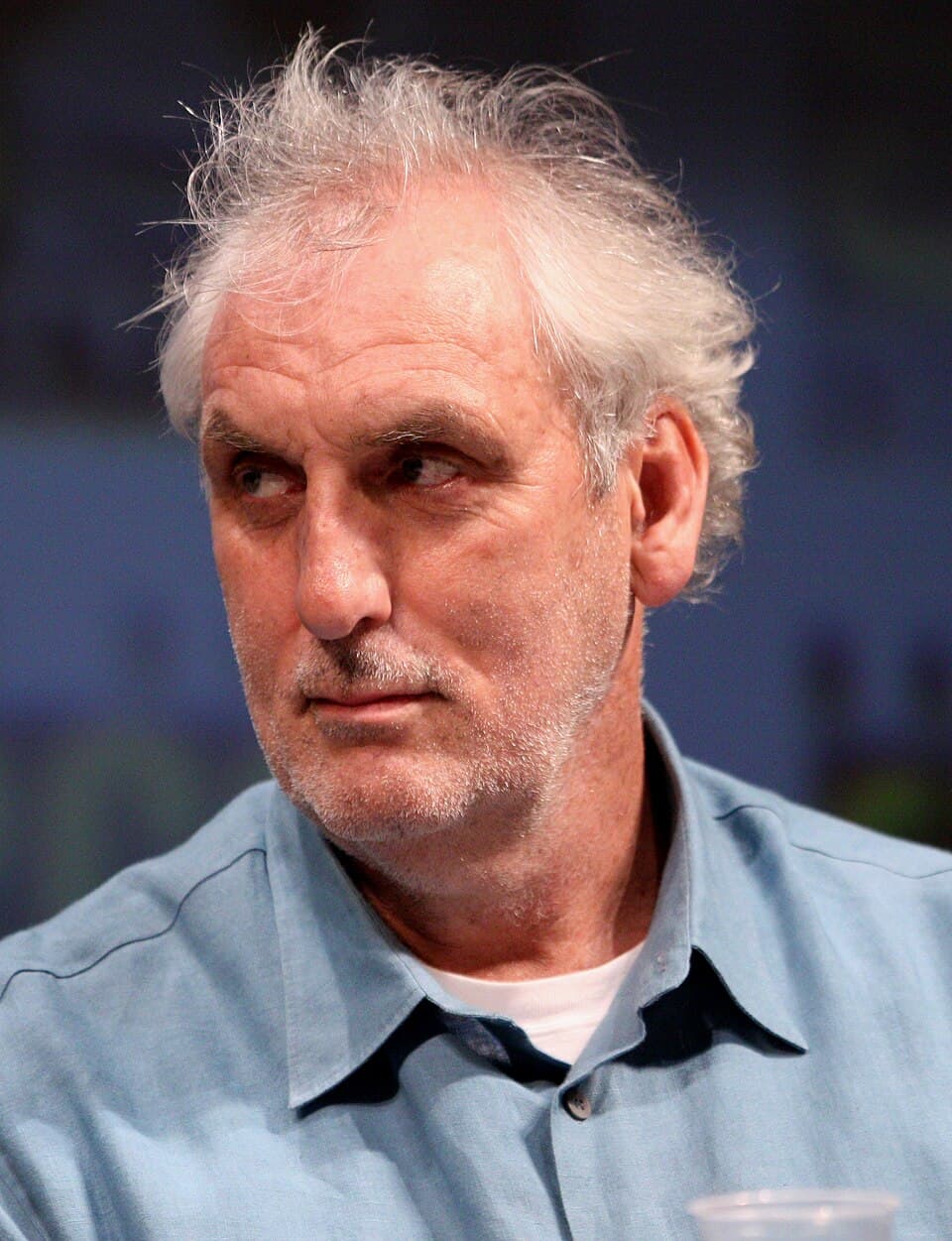
There is a particular kind of Australian filmmaker who stays. They make their debut, win the AFI, maybe two, work within the ecosystem of state funding bodies and public broadcasters, and build a career that is legible within the national cinema’s terms. The register is familiar: social realism, landscape as psychology, an inherited suspicion of genre. And then there is Phillip Noyce, who made one of the great Australian films of the 1970s and then, with what looks from the outside like deliberate perversity, refused to make another one like it. Not because he rejected Australian cinema but because he could not stay inside any single version of what cinema was supposed to be. His career is not a trajectory; it is a sequence of lateral moves, each one governed by a different set of rules, and the only constant is the restlessness itself.
Newsfront and the film nobody outside Australia has seen
Newsfront (1978) is the picture that should have established Noyce as one of the defining voices of the Australian New Wave. It did, briefly, within Australia; it won four AFI Awards, including Best Film and Best Director, and it consolidated Noyce’s reputation as a filmmaker of serious ambition. But outside Australia the film barely registered, and it has never recovered from that initial invisibility. This is a problem of distribution rather than quality. Newsfront is a genuinely extraordinary work: a film about the newsreel cameramen of the 1940s and 1950s that uses their profession as a lens for examining how Australia understood itself in the decades between the war and television. Bill Hunter plays Len Maguire, a cameraman whose commitment to newsreel authenticity puts him at odds with the encroaching dominance of American media, and the film builds its argument not through polemic but through texture. Noyce intercuts real archival footage with staged recreations so seamlessly that the boundary between document and fiction dissolves, and this dissolution is the film’s subject as much as its method.
What strikes me now about Newsfront is how confidently it operates in a register that Noyce would never return to. The film is patient, essayistic, comfortable with digression. It trusts the audience to follow connections between the newsreel footage and the personal drama without having those connections underlined. It is a film about looking, about the politics of the camera, and Noyce directs it with a density of purpose that suggests a filmmaker who could have spent a decade refining this mode. He did not. Within a few years he was making Heatwave (1982), a conspiracy thriller with Judy Davis, and the shift was already underway.
Dead Calm and the export of Nicole Kidman
By 1989 Noyce had made the leap that many Australian directors of his generation attempted and few survived: the Hollywood genre picture. Dead Calm is a three-character thriller set almost entirely on two boats in the Pacific Ocean, and it works with a mechanical precision that owes nothing to the contemplative rhythms of Newsfront. Sam Neill and Nicole Kidman play a couple on a sailing holiday who rescue a stranger (Billy Zane) from a sinking schooner; the stranger is not what he appears. The premise is simple enough to fit on a napkin, and Noyce directs it as though simplicity were a discipline rather than a limitation.
What Dead Calm demonstrated was that Noyce could think in genre without condescending to it. The film is lean, ruthless with its pacing, and it treats its audience’s nervous system as a legitimate compositional element. It also launched Kidman into the international consciousness in a way that her earlier Australian work had not; the picture required her to carry long sequences alone, in physical danger, without dialogue, and she did it with a control that made Hollywood pay attention. Noyce, characteristically, did not try to replicate the result. He moved on.
The Hollywood years and the question of anonymity
The films Noyce made in Hollywood through the 1990s are competent, sometimes more than competent, and they are also the reason certain Australian critics regard him with suspicion. Patriot Games (1992) and Clear and Present Danger (1994) are Tom Clancy adaptations starring Harrison Ford; they are solidly constructed studio thrillers that do exactly what they are designed to do and nothing more. The question is whether “nothing more” constitutes a failure or a professional achievement, and the answer depends on what you think directors are for. Noyce directed these films the way a master carpenter builds a house to specification: the joints are clean, the structure is sound, and the personality of the builder is not the point.
The Quiet American (2002) is a different matter. Philip Roth once observed that a writer’s truest work often emerges when they stop trying to be interesting, and something similar happened to Noyce in Vietnam. The film, adapted from Graham Greene’s novel, stars Michael Caine as a cynical British journalist in 1950s Saigon and Brendan Fraser, cast against type, as the quiet American of the title. Noyce directs it with a restraint that recalls Newsfront; the film is interested in complicity, in the ways that good intentions produce catastrophe, and it trusts its source material enough to let the ambiguity breathe. It was also, not coincidentally, Noyce’s return to the kind of politically engaged filmmaking he had not practised since the early 1980s.
Rabbit-Proof Fence and the homecoming that was not one
In the same year as The Quiet American, Noyce released Rabbit-Proof Fence, and the two films together represent the most concentrated burst of serious work in his career. Rabbit-Proof Fence tells the story of three Aboriginal girls who escape from the Moore River Native Settlement in 1931 and walk 1,500 miles home along the rabbit-proof fence that bisects Western Australia. The film is based on Doris Pilkington Garimara’s account of her mother’s journey, and Noyce directs it with a clarity that borders on spareness. Peter Gabriel’s score, the wide shots of the fence cutting through red earth, the children’s faces; the picture strips its storytelling to essentials and holds there.
What makes Rabbit-Proof Fence difficult to categorise within Noyce’s body of work is that it is simultaneously his most Australian film and his most international. The subject is specifically, irreducibly Australian, rooted in a history of state violence against Indigenous families that the country was only beginning to publicly reckon with at the time of the film’s release. But the filmmaking grammar is universal, almost classical, and the picture found audiences worldwide in a way that Newsfront never had. Noyce proved that an Australian story of this gravity could travel without being simplified for export, and then, once again, he did not stay to build on what he had made.
The problem of belonging
The lineage Noyce belongs to is not the one Australian film history usually constructs. He is not Peter Weir, whose Hollywood career maintained a recognisable sensibility across genres. He is not George Miller, who built a single franchise into a mythology. Noyce’s career resists the biographical arc that criticism prefers: the early promise, the mature vision, the late-period summing up. There is no mature vision. There is a series of problems, each one approached on its own terms, and the quality varies because the ambition varies, and the ambition varies because Noyce does not appear to believe that consistency is a virtue.
This is, I think, why Australian cinema has never fully claimed him. The national film culture wants its major directors to stand for something, to carry a set of thematic or aesthetic concerns that can be traced from first feature to last. Noyce carries nothing from one film to the next except a technical facility that adapts to whatever the project requires. He is, in the deepest sense, a professional, and Australian cinema has never been entirely comfortable with professionals. It prefers artists, or at least directors who can be discussed as artists, and Noyce’s refusal to perform the role of the artist is itself a kind of artistic position, though he would probably reject that framing too. He has spent fifty years making films. They do not look like each other. That is, if you pay attention to what it actually costs to reinvent yourself every few years, its own form of discipline.
Bronte writes long-form criticism of Australian cinema and the international art films that feed into it. She was on the ground at Cannes in 2019 and has not entirely forgiven the festival for 2020. Patient with slow films; impatient with tidy ones.
MORE BY BRONTE HAUGHEY →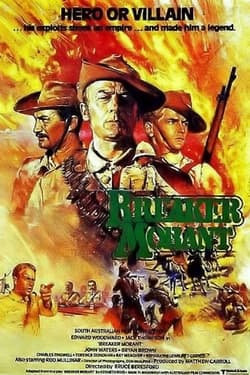
Breaker Morant and the country that adopted its scapegoat
Bruce Beresford's 1980 courtroom drama made an English-born soldier into an Australian martyr, and the picture's argument about empire has outlived its historical certainties.
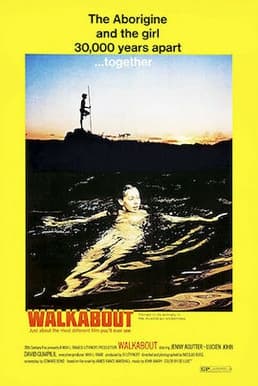
Walkabout is a British film about a country it never claims
Nicolas Roeg's 1971 picture is claimed as an Australian classic, though it was made by a Londoner, financed by two Americans and sold by 20th Century Fox. Its best argument is how little it pretends otherwise.
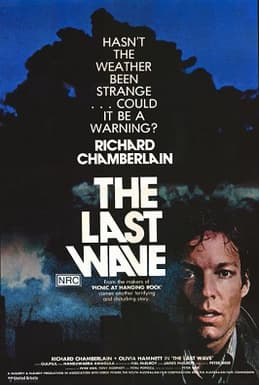
The Last Wave and the rain Sydney could not explain
Peter Weir's 1977 film puts a corporate lawyer in a drowned city and asks what a settler place owes to the ground and weather beneath it.