Penguin Bloom tells a disability story and the magpie gets the better arc
The bird learns to fly; the woman learns to accept; and the gap between the two arcs is where the film's assumptions live.
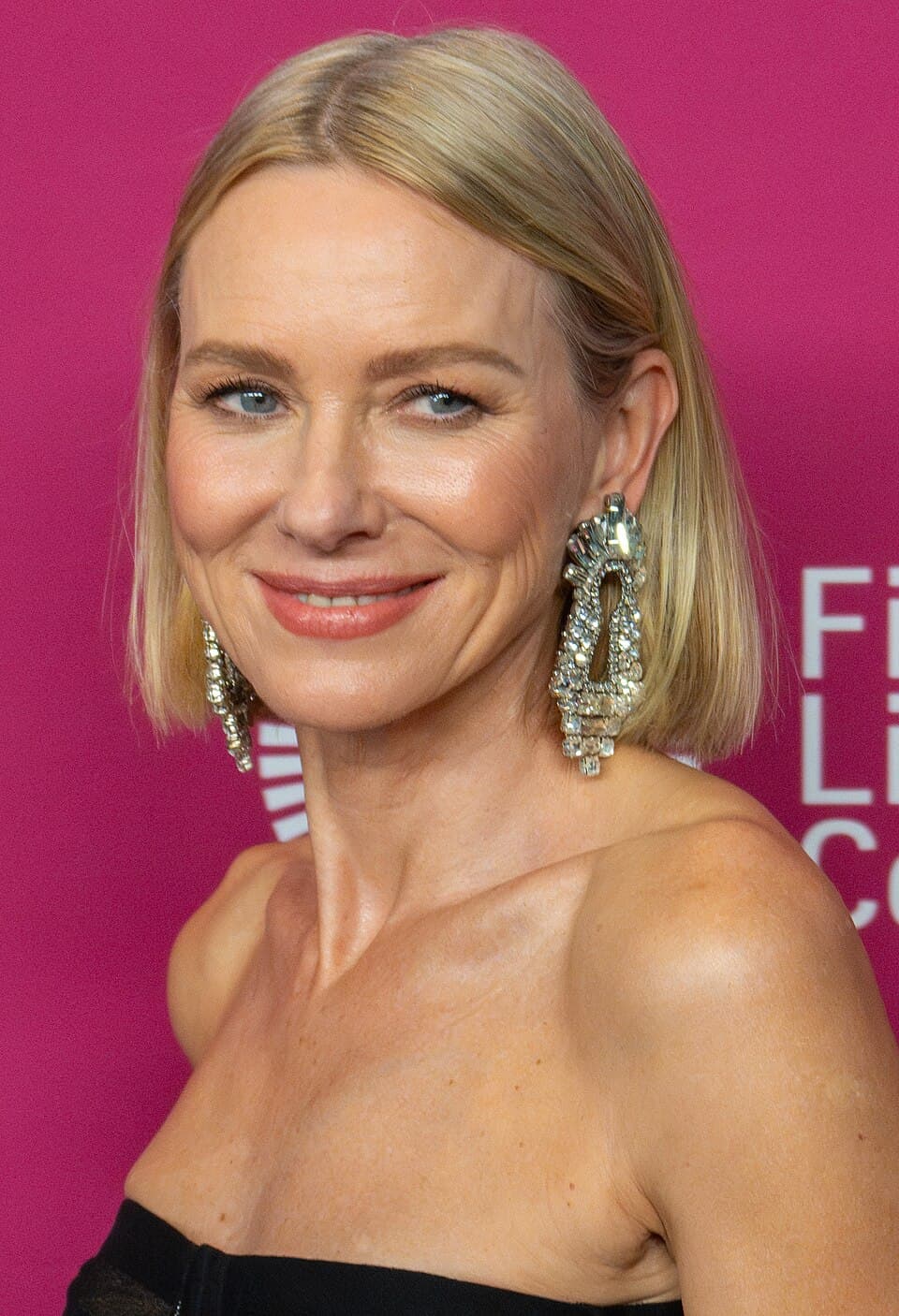
I want to say that Penguin Bloom moved me, because it did, and I want to say that the fact it moved me bothers me, because that is also true, and the space between those two responses is what I have been thinking about for weeks. The film is warm and careful and deeply well-intentioned, and it stars Naomi Watts, who is good in it, who is always good, and it tells the story of Sam Bloom, who fell from a balcony in Thailand and sustained a spinal cord injury and then found purpose and healing through a baby magpie named Penguin. It is based on a real story. The real Sam Bloom is a remarkable person. The film knows this and wants you to know it too, and in its eagerness to make you feel the remarkableness of the recovery, it reveals something about the way Australian cinema thinks about disability that I do not think it intended to reveal.
The magpie gets the better arc. I do not mean this as a joke. I mean it structurally. Penguin arrives broken, learns to trust, learns to fly, and completes a clean emotional trajectory from vulnerability to freedom. Sam arrives broken, resists help, resists her family, resists herself, and eventually accepts her situation through the mechanism of caring for the bird. The bird’s arc is active. Sam’s arc is reactive. The bird does things. Sam watches the bird do things and is changed by the watching. The most dynamic character in a film about a woman’s relationship with paralysis is the animal, and the film does not seem to notice this, or if it notices, it does not seem to find it troubling.
The problem-to-be-solved
What bothered me, sitting in the cinema, was the shape of the narrative. Penguin Bloom treats Sam’s spinal injury as a problem. Not in the obvious sense that a catastrophic injury is a problem, which it is, which nobody disputes. In the structural sense that the film organises itself around the question of whether Sam will overcome her disability, where “overcome” means something like “stop being angry about it” and “find a reason to keep living.” The injury is the inciting incident. The recovery is the plot. The endpoint is acceptance, which the film presents as a kind of victory, Sam on the beach, Sam in the kayak, Sam competing in adaptive surfing. She is not cured. The film is not stupid. But she is better, in the film’s terms, and the betterness is defined by her proximity to her pre-injury life: she surfs again, she paddles again, she is outside again, she is a mother again in the way she was a mother before.
I do not know what else the film could have done. This is the story it chose to tell, and it is, in many respects, Sam Bloom’s own story, told with her involvement and shaped by her experience. But I keep thinking about what the film does not do, which is imagine a life with disability that is not measured against a life without it. Sam’s value in the film is calibrated to her capacity to return. To the water. To her sons. To something that looks like the life she had before Thailand. The wheelchair is an obstacle, not an identity. The injury is a before-and-after, not a condition that generates its own forms of living.
Animal surrogates and emotional outsourcing
Australian cinema has a pattern with animals, and I think it is worth naming. Red Dog, Storm Boy, Oddball, and now Penguin Bloom. In each case, the animal carries the emotional weight that the human characters cannot or will not carry themselves. The animal is permitted to be vulnerable in ways the humans are not. The animal’s suffering is legible, uncomplicated, available for sentiment. When the bird struggles, we feel it cleanly. When Sam struggles, the film hedges. It gives her anger but pulls back from the anger quickly. It gives her grief but wraps the grief in family warmth. It gives her despair but never lets the despair become the point. The bird, by contrast, is allowed to just be broken and then be mended, and the simplicity of that arc is what the audience responds to, and the film knows this, which is why the bird is in the title.
I am not saying the film should have been grimmer. I am saying something about what happens when a disability narrative uses an animal as its emotional proxy. The animal absorbs the feelings that the disabled character is not permitted to fully express. The audience cries for the bird. They admire Sam. These are different emotional registers, and the gap between them tells you something about what the film believes its audience can handle. Crying is easy. Sitting with a woman’s unresolved fury at the arbitrary destruction of her body is harder. The film chose the bird.
What Australian cinema does with disability
I started thinking about other Australian films with disabled characters, and the list is short and the patterns are consistent. Disability appears as tragedy, as obstacle, as thing-to-be-overcome. It rarely appears as ordinary life. The disabled character exists in relation to their injury or condition, not in relation to the world. Their story is their disability. Their arc is their recovery or their acceptance or, in older and crueller films, their decline. The idea that a disabled person might be the protagonist of a story that is not about disability, that their condition might be present but not central, that they might have concerns and desires unrelated to their body’s limitations, this barely exists in Australian feature film.
There are exceptions. Rolf de Heer’s Dance Me to My Song (1998) is one, and it is telling that the film was controversial precisely because it refused the sentimentality that Penguin Bloom embraces. Heather Rose, who had cerebral palsy, co-wrote and starred in a film about a disabled woman who wants sex and autonomy and is denied both by her carer, and the film is angry and raw and not interested in making the audience feel good about disability. It was difficult. It did not perform well. It has largely vanished from the conversation, while Penguin Bloom, which is gentle and affirming and ultimately reassuring, had a healthy release and a Netflix deal and the kind of warm critical reception that comes with a film that does not challenge its audience’s assumptions about what disability looks like.
Why it moved me anyway
I cried during Penguin Bloom. I cried when the bird flew. I cried when Watts, sitting in her wheelchair on the sand, watched the magpie circle above her and the camera held on her face and I could see something in her expression that was not acting, or was acting so precise that it had arrived at the same place as not-acting. I cried because the film is competently made and emotionally literate and because it knows exactly where to put the music and the light and the close-up. I cried because I am a person who cries at films about birds, and this is a film about a bird.
But I left the cinema thinking about Sam Bloom in her wheelchair, not the cinematic Sam but the real one, and wondering what her life contains that the film did not have space for. The boredom. The logistics. The daily negotiation with a world built for people who can walk. The things that are not overcome but simply managed, day after day, without resolution, without a magpie, without a Naomi Watts to make it look like light through curtains. The film gave me the version of disability I could cry about. I wanted the version I could not.
I want to say that I think Penguin Bloom is a good film, because I do. And I want to say that good is not the same as sufficient, and that the distance between the two is where Australian cinema’s relationship with disability still lives, cautious and warm and ultimately more comfortable than it should be.
Mara writes essays. She came to film writing from a decade of literary criticism and still reaches, sometimes, for a novel before she reaches for a shot list. She lives in the inner north of Melbourne and does not explain which city that is.
MORE BY MARA DENG →
Australian women on screen in 2023 were allowed to be difficult and the work was better for it
The year's strongest Australian screen work gave women permission to be angry, messy, cruel, and specific, and the camera did not flinch.
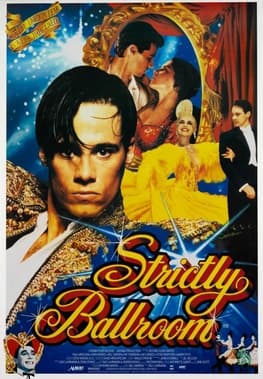
Strictly Ballroom is a film about who is allowed to teach the steps
Baz Luhrmann's 1992 comedy is sold as a story about dance. It is also a story about an Australian champion who has to be taught his own steps by a Spanish-Australian family in their own house.
Looking for Alibrandi was the first Australian story handed to me as mine
It was not my family's story. It was the shape of my family's story, put on a screen in a country that had never once bothered to hold it before.