Of an Age finds tenderness in the back seat of a car in Footscray
Goran Stolevski's second feature is a 1999-set romance that earns its ache by being precise about place rather than grand about feeling.
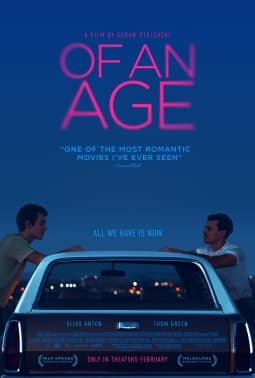
The first half of Of an Age takes place across a single morning in Melbourne’s western suburbs, and it earns its emotional weight by being geographically exact. Goran Stolevski does not set his 1999 queer romance in a generic Australian city; he sets it in Footscray, in Yarraville, on the Western Ring Road at dawn, in a car with bad air conditioning and a cassette deck playing something tinny and half-remembered. Kol (Elias Anton) is a seventeen-year-old Serbian-Australian ballroom dancer who needs to get to a competition. Adam (Thom Green) is the older brother of Kol’s dance partner, and he drives Kol across the western suburbs in a borrowed sedan, and in the space between one destination and another something happens between them that neither of them names, because naming it in 1999, in this part of Melbourne, in this community, would cost more than either of them can afford. The picture understands this cost with a specificity that distinguishes it from most queer coming-of-age films, which tend to locate their tenderness in the act of declaration. Stolevski locates it in the act of restraint.
Geography as feeling
The western suburbs carry a particular weight in Melbourne’s cultural imagination, and Stolevski, who grew up in the west, deploys that weight without sentimentality. Footscray in 1999 was not yet the site of laneway bars and warehouse conversions; it was working-class, migrant-dense, a place where communities were tight and privacy was scarce. The film shoots these streets with an intimacy that feels residential rather than cinematic. The houses are close together. The light is flat and yellow, the light of sodium street lamps and early-morning overcast. When Kol and Adam drive through these streets, the camera stays inside the car with them, and the suburbs become a container for a conversation that grows more charged with every kilometre.
This is not incidental set dressing. The geography determines the emotional grammar of the picture. Kol cannot be openly queer in Footscray in 1999; the Serbian community his family belongs to, the ballroom-dance circuit that structures his social life, the sheer density of people who know him and his parents and his business, all of it conspires to make visibility dangerous. Adam, who is slightly older, slightly more worldly, slightly more at ease with himself, understands this without Kol having to explain it. Their intimacy is built in the negative space around what cannot be said, and Stolevski films it accordingly: long takes, two-shots held until the silence becomes its own kind of speech, a camera that watches faces the way you watch someone you are trying to read.
The lineage of Head On
It is difficult to talk about Of an Age without placing it in relation to Head On (1998), Ana Kokkinos’s adaptation of Christos Tsiolkas’s novel Loaded, which remains the most significant Australian queer film of the past thirty years. Both pictures are set in Melbourne. Both centre on young men from migrant families negotiating desire against the pressure of community expectation. Both understand that queerness in these communities is not simply a matter of identity but of spatial politics: where you can be yourself, who can see you, what rooms are safe.
But the register is entirely different. Head On is furious, propulsive, saturated with bass and sweat and amphetamines. Ari (Alex Dimitriades) moves through Melbourne’s nightlife like a projectile, bouncing off surfaces, consuming and being consumed. Kokkinos films the city as a body, hot and porous and dangerous. Stolevski’s film operates in the opposite key. Of an Age is quiet, almost unbearably so. Its eroticism is the eroticism of proximity and hesitation; a hand resting near another hand on a gear stick, a glance held one beat too long, the specific electricity of sitting next to someone in a car when you are both aware that if either of you moves two inches the whole situation changes. Where Head On made its case through force, Of an Age makes its case through patience, and the patience is what gives the film its particular ache.
The structural gamble
The picture splits cleanly into two halves, divided by a title card and a jump of more than a decade. The first half is the morning drive, the competition, the hours in between. The second half takes place in the present day, at a funeral, when Kol and Adam see each other for the first time in years. This structure is a gamble, and it is the kind of gamble that reveals what a filmmaker thinks cinema is for. The first half builds an intimacy so specific and so fragile that by the time the title card appears, you are invested in these two people with an intensity that the narrative has not quite justified; you have watched them talk, and drive, and almost touch, and that is all. The second half then asks whether that morning was enough to sustain a connection across years of silence, and the answer, which Stolevski delivers with a restraint that borders on cruelty, is both yes and no.
The second half is harder to watch, not because anything violent or dramatic happens but because the distance between who these men were and who they have become is visible in every frame. Kol carries himself differently. Adam is guarded in a way that the younger version was not. They are polite to each other, careful, and the care is worse than hostility because it confirms that the morning mattered, that it mattered enough to make the present painful, and that neither of them has a way to say this that does not sound like a confession.
What the picture holds
Of an Age premiered at Venice in 2022, and the critical response was warm but not overwhelming, which seems right; it is not a film that announces itself. It sits in a quieter register, the register of memory and regret, and it asks you to pay a kind of attention that festival audiences, conditioned by louder and more declarative pictures, do not always give. Stolevski, whose debut You Won’t Be Alone (2022) was a Macedonian-language folk-horror film set in the 19th century, has made something entirely different here: a contemporary, realist, deeply local film about two people in a car in Footscray, and the whole emotional architecture rests on whether you believe that a single morning can change the shape of a life.
I believe it can. The film does not ask me to justify this; it simply presents the evidence and lets the ache do its work. The car, the cassette deck, the sodium light, the hand on the gear stick. The morning is enough. The morning is always enough. What happens afterward is just the cost of having had it.
Bronte writes long-form criticism of Australian cinema and the international art films that feed into it. She was on the ground at Cannes in 2019 and has not entirely forgiven the festival for 2020. Patient with slow films; impatient with tidy ones.
MORE BY BRONTE HAUGHEY →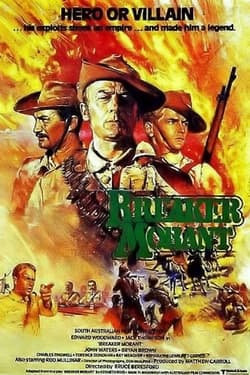
Breaker Morant and the country that adopted its scapegoat
Bruce Beresford's 1980 courtroom drama made an English-born soldier into an Australian martyr, and the picture's argument about empire has outlived its historical certainties.
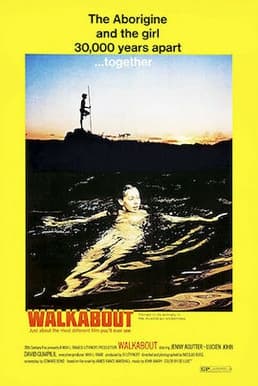
Walkabout is a British film about a country it never claims
Nicolas Roeg's 1971 picture is claimed as an Australian classic, though it was made by a Londoner, financed by two Americans and sold by 20th Century Fox. Its best argument is how little it pretends otherwise.
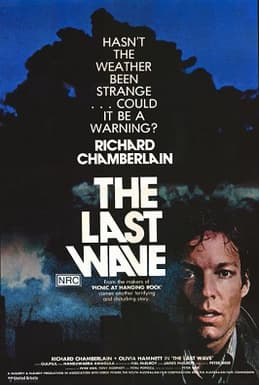
The Last Wave and the rain Sydney could not explain
Peter Weir's 1977 film puts a corporate lawyer in a drowned city and asks what a settler place owes to the ground and weather beneath it.