Mr Inbetween ended the way its hitman would have wanted: quietly and without apology
Scott Ryan's hitman sitcom finished its third season without a redemption arc, a moral reckoning, or a single scene where Ray explained himself, and it was perfect.
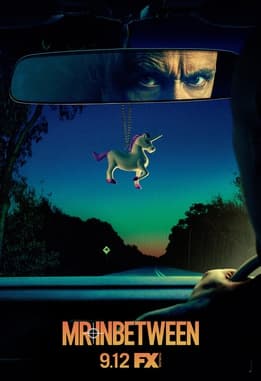
Look, I will say this plainly: Mr Inbetween is one of the best television shows Australia has ever produced, and the fact that it ended after three seasons without anyone outside of a certain kind of viewer really noticing is the most Mr Inbetween thing that could have happened. The show lived the way its protagonist lived. It did the work, kept its head down, and left without making a scene.
Scott Ryan created Ray Shoesmith in a 2005 short film called The Magician, which he also wrote, directed, and starred in for about eleven dollars. The conceit was simple: a documentary crew follows a Melbourne hitman on his rounds. The tone was dry in a way that felt less like comedy and more like the absence of drama. Ray kills people. He also picks up his daughter from school, argues with his brother, and gets into the kind of suburban disagreements that most Australians would recognise from their own lives, except his version occasionally ends with someone in a boot.
The Foxtel series, which ran from 2018 to 2021, expanded on this without ever inflating it. Nash Edgerton directed every episode, and his restraint is the thing I keep coming back to. In an era where every prestige drama feels the need to announce itself with visual ambition and needle drops and long tracking shots that say “look what we can do,” Edgerton shoots Mr Inbetween like a Tuesday. The camera sits. It watches. It does not move unless it has a reason to move. The lighting is whatever the room provides. The violence, when it happens, is fast and ugly and over before you have processed it, which is, of course, exactly how violence works.
The anti-antihero
Ray Shoesmith is not Tony Soprano. He is not Walter White. He is not any of the prestige antiheroes that the last two decades of television have trained us to expect, because those characters were all, in their various ways, performing for us. They wanted us to understand them. The shows wanted us to wrestle with our complicity in finding them compelling. There were therapy scenes and monologues and moments of self-reflection designed to create the space for the audience to ask, “Am I a bad person for liking this guy?”
Ray does not do any of that. He does not explain himself, to the audience or to anyone else. When someone asks him what he does for a living, he changes the subject. When a situation requires violence, he is violent. When a situation requires patience, he is patient. He has a code, but the show never stops to examine it or hold it up to the light or contrast it with a more conventional morality. The code is just how Ray operates, and you either follow it or you do not.
This is harder to pull off than it sounds. The temptation with a character like Ray is to eventually give the audience a key, a childhood trauma, a moment of regret, a scene where he stares at his hands and we understand. Ryan never does this. Three seasons, and the closest we get to Ray’s interior life is the way he holds his daughter, or the look on his face when a relationship ends, or the beat of silence before he answers a question he does not want to answer. The characterisation is all in the negative space, and Ryan’s performance is so controlled that you start reading everything, a shoulder shift, a half-second pause, the way he eats a sandwich, as meaningful. Whether it is meaningful or whether you are projecting is part of the show’s trick.
The comedy that does not wink
The funniest scenes in Mr Inbetween are funny because nobody in them thinks they are funny. Ray sitting in a doctor’s waiting room. Ray trying to assemble furniture. Ray having a conversation with a man who does not know he is about to die. The comedy comes from the collision between the mundane and the lethal, and the show never signals the collision. There is no score telling you to laugh. There is no cutaway. There is just the scene, played straight, and your nervous laughter filling the silence the show leaves for you.
This is, honestly, a very Australian kind of comedy. The tradition of dry, understated humour that does not announce itself runs through everything from Frontline to The Castle to Kath and Kim, and Mr Inbetween belongs in that lineage even though it is also, you know, a show about a man who kills people for money. The suburban specificity helps. Ray lives in a house that looks like every second house in Sydney’s west. He drives the kind of car that does not draw attention. His world is takeaway shops and car parks and living rooms with the telly on. The ordinariness is the joke, and also the point.
Season three and the ending
The third season does what the first two seasons did, which is nothing more and nothing less than follow Ray through a stretch of his life. There is an illness. There is trouble with the people he works for. There is a relationship that matters more to him than he can articulate. The stakes escalate, but the show does not change pitch. It remains stubbornly itself, right up to the final episode, which I will not spoil except to say that it ends the way the show began: with Ray doing what Ray does, without commentary, without a musical cue designed to tell you how to feel, without any suggestion that the show owes you a conclusive emotional experience.
Some people hated the ending. I think those people wanted a different show, which is fine. There are plenty of shows that will give you a redemption arc, a final reckoning, a moment where the antihero faces the full weight of what he has done. Mr Inbetween is not one of them. Ray Shoesmith does not believe he owes the world an explanation, and neither does Scott Ryan.
The awards conversation that never happened
Mr Inbetween was never an AACTA contender in the way that a show of its quality should have been. It won a couple of technical awards. Ryan was nominated for Best Lead Actor. But the show never broke through into the broader cultural conversation the way that, say, Wentworth or Mystery Road did. Part of this is the Foxtel problem (smaller platform, smaller audience, smaller noise). Part of it is that the show is so resolutely unostentatious that it does not give critics easy superlatives to reach for.
But I suspect the bigger issue is that Mr Inbetween does not make a case for itself. It does not present itself as important television. It does not address themes or wrestle with Australia’s national identity or do any of the things that tend to attract awards-body attention. It just tells a story about a bloke who does a specific job and lives a specific life, and it tells that story with a precision and a confidence that most Australian shows never achieve.
Three seasons. Twenty-six episodes. No wasted scenes, no filler, no moments where the show pauses to admire itself. It came in, did the job, and left. Honestly, I cannot think of a better ending for a show about a hitman.
Rhys watches more television than is healthy and writes about it with a dryness that tips occasionally into cruelty. His favourite ABC drama is the one the ABC just cancelled, whichever that happens to be.
MORE BY RHYS TAVITA →
The Twelve asks twelve Australians to agree and then watches them fail
The jury room is the one place on Australian television where people are forced to listen to each other, and the show is smart enough to make that unbearable.

Wentworth ran for nine seasons and never once apologised for being a prison show
The longest-running Australian drama of the streaming era is a women's prison show that outlasted every prestige competitor by refusing to be anything else.

Upright is the best Australian road show nobody outside this country has seen
Tim Minchin drives a piano across Australia and somehow makes you cry about it, which is not what you expect from a man best known for musical comedy.