Love Me gives Hugo Weaving a dating app and watches him try to be human
Weaving plays a widower on a dating app, and the show's best trick is treating online romance with the same gravity it gives grief.
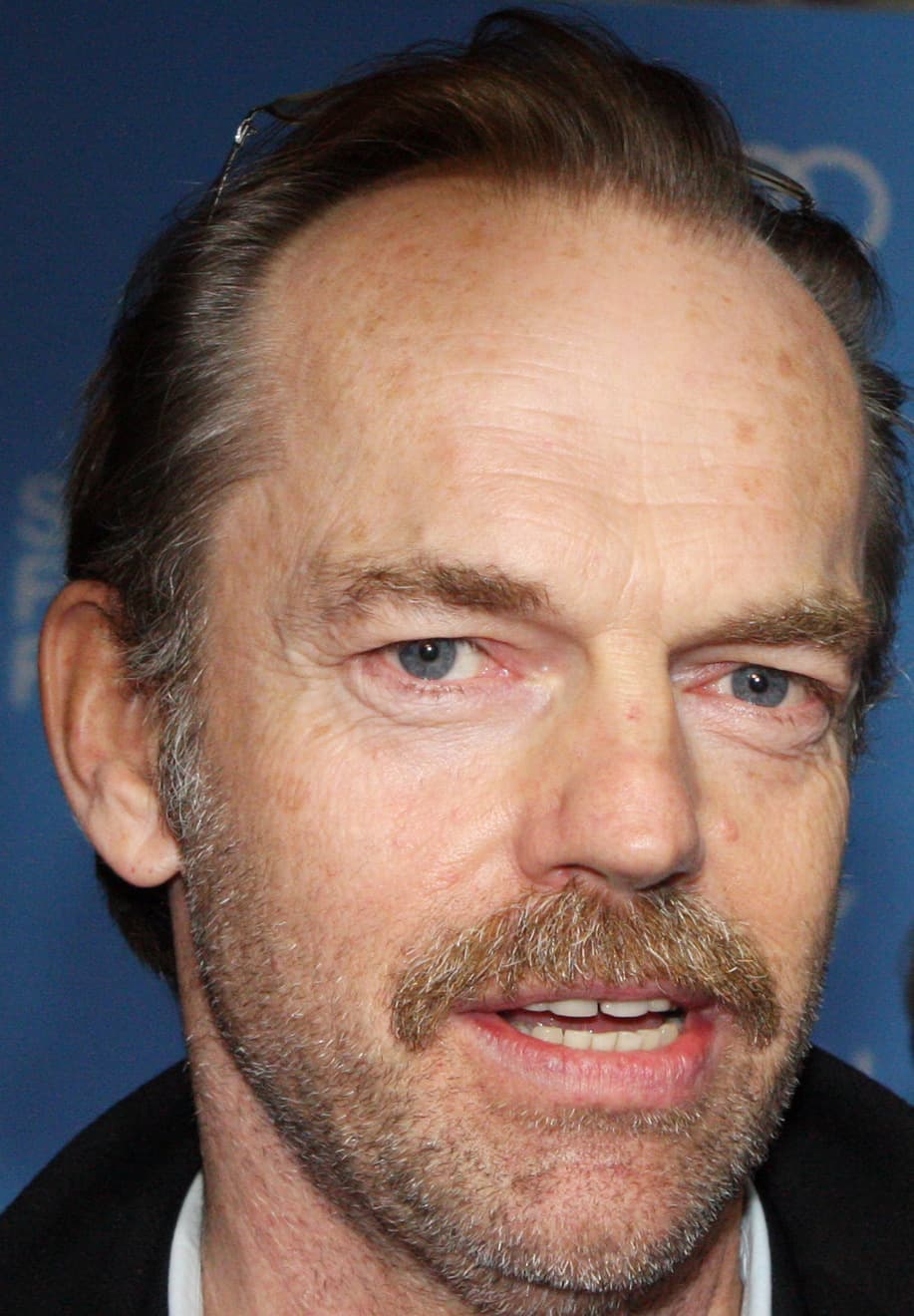
Look, there is a version of Love Me that treats its premise as comedy. A sixty-something widower downloads a dating app, fumbles with the interface, goes on dates that are awkward in the way television has taught us that dates involving older people are supposed to be awkward. That version would be easy to make and easy to watch and completely forgettable. It would be a show about a man out of his depth, and the depth would be shallow.
Love Me is not that show. What Alison Bell and Briony Benjamin have written is something considerably more uncomfortable: a family drama in which grief and online dating are given equal weight, and the show refuses to treat either as more real than the other. Glen (Hugo Weaving) is a retired academic whose wife has recently died. His adult children, Clara (Bojana Novakovic) and Aaron (William Lodder), are each dealing with the loss in their own way, which is to say they are each avoiding dealing with the loss in their own way. Glen downloads a dating app. Clara is in a relationship that is disintegrating under the pressure of her unexpressed grief. Aaron is young enough that his mother’s death has rearranged his understanding of permanence, and he is responding to that rearrangement by making choices that look reckless from the outside but feel necessary from the inside.
The dating app is not the story. The dating app is the pressure that makes the story visible.
Weaving and the quiet performance
Hugo Weaving has spent the past two decades playing characters who are, in various ways, larger than the world they inhabit. Agent Smith. Elrond. V. Even in Australian productions, he tends toward roles that demand a certain scale: the patriarch in The Dressmaker, the authority figure in Hacksaw Ridge. He is an actor whose physical presence, that angular face, those eyes that always seem to be processing something three steps ahead, naturally suggests power and control.
Love Me strips all of that away. Glen is not powerful. He is not in control. He is a man sitting on a couch with a phone, trying to write a bio for a dating profile, and the scene is played with the same tension that a different show might give to a hostage negotiation. Weaving’s performance here is built on hesitation. Glen pauses before he speaks. He starts sentences and abandons them. He smiles at moments that do not call for smiling, because the smile is a reflex he developed during his marriage and the marriage is over but the reflex remains.
There is a scene in the third episode where Glen goes on a first date with a woman he met through the app, and the entire scene is a masterclass in what good acting looks like when the camera is close and the dialogue is ordinary. They talk about nothing. The conversation is the kind of pleasant, surface-level exchange that first dates produce when both people are trying to seem normal. What Weaving does underneath the dialogue, the way his body language shifts between genuine interest and performative interest and back again, makes the scene feel like it contains more information than the words can carry.
Digital romance without condescension
The show’s smartest decision is its refusal to treat online dating as a joke, a cautionary tale, or a metaphor for modern disconnection. In Love Me, a dating app is just a tool. It is the way people meet now. Glen using it is not funny or sad or symbolic. It is practical. His wife died. He is lonely. The app exists. He uses it.
This sounds obvious, but Australian drama (and drama generally) has historically struggled to depict online interaction without either mocking it or moralising about it. Shows treat screens as barriers to authentic connection, as if the only real emotion happens face to face. Love Me understands that the connection Glen makes through his phone is as real as any other connection, and the vulnerability required to put yourself on a dating app after losing a spouse is enormous, and the show honours that vulnerability without sentimentalising it.
The multi-generational structure
The three-strand structure, Glen, Clara, Aaron, gives the show a shape that Australian family drama has used before but rarely this well. Each character is processing the same loss through a different stage of life, and the show cuts between them without hierarchy. Glen’s dating storyline is not the A-plot with the children as subplots. All three stories have equal weight, and the resonances between them are felt rather than stated.
Clara’s strand is the most painful to watch. Novakovic plays her as a woman who has mistaken control for coping, and her relationship with her partner deteriorates in the way that relationships deteriorate when one person is refusing to grieve: slowly, then all at once. Aaron’s strand is the loosest, occasionally drifting into territory that feels more like a coming-of-age drama than a grief story, but Lodder is good enough to hold it together, and his scenes with Weaving have a tenderness that earns the emotional weight the show places on them.
The Offspring comparison and the Binge question
If you want to understand what Love Me is doing, compare it to Offspring. Both are multi-generational family dramas set in Melbourne. Both centre on a family that is chaotic in specifically Australian ways: the passive-aggression, the reluctance to say the direct thing, the meals where everyone is performing normality while privately falling apart. But Offspring used comedy as its primary mode, with drama as the secondary register. Love Me inverts that ratio. It is primarily a drama, and the comedy, when it appears, arrives through recognition rather than punchlines. You laugh because you recognise something, not because the show is being funny.
The other thing worth noting is that Love Me is a Binge original, and Binge has quietly become the platform doing the most interesting Australian drama commissioning. Honestly, it does not get the attention it deserves for this. Stan gets the press because of Bump and The Tourist. ABC gets the cultural credit because it is the ABC. But Binge, which launched in 2020 and has been building its slate with less fanfare, is producing shows like Love Me that are genuinely good and genuinely underseen.
The show got a second season, which is the right decision but not an inevitable one. In the current landscape, a quiet Australian drama about grief and dating apps, without a crime, without a twist, without a hook that fits neatly into a social media clip, is a hard sell. That Love Me exists at all is a minor achievement. That it is this good is a significant one. Weaving has never been better, and the show around him deserves the audience it has not yet found.
Rhys watches more television than is healthy and writes about it with a dryness that tips occasionally into cruelty. His favourite ABC drama is the one the ABC just cancelled, whichever that happens to be.
MORE BY RHYS TAVITA →
High Country trusts the mountains more than the mystery
Eight episodes, five missing persons, and a Victorian Alps landscape doing about sixty per cent of the dramatic work. Season two arrives on 14 September with almost nobody from season one.
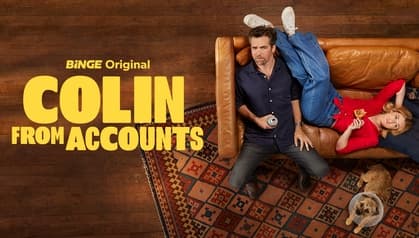
Colin from Accounts has the courage to let its characters grow up and it is not sure that was a good idea
The third season of Australia's best romantic comedy discovers that its leads are no longer charming disasters, and the show does not know what to do with functional adults.
The Lost Flowers of Alice Hart cannot decide if it trusts its audience
Sigourney Weaver commits fully to the Australian accent and the Australian landscape; the scripts commit to neither.