High Ground walks the frontier and does not pretend to own the view
Stephen Johnson's frontier western is a film about complicity, and it implicates its audience by making them comfortable before it makes them accountable.
I want to say that High Ground begins with landscape, but that is not quite right. It begins with air. The opening helicopter shots of Arnhem Land move through atmosphere that feels thick and old, saturated with moisture and deep geological time, and for a few seconds the film lets you sit inside that beauty the way Australian cinema has always let you sit inside it: comfortably, at a distance, as a tourist of your own country. Then it drops you into a massacre, and the comfort is gone, and you realise the comfort was the point. You were supposed to feel safe. The film needed you to feel safe so that what comes next would land properly, which is to say it needed you complicit before it could make you accountable.
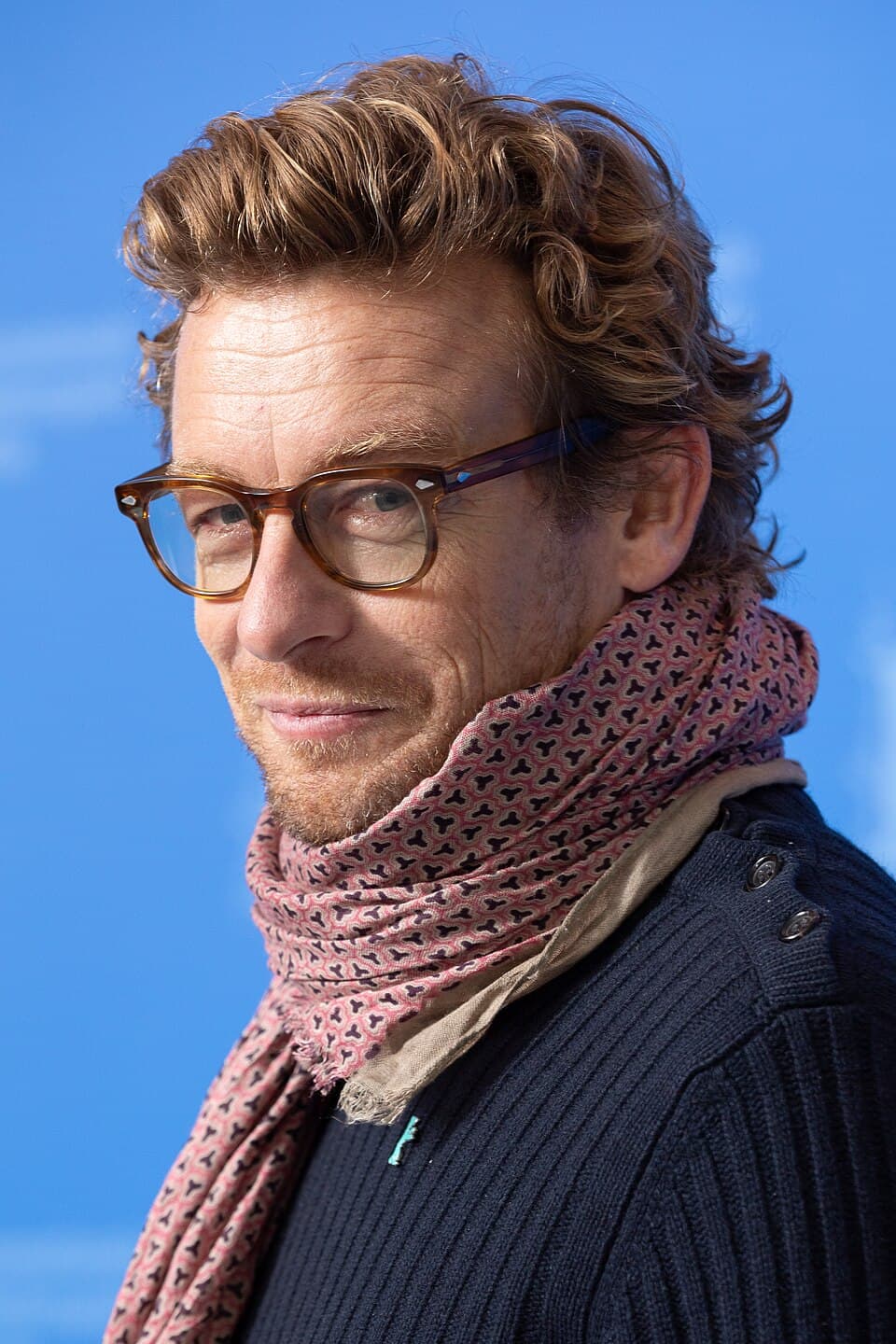
Stephen Johnson directed Yolngu Boy in 2001, a film about three Aboriginal teenagers that handled Indigenous experience with a gentleness unusual for its era, and then he largely disappeared from feature filmmaking for nearly two decades. High Ground is his return, and it is not gentle. It is set in 1919 in the Northern Territory, in the aftermath of a colonial massacre of an Aboriginal community, and it follows Travis (Simon Baker), a white ex-sniper who witnessed the killing and reported it, and Gutjuk (Jacob Junior Nayinggul), a young Yolngu man who survived it. Their paths converge when the colonial authorities need Gutjuk to track his own uncle, Baywara (Sean Mununggurr), who has begun fighting back.
The structure is familiar if you have spent any time with frontier westerns, Australian or otherwise. The reluctant white man. The Indigenous tracker. The corrupted law. But Johnson does something with this structure that I keep turning over in my mind, which is that he never lets Travis escape the frame of his own whiteness. Baker plays him as a man who did the right thing, who reported the massacre, who tried to intervene, and the film is precise about showing that none of this matters. His decency does not redeem him. It does not earn him passage into Gutjuk’s trust. It is simply another mode of being white in a place where whiteness is the mechanism of violence, and his guilt about this, his visible, legible guilt, is treated by the film not as a virtue but as a symptom.
The white man who cannot leave
I want to be careful here because this is the hinge of the film, and it is easy to get wrong. Travis is not a white saviour. Johnson is too smart for that, and Baker plays the role with a kind of hollowed-out restraint that resists any reading of heroism. But Travis is also not nothing. He is the camera’s entry point. He is the face we look at when the film needs us to look at something, and this is a choice, a structural choice, and it is worth asking what it costs.
The cost is that Gutjuk, who is the more interesting character, the character with the deeper claim on the story, spends long stretches of the film in relation to Travis rather than in relation to himself. Nayinggul is remarkable in the role, carrying an authority that owes nothing to the script’s architecture, but the script’s architecture is still there, still orienting itself around the white man’s journey through guilt. I do not think this is a failure, exactly. I think it is an honest account of how Australian frontier stories get told, even now, even by filmmakers who know better. The white perspective is the funding body’s comfort zone. It is the international sales agent’s comfort zone. It is, if I am being honest, the comfort zone of a significant portion of the audience sitting in that cinema, including me.
The frontier conversation
High Ground arrives into a very specific moment in Australian cinema. The Nightingale (Jennifer Kent, 2018) had already torn the colonial period open with a violence that left audiences physically shaken. Sweet Country (Warwick Thornton, 2017) had used the frontier western to tell a story of Aboriginal survival with the patience and formal rigour of a classical director working at the peak of his confidence. The Tracker (Rolf de Heer, 2002) had, almost twenty years earlier, used painted violence and David Gulpilil’s extraordinary presence to dismantle the tracker narrative from the inside.
What High Ground adds to this conversation is not a new argument but a new register. Where The Nightingale was brutal and unsparing, where Sweet Country was controlled and quietly furious, High Ground is something closer to mournful. It grieves. Not for the colonisers, though it gives them more screen time than they perhaps deserve, but for the inevitability of the structure. The film knows that the massacre will happen again in different forms, that the tracker will be used against his own people again, that the white man’s guilt will be performed again and will change nothing again. This knowledge sits under every scene like groundwater. You cannot see it but you can feel the earth shifting.
The landscape helps. Andrew Commis’s cinematography shoots Arnhem Land not as a backdrop but as a participant, a country that has its own memory and its own account of what happened. There is a recurring motif of high ground, literal elevated positions from which the colonial soldiers survey and shoot, and the film understands that this high ground is not just tactical. It is epistemological. The view from above is the colonial view. It is the view that makes territory out of Country, that turns people into targets, that converts a living landscape into a theatre of operations. Travis knows this. He has stood on the high ground and fired downward, and the film never lets him, or us, forget the angle.
Who is this film for
This is the question I keep circling. I saw High Ground in a cinema in Sydney, a weeknight session, maybe forty people. Mostly white. A few Aboriginal people in the rows ahead of me, though I cannot know this for certain and I should not presume. The film played, and the massacre scene arrived, and the room went very still, the particular stillness of an audience that knows it is watching something it is supposed to find unbearable and is trying to find it unbearable in the right way.
I want to say something about this stillness because I think it matters. For a white Australian audience, High Ground operates as a confrontation. It says: this happened, it happened on the land you live on, and the structures that enabled it have not been dismantled, only renamed. The guilt Travis carries is available to the white viewer as a mirror, and the film is smart enough to know that the mirror itself is a kind of consolation. You can feel guilty and leave the cinema and the guilt becomes a thing you experienced rather than a thing you did anything about.
For an Indigenous Australian audience, the film is something else entirely, and I am not the right person to define what. I can only say that the massacre is not a revelation to Aboriginal viewers. It is a Tuesday. It is family history. It is the thing that happened before the other things that happened, and the film’s careful, prestige-cinema framing of it, the wide shots, the swelling score, the white protagonist’s anguished face, may land differently when you are watching your own history processed through the grammar of a medium that was not built for you.
The ground itself
What stays with me is not the massacre or the guilt or the chase through the bush. What stays with me is the ground. The red earth of Arnhem Land, the rock formations that predate every character and every conflict, the trees that have watched all of this before. Johnson films the land with a respect that is more interesting than reverence. He does not worship it. He does not use it as metaphor. He lets it be present, indifferent and alive, a country that does not belong to anyone in the film and that the film, to its credit, does not pretend to own.
Travis stands on the high ground at the end. I will not say what he sees. But the camera pulls back, and the ground is still there, wider than any story told about it, older than guilt, and the film ends not with resolution but with the landscape continuing. The story stops. The Country does not. That, I think, is the most honest thing High Ground has to say, and it says it by shutting up and letting the land have the last word.

Mara writes essays. She came to film writing from a decade of literary criticism and still reaches, sometimes, for a novel before she reaches for a shot list. She lives in the inner north of Melbourne and does not explain which city that is.
MORE BY MARA DENG →
2021 was the year Australian cinema got serious and the audience looked away
Four of the year's most significant Australian films dealt in violence, guilt, grief, and landscape, and the domestic audience chose to watch something else.
Strictly Ballroom is a film about who is allowed to teach the steps
Baz Luhrmann's 1992 comedy is sold as a story about dance. It is also a story about an Australian champion who has to be taught his own steps by a Spanish-Australian family in their own house.

Looking for Alibrandi was the first Australian story handed to me as mine
It was not my family's story. It was the shape of my family's story, put on a screen in a country that had never once bothered to hold it before.