Heartbreak High came back and I realised I was no longer the target audience
The reboot is not for me and that is fine, but the moment I understood that was the moment I understood what nostalgia actually costs.
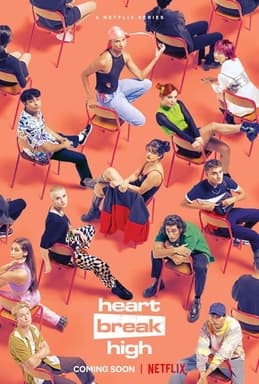
I want to say I came to the Heartbreak High reboot with an open mind, but I did not. I came to it the way you come to anything that carries the name of something you loved when you were fifteen: already braced, already protective, already rehearsing the speech about how it will not be the same. I pressed play on a Wednesday night in my living room with the lights off and the laptop balanced on a cushion and I watched the opening sequence and I thought, this is not for me. And then I kept watching, because the thing about nostalgia is that it does not let you stop.
The original Heartbreak High ran from 1994 to 1999. It was set in a fictional high school in Sydney and it dealt with things that Australian television, at that time, mostly avoided: race, class, sexuality, the specific texture of being young in a country that preferred not to look too closely at what its teenagers were actually doing. I watched it in my bedroom on a television the size of a microwave. I did not think of it as progressive or groundbreaking or culturally significant. I thought of it as the show that came on after dinner, the one where people who looked a bit like the kids at my school said things that the kids at my school would never say out loud.
I remember Drazic. Everyone remembers Drazic. Callan Mulvey played him with the kind of intensity that made you believe a seventeen-year-old could contain that much anger and still function. I remember Anita, and Katerina, and the way the show treated its characters from non-Anglo backgrounds not as tokens but as people with families and obligations and internal lives that the camera took seriously. I remember thinking, without having the language for it, that the show respected me enough to tell me something true.
What Netflix built on top of the name
The 2022 reboot keeps the school. It keeps the name. It keeps almost nothing else, and I think that is probably the right decision, even though it felt, at first, like a betrayal. The new Heartbreak High is louder, faster, more saturated. Its colour palette is neon where the original was grey and brown. Its characters speak with a fluency about gender and identity and consent that the original cast could not have managed, not because they were less intelligent but because the vocabulary did not exist in public yet. The reboot knows things. It is confident in its knowing.
I watched four episodes in a row and I understood, with a clarity that surprised me, that the show was doing something I could recognise as good without being able to feel it as mine. The characters were vivid. The writing was sharp. The performances, particularly Ayesha Madon as Amerie, had a looseness and emotional honesty that the original sometimes struggled to achieve. The reboot is, by most of the measures I would normally apply, a better show. Better acted, better written, more visually interesting, more willing to sit with complexity.
And I felt nothing. Not nothing, exactly. I felt admiration, and a sort of respectful distance, the way you might feel watching someone else’s home videos and recognising that the people in them are happy without being able to access that happiness yourself.
The problem with remembering
Here is what the reboot did to my memory of the original: it sharpened it and ruined it at the same time. Before the reboot existed, I remembered Heartbreak High the way you remember most things from when you were fifteen. Vaguely. Warmly. In fragments that did not need to connect. I remembered how it felt to watch it, not what it actually looked like. The reboot forced a comparison, and the comparison was unkind to the original, and because the original lived in my memory as something formative, the comparison was unkind to me.
I went back and watched a few episodes of the 1990s version after finishing the first season of the reboot. They were not as good as I remembered. The pacing was slower. Some of the dialogue was clunky. The production values were modest in a way that, at the time, I read as gritty and realistic and now read as simply cheap. The performances I remembered as raw and powerful were, some of them, just raw. The show was good for what it was and when it was, and what it was and when it was is gone.
This is what nostalgia costs. Not the disappointment of discovering that the thing you loved was imperfect. You always knew that, on some level. The cost is that you can no longer not know it. Before the reboot, the original existed in a sealed chamber in my memory where it could not be compared to anything. The reboot broke the seal.
Who the show belongs to now
I have read reviews of the reboot written by people in their late teens and early twenties, and they write about it the way I wrote about the original: as a thing that sees them. A show that speaks their language and takes their lives seriously and puts people who look like them on screen dealing with problems that feel real. They write about Amerie and Quinni and Darren the way I wrote about Drazic and Anita. With recognition. With gratitude. With the particular intensity of someone encountering a version of themselves on television for the first time.
I cannot begrudge them that. I would not want to. But reading their responses made me understand something that I had been avoiding, which is that a show cannot belong to two generations at once. The new Heartbreak High does not dishonour the original. It simply does not need it. The old show is a footnote in the new show’s story, a thing that came before, a name on a lineage chart. The reboot’s audience does not watch it thinking about what came before. They watch it thinking about right now.
What I am left with
I finished the first season of the reboot and I have not gone back to it. Not because I disliked it. Because watching it made me feel old in a way that was precise and unarguable, and I did not enjoy that feeling, and I do not think I am obligated to.
The thing I keep coming back to is this. The original Heartbreak High taught me that Australian television could be honest about being young. The reboot taught me that I am no longer young, and that the honesty the show offers is not directed at me any more. Both lessons are true. Both lessons are useful. But the second one sits differently in the body. It is heavier and less romantic and it does not come with a theme song.
I still think about Drazic sometimes, standing in a corridor with that expression on his face, the one that meant he was about to do something reckless. I think about the version of me who watched him and believed that kind of intensity was sustainable. The reboot did not take that away from me. It just showed me what it looks like from the outside, which is: smaller than I thought, and further away, and belonging to someone else now. That is what nostalgia costs. Not the thing itself. The distance.

Mara writes essays. She came to film writing from a decade of literary criticism and still reaches, sometimes, for a novel before she reaches for a shot list. She lives in the inner north of Melbourne and does not explain which city that is.
MORE BY MARA DENG →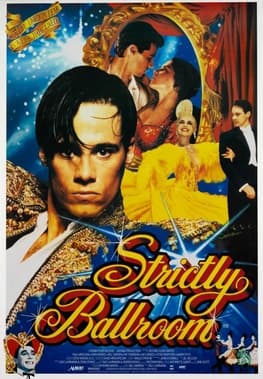
Strictly Ballroom is a film about who is allowed to teach the steps
Baz Luhrmann's 1992 comedy is sold as a story about dance. It is also a story about an Australian champion who has to be taught his own steps by a Spanish-Australian family in their own house.

Looking for Alibrandi was the first Australian story handed to me as mine
It was not my family's story. It was the shape of my family's story, put on a screen in a country that had never once bothered to hold it before.
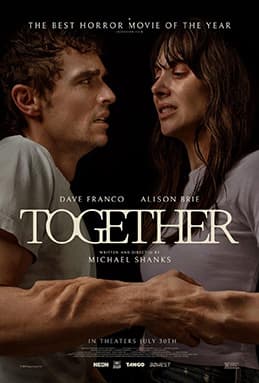
Together is an Australian horror film that learned to say trunk
Michael Shanks made a Melbourne body horror film about two people fusing into one, then sanded the Australian out of it. I keep looking for the seam.