Foe builds a marriage out of wheat fields and then replaces the husband
Garth Davis set a science-fiction film in the Australian wheat belt and made the loneliness more frightening than the technology.
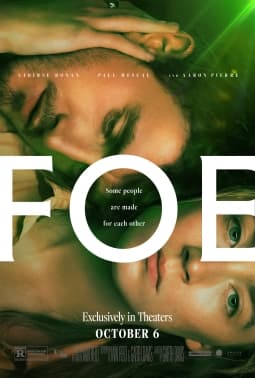
The wheat field in Foe is not a symbol. I want to say that upfront because the film has been read primarily as allegory, as though the landscape is doing metaphorical work and the marriage is standing in for something else and the science-fiction premise is a vehicle for a more respectable set of concerns. None of this is wrong, exactly, but it misses what Garth Davis is actually doing with the picture, which is simpler and stranger than allegory. He is using the Australian wheat belt as a container for a story about what happens when two people have been alone together for so long that the silence between them has become structural, load-bearing, and then a stranger arrives and offers to replace one of them. The wheat is not a symbol. The wheat is the world. It goes to the horizon in every direction, golden and uniform and indifferent, and the two people living inside it have shaped their entire emotional architecture around its presence. When the government man comes to the door, the landscape does not change. The people do. The wheat keeps growing.
The premise is spare. Junior (Paul Mescal) and Hen (Saoirse Ronan) live on a remote farm in a near-future Australia where the climate has shifted and the cities are struggling and the government is recruiting civilians for a space programme. Junior is selected. Before he leaves, the government will install a substitute in his place: an artificial version of Junior, built from his behavioural data, designed to keep Hen company during his absence. The substitute is not a robot in the industrial sense; it looks like Junior, speaks like Junior, carries Junior’s memories and habits and the small physical tics that constitute a person’s legibility to the person who lives with them. The question the film asks is not whether the substitute is real. The question is whether the distinction between the real and the substitute matters to the woman who has to live with both.
The farm as science fiction
What Davis understands, and what I think many viewers missed because the film was marketed as a thriller and received as a disappointment, is that the Australian landscape is already science fiction. The wheat belt is an engineered environment. It is not wilderness; it is not nature in any unmediated sense. It is a vast, flat, human-made monoculture that extends across hundreds of kilometres and produces a particular kind of isolation that is different from desert isolation or mountain isolation or island isolation. It is the isolation of repetition. The horizon looks the same in every direction. The seasons cycle through the same colours. The work is the same work, performed in the same order, year after year, and the two people doing it have nobody else to talk to.
Davis films this with a restraint that borders on the static. The camera holds on the farmhouse from a distance, the building small against the field, the sky enormous and flat and offering no variation. Interior shots are lit with the amber glow of a house that has not been renovated in decades; the furniture is sparse, the walls are bare, and the sense of enclosure is overwhelming despite the fact that the world outside is limitlessly open. This is the paradox of rural Australian isolation and Davis nails it without commentary: the openness is the enclosure. There is nowhere to go because everywhere looks the same.
Two performances held at the same pitch
Mescal plays Junior as a man who has been hollowed out by routine. He is not cruel; he is not dramatic; he is simply present in the way that someone is present when they have stopped expecting anything to change. His body language is heavy, settled, the posture of a man who gets up at the same time every morning and goes to bed at the same time every night and fills the hours in between with work that does not require thought. When the government man, Terrance (Aaron Pierre), arrives with the news of Junior’s selection, Mescal registers the information not as shock or excitement but as a kind of blankness, a pause in the routine that he does not yet know how to fill.
Ronan is operating in a different register entirely. Hen is alert in a way that Junior is not; she watches, listens, tracks the shifts in the room with the precision of someone who has been paying attention to everything for years because there is nothing else to pay attention to. Her performance is built around small recalibrations: the way she holds her glass when Terrance is speaking, the angle of her gaze when Junior enters a room, the fractional delay before she responds to a question. These are not large gestures. They are the accumulated evidence of a woman who has been conducting an internal audit of her marriage for a long time and has arrived at conclusions she has not yet shared.
The Lion comparison
Davis’s first feature, Lion (2016), also used Australian space as a central dramatic element, but the treatment was opposite in almost every respect. Lion is a film about the vastness of Australia as seen by someone who crossed it as a child and then spent decades trying to cross it again; the landscape is charged with the energy of search, of movement, of the desperate need to locate a point of origin in a country too large to comprehend. In Foe, nobody is searching for anything. The landscape is not vast in the expansive, romantic sense; it is vast in the claustrophobic sense, the sense in which too much space and too little variation produce the same psychological effect as confinement.
The shift tells you something about Davis as a filmmaker. He is interested in what Australian geography does to the people inside it, but he is not interested in a single answer. Lion says the landscape separates. Foe says the landscape compresses. Both are true, and the fact that they contradict each other is the point; the same country produces radically different kinds of loneliness depending on whether you are trying to find your way back or trying to find a reason to leave.
The burial
Foe was released by Amazon Studios in October 2023. It grossed approximately $1 million worldwide against a reported budget of $30 million. Reviews were mixed to negative. The theatrical run was brief, and the film was available on Prime Video within weeks. By the time most people heard of it, it was already streaming, which is to say it was already buried; the economics of a streaming platform are such that a film with disappointing theatrical numbers becomes content, catalogued alongside thousands of other titles, discoverable only by algorithm or accident.
Whether anyone saw it is a question that matters because the film is doing something genuinely unusual with its genre and its landscape and its performances, and the conversation it deserved never happened. Foe is not a perfect picture. The pacing in the second act sags; the science-fiction mechanics are underdeveloped; the revelation, when it comes, is less surprising than the film seems to think. But the marriage is real, and the wheat field is real, and the loneliness is real, and Davis films all three with a patience and a specificity that most science-fiction cinema does not attempt. The film asks what it means to be replaceable, and it sets the question in a landscape where everything is already identical, where the rows of wheat are indistinguishable from each other, where the horizon offers no landmark and no direction. The answer it arrives at is quiet, unsettling, and very Australian: sometimes the substitute is close enough, and sometimes close enough is the most frightening outcome of all.
Bronte writes long-form criticism of Australian cinema and the international art films that feed into it. She was on the ground at Cannes in 2019 and has not entirely forgiven the festival for 2020. Patient with slow films; impatient with tidy ones.
MORE BY BRONTE HAUGHEY →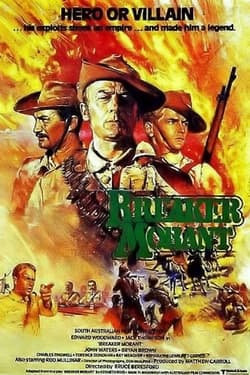
Breaker Morant and the country that adopted its scapegoat
Bruce Beresford's 1980 courtroom drama made an English-born soldier into an Australian martyr, and the picture's argument about empire has outlived its historical certainties.
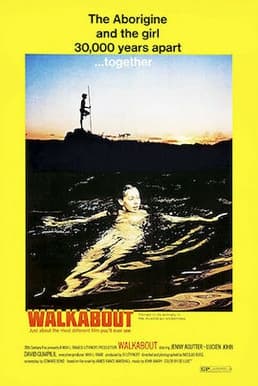
Walkabout is a British film about a country it never claims
Nicolas Roeg's 1971 picture is claimed as an Australian classic, though it was made by a Londoner, financed by two Americans and sold by 20th Century Fox. Its best argument is how little it pretends otherwise.
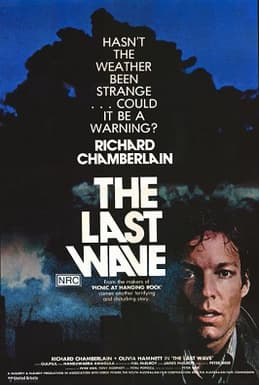
The Last Wave and the rain Sydney could not explain
Peter Weir's 1977 film puts a corporate lawyer in a drowned city and asks what a settler place owes to the ground and weather beneath it.