Australian films premiere in January and arrive in cinemas in October and nobody sees the problem
The gap between a film's festival premiere and its local theatrical release is where audience interest goes to die.
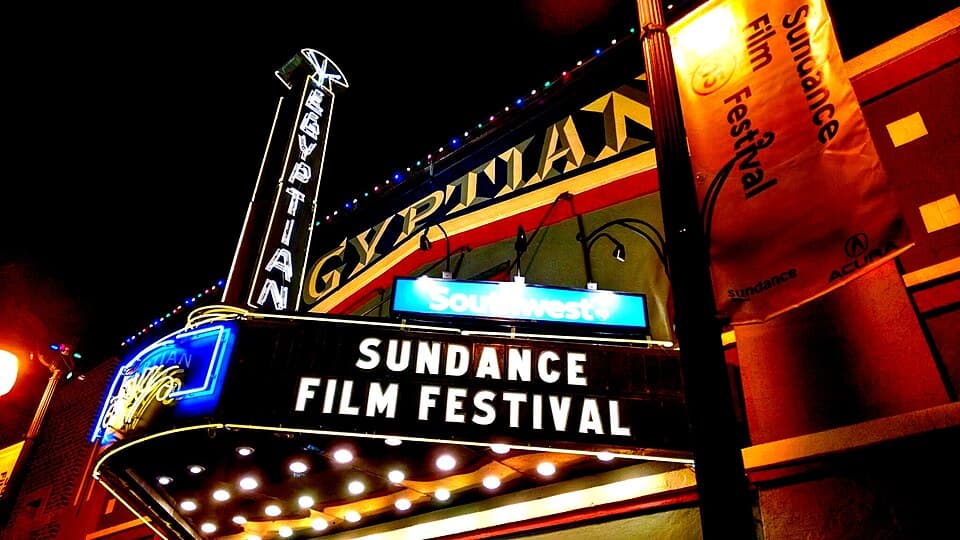
I reviewed Shayda at Sundance in January 2023. Noora Niasari’s film about an Iranian mother navigating a women’s refuge in Melbourne while seeking independence from her abusive husband. It was specific and measured and beautifully performed by Zar Amir Ebrahimi, and I wrote about it with the kind of urgency that comes from seeing something you want other people to see immediately. My readers could not see it. Not for nine months. Shayda did not open in Australian cinemas until October 2023, by which point the conversation I was trying to start had been and gone, replaced by dozens of other conversations about dozens of other films, the way film conversations always are: fast, disposable, already looking ahead.
This is not a story about one film. It is a pattern, and the pattern is so consistent that the people inside the distribution system have stopped noticing it, the way you stop noticing the hum of a refrigerator. An Australian film premieres at an international festival. There is press coverage. There are reviews. There is, for a brief window, genuine public curiosity about the work. And then the window closes, because the film will not be available in Australian cinemas for another six, eight, ten months, and by the time it arrives, the curiosity has curdled into vague recognition. Oh, that one. I heard about that. I meant to see it.
The timeline that kills momentum
Consider the mechanics. A film premieres at Sundance in January. The premiere generates reviews, interviews, social media attention. If the film is good and the coverage is warm, there is a spike of interest. People hear the title. They see the trailer. They think: I want to watch that. Then nothing happens, because the film does not yet have an Australian distributor, or it does have one but the distributor has slotted it into a release calendar that will not open up until the second half of the year, after the blockbuster season, after the school holidays, after the other films that were already scheduled.
The audience, in this gap, does not pause and wait. The audience forgets. Not maliciously, not even consciously. There is simply too much else happening. The streaming platforms release new content weekly. The cinema chains programme other films. The cultural conversation, which moves at the speed of social media, has cycled through several complete rotations by the time the delayed film finally appears on a screen in Newtown or Carlton or Leederville. The film arrives into silence.
Talk to Me, the Philippou brothers’ horror debut, premiered at the Adelaide Film Festival in late 2022, then played Sundance in early 2023, and had a US theatrical release in July 2023 through A24. It became a significant commercial hit in America, earning over $90 million globally. Its wide Australian release came after the American run. An Australian film, made by Australian filmmakers, set in Adelaide, was available to American audiences before Australian audiences could see it in their own cinemas. The logic of international distribution made this inevitable. The absurdity of it remains.
Why it works this way
I want to be fair to the distributors, because the system is not irrational. It is just optimised for something other than audience access. The festival-to-release pipeline exists because festivals function as marketplaces. A film premieres at Sundance or Venice or Toronto not primarily for the audience in the room but for the buyers in the room. Sales agents use the premiere to secure distribution deals in multiple territories. Australian distributors attend these festivals, evaluate the slate, and acquire films they believe they can release profitably. The acquisition process takes time. The release schedule is planned months in advance. The marketing spend needs to be concentrated, not spread thin.
All of this is true and all of this is reasonable and all of this results in Australian audiences waiting the better part of a year to see a film that was made down the road from where they live.
There is also the festival strategy itself. Filmmakers and producers choose to premiere at international festivals because the prestige of a Sundance or Venice premiere translates into better distribution deals, better press, and a stronger position in the awards conversation. An Australian film that premieres domestically first, at Sydney Film Festival or Melbourne International, may struggle to attract the same level of international buyer interest. The international premiere is a strategic investment in the film’s commercial future, and it works, except that the investment is paid for by the domestic audience, who are asked to be patient while the rest of the world gets to see their film first.
The streaming question
The obvious response, the one that comes up in every panel discussion at every screen industry conference I have attended in the past five years, is streaming. If the theatrical window is the problem, why not release directly to a platform? Why not make the film available digitally the same week it premieres at the festival? Day-and-date release. Cut the gap. Meet the audience where the interest is.
The arguments against this are not trivial. Theatrical release still matters for cultural visibility. A film that opens in cinemas gets reviewed, profiled, discussed in a way that a film dropped onto a streaming platform frequently does not. The cinema release is itself a marketing event. For Australian films, which already struggle for attention in a marketplace dominated by American studio product, the theatrical window is one of the few mechanisms that generates the kind of coverage that makes people aware the film exists at all.
But the theatrical release only works as marketing if people actually attend. And the nine-month delay between festival premiere and local cinema opening means the marketing effect of the premiere has long since dissipated. The distributor is left spending money to reintroduce a film that the attentive audience already knows about and the casual audience has already forgotten. The theatrical release, in this scenario, is marketing a memory.
What it feels like from here
I write about Australian film for a living, and the festival-to-release gap is the single most frustrating structural feature of the industry I cover. I see a film in January. I write about it in January. My readers, the people who trust me to tell them what is worth their time and money, cannot act on that recommendation until October. By October, I have written about forty other films. The January review is buried in the archive. The reader who might have bought a ticket in February, when the recommendation was fresh and the enthusiasm was specific, is now choosing between the October release and whatever else opened that week, and the whatever else has a fresher marketing campaign and a more recent place in the conversation.
I do not have a clean solution. I do not think day-and-date streaming is the answer, because I believe theatrical exhibition matters. But I also do not think the current system serves the films it is supposed to support. The gap is too long. The conversation moves too fast.
The silence between premiere and release
What happens in those nine months? Nothing, mostly. The film exists in a liminal space. It has been seen but it is not available. It has been reviewed but it cannot be watched. It is present in the discourse and absent from the marketplace, and this combination is lethal for audience interest, because interest without access does not accumulate. It decays.
I think about Shayda often. Not because it is the most important Australian film of its year, though it might be, but because it represents something I find genuinely painful about the way this industry treats its own audience. Noora Niasari made a film about a woman trying to be free, and the distribution system put that film in a holding pattern for nine months, and by the time it landed, the audience that might have carried it to a wider viewership had already moved on. The film deserved better. The audience deserved better. The filmmaker, who did everything right, was failed by a timeline that nobody in the system has the power or the incentive to change.
The refrigerator hums. Nobody notices. The films keep premiering in January and arriving in October, and the audiences keep not showing up, and the industry keeps wondering why Australian films struggle at the local box office, and the answer is right there in the calendar, nine months wide, and nobody sees the problem.

Mara writes essays. She came to film writing from a decade of literary criticism and still reaches, sometimes, for a novel before she reaches for a shot list. She lives in the inner north of Melbourne and does not explain which city that is.
MORE BY MARA DENG →
What is Australian film criticism for if the audience is not reading it
The masthead runs on conviction, the readership is small, and the question of who we are writing for has not gone away.
The cinema is not dying but it is learning to share the room
The argument between cinema and streaming was never about screens; it was about who gets to decide what watching means.
Who is Australian cinema for and does it know
The question is not whether Australian films are good enough; it is whether the industry has decided who it is talking to.