Frances O'Connor stepped behind the camera and made a Bronte film that trusts the wind
The Australian actor's directorial debut is a Bronte biopic that cares more about weather than biography, and the instinct is right.
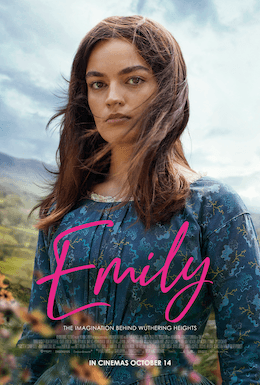
There is a tradition, well-established and mostly tedious, of literary biopics that treat their subjects as vessels for their own bibliography. The writer sits at a desk. The writer dips a pen. The writer stares out a window and the audience is invited to understand that what is happening behind those eyes is the future of English literature. Frances O’Connor’s Emily is aware of this tradition and has decided, with a conviction that feels almost physical, to walk away from it and into the weather.
O’Connor, who spent decades in front of cameras in films ranging from Mansfield Park to AI: Artificial Intelligence to the quieter registers of Australian independent cinema, has chosen for her directorial debut a subject that would seem to invite exactly the kind of reverent portraiture she refuses. Emily Bronte wrote one novel. That novel changed English fiction. She died at thirty. The outline alone is enough to generate the usual prestige machinery: the candlelit interiors, the sisterly whispers, the sense of genius pressing against the constraints of its era. O’Connor is not interested in any of this, or rather, she is interested in it only insofar as it can be rendered as something felt in the body rather than narrated from the biography.
A body on the moors
Emma Mackey plays Emily not as a writer becoming a writer but as a person who cannot stay indoors. The performance is built on movement. She walks. She runs. She lies in grass. She stands in wind that is clearly real wind, not the polite breeze of a period drama but the kind of lateral gale that pulls your hair sideways and makes your eyes water. Mackey’s face in these scenes is doing something interesting; it is not performing rapture or poetic sensitivity. It is simply being outside, registering the cold and the space and the scale of the landscape, and the film trusts this enough to let it carry entire sequences without dialogue.
This is a gamble. Period biopics earn their credibility through language, through the deployment of archaic diction and significant glances and scenes in which the protagonist says something that the audience recognises as a seed of the famous text. Emily has some of this. There is a scene involving the early composition of Wuthering Heights that is handled with appropriate gravity. But O’Connor consistently undercuts the literary machinery by returning to the physical. Emily’s relationship with the moors is presented not as metaphor but as fact: she goes outside because outside is where she can breathe, and the picture earns its emotional weight from the accumulation of these departures rather than from the writing scenes themselves.
The Bronte household as pressure system
The parsonage at Haworth is shot as a space of compression. The rooms are small. The ceilings are low. The light is the colour of old paper. Charlotte (Alexandra Dowling) and Anne are present and accounted for, as is Branwell (Fionn Whitehead), whose decline into addiction the film handles with less sentimentality than most Bronte adaptations manage. But the household dynamics serve a structural purpose that goes beyond character. The parsonage is the inside; the moors are the outside; and the film’s rhythm is built on the oscillation between the two. Every interior scene generates a pressure that the landscape scenes release, and O’Connor orchestrates this with an instinct that feels more directorial than writerly, more concerned with spatial rhythm than with narrative arc.
There is a subplot involving a relationship between Emily and William Weightman (Oliver Jackson-Cohen), the local curate, which has drawn criticism for its lack of historical basis. The criticism is fair in the narrow sense that there is no evidence for this relationship, but it misses what O’Connor is doing with it. The romance is not an attempt to explain Wuthering Heights through autobiography. It is an attempt to give Emily a physical life, to insist that the woman who wrote Heathcliff into existence was herself a person with desires and skin and a body that responded to proximity. Whether this specific proximity occurred is beside the point. The register is emotional rather than archival.
An Australian eye on English landscape
What strikes me most about Emily is how Australian it feels, despite being set entirely in Yorkshire. O’Connor grew up in Perth and worked across Australian and international productions for twenty years before making this film, and you can feel that experience in the way she photographs landscape. There is a tradition in Australian cinema of treating the land as a character, not in the twee sense of giving it a personality but in the structural sense of letting it determine the mood and pace of the picture. Peter Weir understood this. Jane Campion understood this, though she made her landscape film in New Zealand. O’Connor brings the same sensibility to the moors, and the result is a Bronte adaptation that feels less like heritage cinema and more like a film about a woman and a place and the relationship between the two.
Instinct over fidelity
The debut is not flawless. The pacing in the second half grows uneven, and the film’s determination to avoid conventional biography occasionally leaves it without enough narrative scaffolding to support its emotional ambitions. There are scenes that feel like they belong in a different, more conventional version of the story, and their presence next to the wilder, more instinctive sequences creates a tonal inconsistency that a more experienced director might have smoothed out.
But the instinct is right. O’Connor has made a film that understands something essential about Emily Bronte, which is that the writing came from the body and not the other way around. Wuthering Heights is a novel of weather and violence and physical obsession, and any biopic that reduces its author to a quiet woman with a pen is missing the point. Emily does not miss the point. It stands in the wind and lets the wind do the work, and if that sounds like a small achievement, it is worth remembering how many literary biopics cannot manage even this. They give you the desk. They give you the pen. They give you the window. O’Connor gives you the moor, and the cold, and a woman who would rather be outside than anywhere else, and the picture is better for every minute it spends out there with her.
Bronte writes long-form criticism of Australian cinema and the international art films that feed into it. She was on the ground at Cannes in 2019 and has not entirely forgiven the festival for 2020. Patient with slow films; impatient with tidy ones.
MORE BY BRONTE HAUGHEY →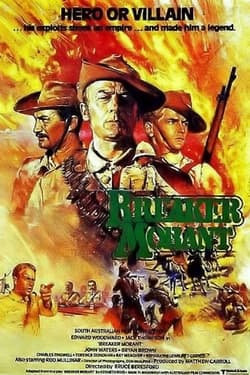
Breaker Morant and the country that adopted its scapegoat
Bruce Beresford's 1980 courtroom drama made an English-born soldier into an Australian martyr, and the picture's argument about empire has outlived its historical certainties.
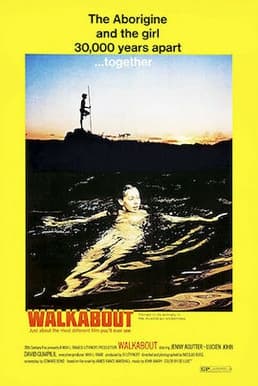
Walkabout is a British film about a country it never claims
Nicolas Roeg's 1971 picture is claimed as an Australian classic, though it was made by a Londoner, financed by two Americans and sold by 20th Century Fox. Its best argument is how little it pretends otherwise.
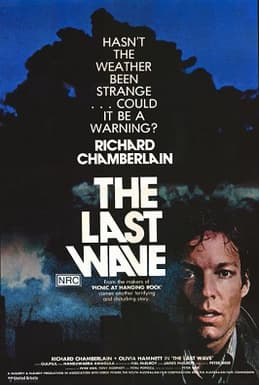
The Last Wave and the rain Sydney could not explain
Peter Weir's 1977 film puts a corporate lawyer in a drowned city and asks what a settler place owes to the ground and weather beneath it.