Australian composers spent lockdown scoring podcasts and games and it changed how they work
When the films stopped, the composers did not; they just scored different things, and the habits they built in lockdown stayed.
Five weeks into lockdown and the film composers I know are all scoring something. Just not films. The productions that were in post have paused or slowed to a pace that makes delivery dates meaningless. The productions that were in pre have been postponed indefinitely. The pipeline that feeds Australian screen composers, a pipeline that was never robust to begin with, has effectively stopped. But the composers have not. They have done what freelancers always do when one income stream dries up: they have found another.
The pivot, for most of them, has been sideways rather than down. Podcasts. Video games. Web series. Branded content. Interactive installations that now exist only as prototypes on someone’s laptop. The work is different in ways that are structural, not just aesthetic, and I suspect the habits being formed in these five weeks will outlast the lockdown that produced them.
Scoring for podcasts
The podcast work has been the most visible shift. Several Australian composers who ordinarily work in film and television have taken commissions from podcast producers in the past month, and the form demands a fundamentally different approach to composition. A podcast score has no image. There is no picture to sync to, no cut to hit, no facial expression to underline or counterpoint. The score accompanies a voice, and the voice is the primary medium, and the composer’s job is to create an emotional context that supports the narration without competing with it.
This is a constraint that produces interesting music. Film composers are trained to respond to visual information: the duration of a shot, the rhythm of an edit, the movement within a frame. Remove the image and the composer has to find other structural anchors. Tempo becomes more important. Texture becomes more important. The relationship between the score and the silence around it becomes the primary compositional decision, because in a podcast there is no visual information to fill the gaps and the music is either present or it is absent and the transition between those two states is audible in a way that it is not in a film, where the eye compensates for what the ear loses.
The composers I have spoken to describe the podcast work as liberating and disorienting in roughly equal measure. Liberating because the absence of image frees them to write music that is more abstract, more textural, less tied to the literal content of a scene. Disorienting because the feedback loop is different. A film composer writes a cue, spots it against picture, adjusts, rewrites, spots again. A podcast composer writes a cue, sends it to a producer, and waits. The image is not there to confirm or deny the musical choices. The composer has to trust the music in isolation, which is a different kind of confidence from the one that film scoring requires.
Games and interactive scoring
The game work is a smaller category but a more radical departure. Two composers I know have taken short-term contracts with independent game studios in Melbourne, writing adaptive scores that respond to player behaviour rather than following a fixed timeline. The technical requirements are different: the music has to loop seamlessly, transition between states without audible seams, and maintain emotional coherence across sessions that might last five minutes or five hours.
For a film composer, the fixed timeline is the fundamental unit of composition. A cue starts at a specific timecode and ends at another. The duration is known. The emotional arc is determined by the edit. Adaptive scoring removes all of this. The composer writes modules, fragments, layers that can be assembled in real time by the game engine, and the result is music that is composed but not fixed, structured but not linear. It is closer to systems design than it is to traditional composition, and the composers who are doing it describe a learning curve that is steep, humbling, and genuinely exciting.
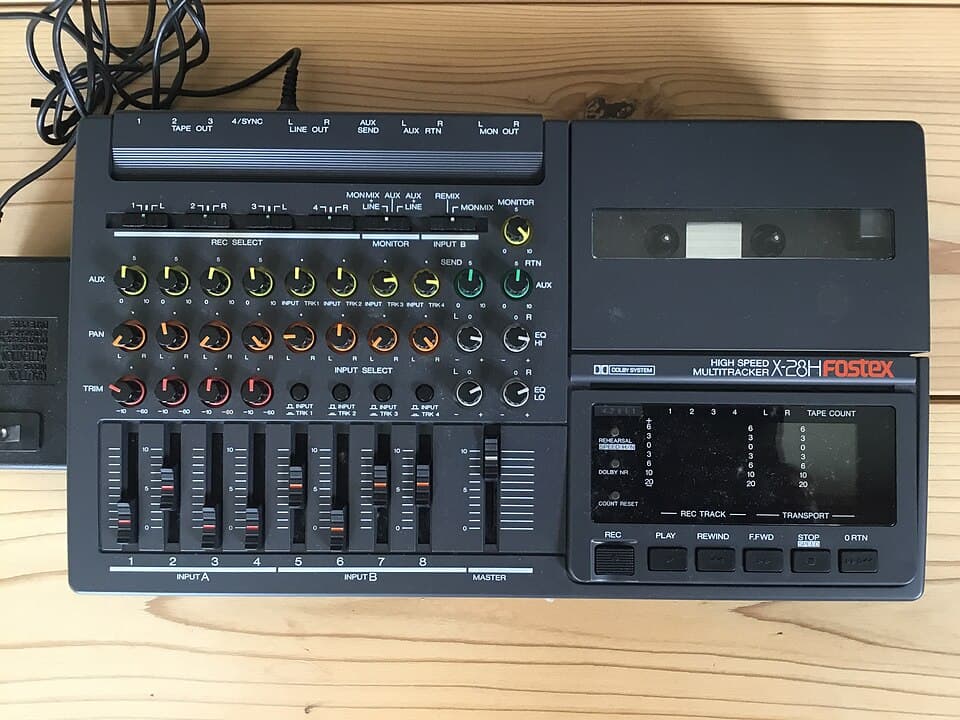
The tools are different too. Game audio middleware, interactive music systems, horizontal and vertical layering techniques that have no equivalent in film post-production. The composers are learning new software, new workflows, new ways of thinking about how music relates to time. They are doing this from home studios, on laptops and desktop setups that were built for film work and are being repurposed for a medium with different technical requirements.
Whether the habits will last
The question that interests me is not whether Australian composers can score podcasts and games. They obviously can. The question is whether the habits and tools they are acquiring now will persist after the film pipeline restarts, and what happens to their film work if they do.
There are two possibilities. The first is that the lockdown pivot is temporary, a survival strategy that will be abandoned the moment the films start up again, and the composers will return to their established workflows as though nothing happened. The second is that the experience of working in other media changes how they approach film scoring, that the podcast work teaches them something about texture and restraint and the game work teaches them something about modularity and responsiveness and these lessons carry back into their film practice in ways that are audible.
I think the second possibility is more likely, because creative habits, once formed, are difficult to unlearn and because the tools are sticky. A composer who has spent two months working with adaptive audio middleware is not going to forget that the technology exists when a film brief arrives. The temptation to apply interactive techniques to linear scoring, to think in layers and modules rather than fixed cues, to write music that can breathe and shift rather than music that follows a locked edit, will be there, and some composers will act on it.
The pandemic did not create these alternative pathways. Podcast scoring, game music, branded content, these all existed before COVID and Australian composers were already working in them, sporadically, as supplements to their film and television income. What the pandemic did was compress the timeline. It forced an entire cohort of composers into these media simultaneously, and the collective experience is producing a collective shift in practice that would have taken years to happen organically.
The films will come back. The pipeline will restart. But the composers who return to it will not be the same composers who left, and the scores they write next will carry the fingerprints of the work they did when the screens were dark.
Kieran writes about what films sound like. Played in a band that nearly got signed in 2012 and has been thinking about attack and decay ever since. Devoted to Warren Ellis, Amanda Brown, and the quiet work of sound editors nobody interviews.
MORE BY KIERAN BOUSTANY →
Australian musicians played to laptop cameras and the sound changed
The venue closed, the laptop opened, and the room the mic was in became a bedroom.
Australian film music in 2026 sounds closer to the ground than it used to
The orchestras are smaller, the budgets are tighter, and the music is better for both.
The last Australian film scores released before cinemas closed
Three scores dropped in the two weeks before every screen went dark, and nobody heard them the way they were designed to be heard.