Australian cinema attendance recovered to 78 per cent of pre-COVID levels and then stopped
The audience came back, but not all of it, and the missing 22 per cent is not coming.

Australian cinema attendance in 2022 reached approximately 62 million admissions, which represents 78 per cent of the 79.5 million admissions recorded in 2019. The trajectory of that recovery tells a clear story: attendance jumped sharply in the second half of 2021 as lockdowns ended, rose steadily through 2022, and then flattened. The curve is not declining. It is not climbing. It has found a level and settled there with the finality of something that has made its decision.
The question facing the exhibition sector in early 2023 is whether 78 per cent is a way station or a destination. The data suggests it is a destination.
Who came back
The demographic breakdown of the recovery is more revealing than the aggregate number. Audiences aged 55 and over returned to cinemas at rates close to their 2019 levels. Family audiences, measured by admissions to G and PG-rated films, recovered to approximately 85 per cent. The older cohort missed cinemas. They had the habit, the disposable income, and the preference for a shared viewing experience that streaming does not replicate. They came back.
The 18-to-34 cohort did not. Admissions in this age bracket sit at approximately 61 per cent of 2019 levels, and the trend line is flat. This is the demographic that adopted streaming most completely during the pandemic, that has the strongest attachment to at-home viewing, and that is most price-sensitive to the rising cost of a cinema ticket. The average ticket price in Australia rose from $14.70 in 2019 to $16.90 in 2022, an increase of 15 per cent in three years. For a couple seeing a film on a Saturday night, the total cost, including parking, food, and tickets, now regularly exceeds $80. For a cohort whose median weekly income has not risen at the same rate, that is a calculation that increasingly resolves in favour of the couch.
The 18-to-34 group did not lose access to cinemas. They lost the habit. That is harder to reverse.
The cinema-chain response
The major exhibitors, Event Cinemas (owned by EVT Limited), Hoyts (owned by Wanda Group), and Village Cinemas (a joint venture between Village Roadshow and Event), have responded to the attendance plateau with a strategy that is consistent across all three chains: if you cannot sell more tickets, sell more expensive tickets.
Premium formats are the centrepiece of this approach. IMAX, Dolby Atmos, Vmax, Gold Class, and various proprietary large-format screens now account for a growing share of revenue. Event Cinemas reports that premium-format sessions generate roughly 2.4 times the revenue per seat of standard sessions. The investment in recliners, improved sound systems, and in-cinema dining is designed to convert a $16.90 transaction into a $35-to-$55 transaction. The audience is smaller. The revenue per head is larger. The maths, for now, works.
Food and beverage is the other lever. Candy bars have expanded into full kitchen operations at flagship locations. Licensed bars are increasingly common. The cinema experience is being repositioned as an evening out rather than a simple film screening, which is a rational response to a market where the film alone is no longer sufficient to justify the trip.
What it means for Australian films
The attendance plateau has specific implications for Australian films, which depend disproportionately on theatrical exhibition for visibility and revenue. An Australian drama released on 80 screens nationally is competing for the attention of an audience that is 22 per cent smaller than it was in 2019, and the missing 22 per cent skews young, which is the demographic most Australian dramas need to reach.
The arithmetic is unforgiving. If the total market is 62 million admissions and the Australian share is approximately 4 per cent (its recent average), that represents 2.48 million admissions for all Australian films combined. Spread across 30 to 40 releases per year, the average Australian film is drawing fewer than 70,000 admissions nationally. At an average ticket price of $16.90, that is a gross of approximately $1.18 million per film. After the exhibitor takes their share (typically 45 to 50 per cent), the distributor’s net is around $600,000. For a film budgeted at $5 million, that figure is not viability. It is a rounding error.
The baseline question
The screen industry’s policy framework was built for a market of 75 to 80 million annual admissions. The Producer Offset, the distribution guarantees, the exhibitor relationships, the marketing spend calculations: all of these assume a theatrical market of a certain size. If that market has permanently contracted to 62 million admissions, the framework needs recalibration.
This is not a popular observation. The exhibition sector prefers to frame the 78 per cent figure as a recovery in progress, pointing to the release calendar for 2023, which includes several franchise titles expected to perform strongly. The production sector prefers to emphasise the growth of streaming as a complementary revenue stream rather than a substitute. Both positions contain truth. Neither addresses the structural reality that the missing 22 per cent of the audience has found an alternative and is not coming back to look for what it left behind.
Seventy-eight per cent is not a crisis. It is a new normal. The sooner the industry builds its models around that number, the sooner those models will start producing answers that are useful rather than optimistic.

Odette covers the business of Australian screen. Previously a financial journalist. Reads every Screen Australia annual report the week it drops. Short paragraphs, long memory, never misses a figure.
MORE BY ODETTE MALOUF →
Australian production hit its 2023 peak in August and the pipeline was already cooling
Thirty-eight productions were in active photography in August, the highest since COVID, and by October the number will drop to twenty-two.
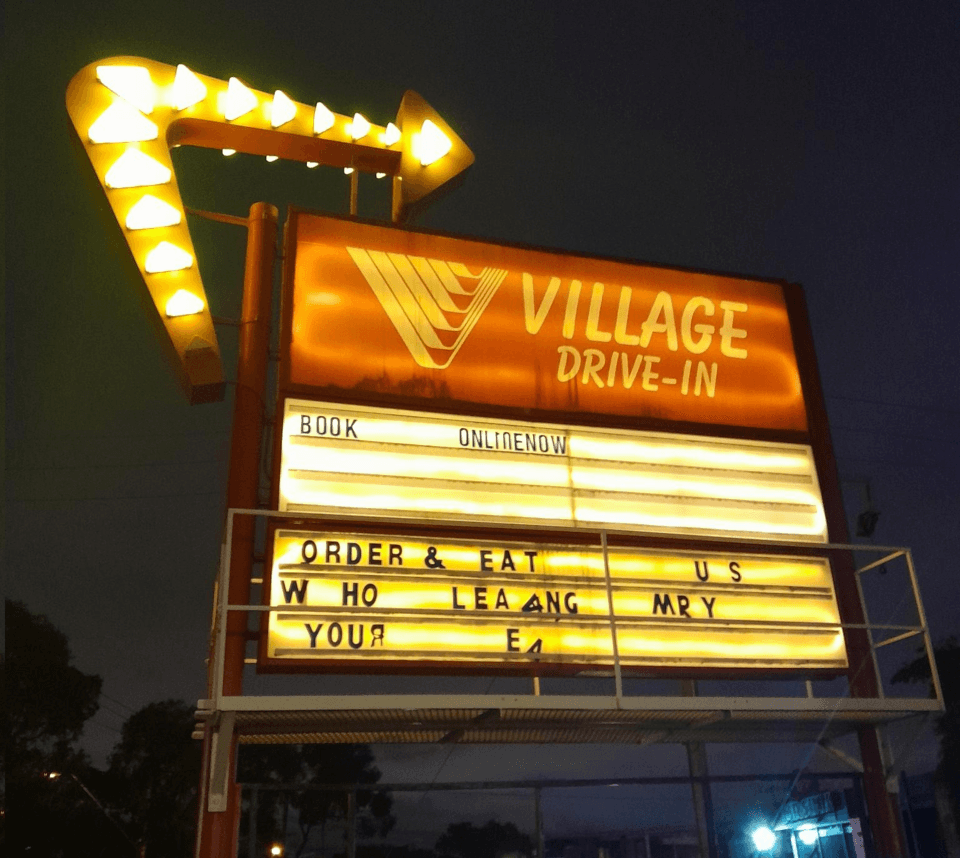
Drive-in cinemas came back during COVID and the nostalgia lasted exactly one summer
The Coburg Drive-In sold out every session in October, and by December the queues were back to normal, which is to say: short.
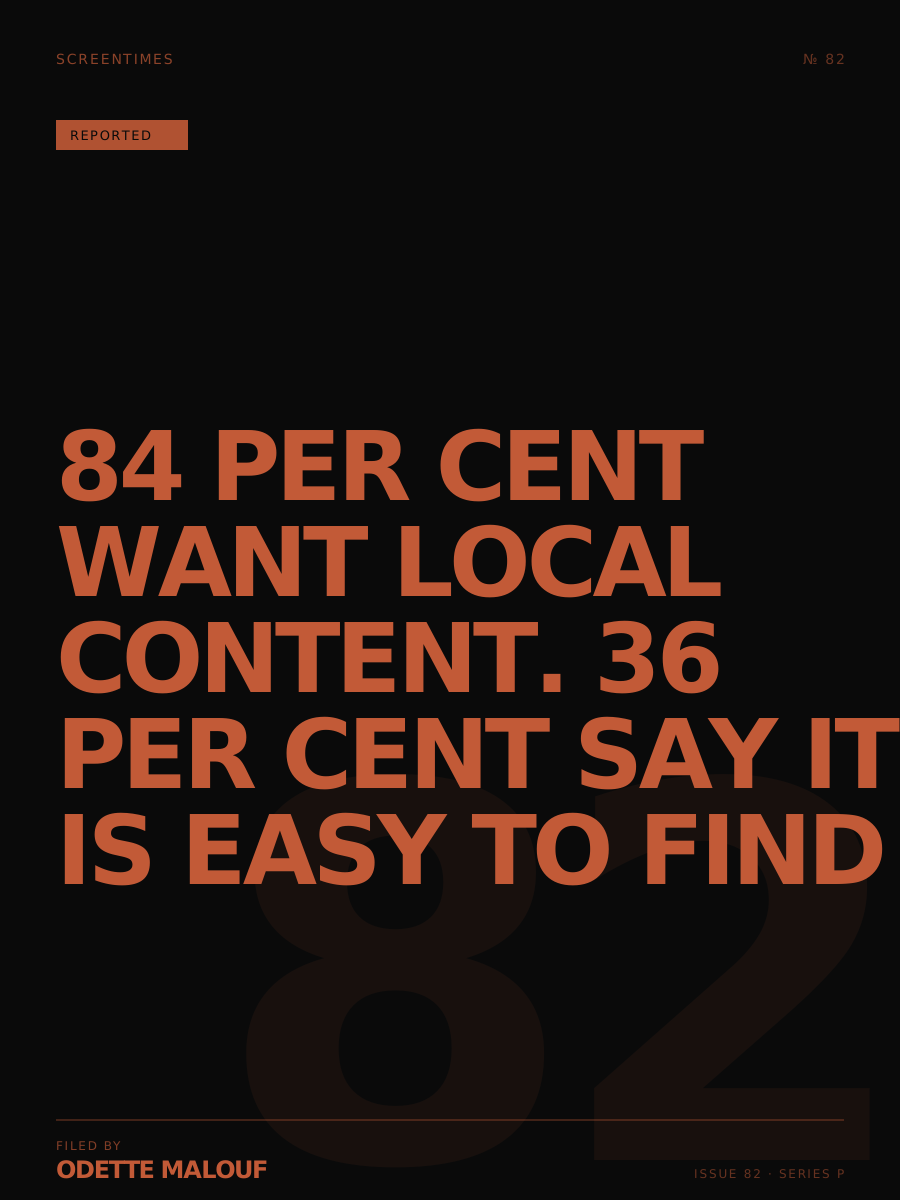
84 per cent want local content. 36 per cent say it is easy to find
Screen Australia's Screen Currency 2026 report finds strong demand for Australian screen stories and a discovery problem that no amount of production funding fixes on its own.