Drive-in cinemas came back during COVID and the nostalgia lasted exactly one summer
The Coburg Drive-In sold out every session in October, and by December the queues were back to normal, which is to say: short.
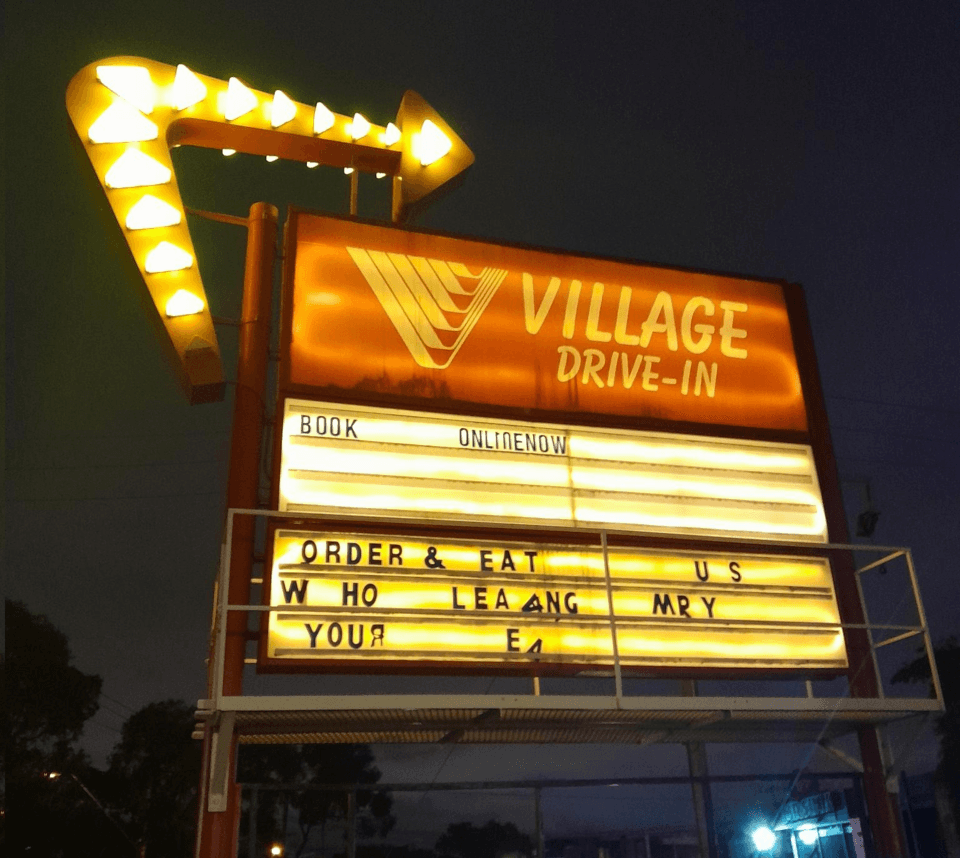
The Coburg Drive-In, on Newlands Road in Melbourne’s northern suburbs, had been operating for 55 years before 2020 handed it the best business conditions of its life. When indoor cinemas closed in March and reopened with heavy restrictions from June, the drive-in was one of the few exhibition venues in the country that could operate at something close to normal capacity. Cars are naturally socially distanced. The screen is outdoors. The snack bar can run a queue. By October, every session was selling out, and the waiting list for weekend screenings stretched to three hours.
The Coburg is not alone. Australia has roughly a dozen operational drive-in cinemas, a number that has been stable for a decade after decades of decline. The Yatala Drive-In on the Gold Coast, the Blacktown Drive-In in western Sydney, the Tivoli in Melbourne’s east, and a handful of regional sites in Queensland and Western Australia make up the remainder of a sector that peaked at over 300 venues in the 1960s and had, by 2019, been reduced to a curiosity.
COVID changed the maths. Temporarily.
The attendance spike
The numbers, where available, are striking. The Coburg Drive-In reported a 50 per cent increase in attendance between July and October 2020 compared to the same period in 2019. The Yatala, which has the advantage of Queensland’s earlier emergence from restrictions, reported similar figures from May onwards. The Blacktown Drive-In, operating under New South Wales regulations that permitted outdoor gatherings with density limits, saw its strongest trading period in at least a decade.
Media coverage amplified the effect. The drive-in revival became a reliable feel-good story during a period short on them. Television news covered the queues. Newspapers ran features. Social media did what social media does. The result was a feedback loop: coverage drove attendance, attendance drove coverage, and for a period between August and November 2020, the drive-in was not a relic but a venue.
What was on the screens
The programming tells a less romantic story. Drive-in cinemas in Australia are programmed largely through the same distribution channels as indoor cinemas, which means they are dependent on the major studios for product. In a normal year, the Hollywood release calendar delivers a steady supply of wide-release titles. In 2020, that calendar collapsed. Warner Bros., Disney, Paramount, and Universal all delayed their major releases, and the titles that remained in the pipeline were, with exceptions, second-tier product or holdovers from earlier in the year.
The Coburg’s October programme included Tenet (the Christopher Nolan film that became the global test case for theatrical release during a pandemic), The War with Grandpa (a family comedy starring Robert De Niro that would have gone unremarked in a normal year), and a selection of catalogue titles and retro screenings. The retro programming, which at the Coburg included Grease, Back to the Future, and Jurassic Park, accounted for a higher share of sessions than it would in a normal trading period, because there was not enough new product to fill the schedule.
Australian films were largely absent from drive-in screens, for the same reason they are largely absent from indoor screens: the distribution model favours wide-release studio titles, and drive-in operators, who run single-screen or dual-screen venues and depend on high turnover, programme accordingly.
The economics
A drive-in cinema is a low-margin operation in a normal year. The Coburg charges $16 per adult, $10 per child, with a per-car maximum. Revenue per session is constrained by physical capacity: the site holds approximately 500 cars. The snack bar, as with indoor cinemas, is where the margin sits, and drive-in snack bar revenue per head is typically lower than indoor equivalents because many patrons bring their own food.
The attendance spike of 2020 improved these economics meaningfully but did not transform them. A full house at the Coburg on a Saturday night generates roughly $8,000 to $10,000 in ticket revenue before distribution fees, which typically run at 50 to 55 per cent for first-run titles and lower for catalogue screenings. The snack bar adds margin, but the fixed costs of site maintenance, projection equipment, staffing, and the large land footprint, which in the Coburg’s case sits on commercially zoned real estate in a suburb where land values have risen sharply, remain significant.
The drive-in revival was real, but it was a volume story, not a margin story. More people came. The per-head economics did not change.
Whether it lasted
By December 2020, the queues at the Coburg were shorter. Melbourne’s second lockdown had ended in late October, indoor cinemas had reopened with capacity limits, and the novelty factor that had driven part of the attendance spike was fading. The weather helped for a while, as Melbourne’s long summer evenings are ideal drive-in conditions, but the combination of indoor cinemas reopening, the Hollywood release calendar remaining thin, and the natural cycle of public attention moving on meant that by early 2021, attendance at most drive-in venues had returned to levels closer to 2019.
The Coburg survived. The Yatala survived. The Blacktown survived. None closed during the pandemic, which is itself a minor achievement for a sector that has been contracting for fifty years. But the revival did not stick. The structural factors that have been shrinking the drive-in sector since the 1970s, including competition from multiplex cinemas, streaming services, rising land values, and the simple fact that most people prefer to watch films in climate-controlled rooms with quality sound, remained in place.
What the COVID summer revealed was not a latent demand for drive-in cinema. It was a latent demand for going out. The drive-in was the available option, and for one summer it was the only option, and people took it. When other options returned, the audience returned with them. The nostalgia lasted exactly as long as the restrictions did, which is to say: one summer, give or take.

Odette covers the business of Australian screen. Previously a financial journalist. Reads every Screen Australia annual report the week it drops. Short paragraphs, long memory, never misses a figure.
MORE BY ODETTE MALOUF →
Australian cinema attendance recovered to 78 per cent of pre-COVID levels and then stopped
The audience came back, but not all of it, and the missing 22 per cent is not coming.
The COVID production insurance gap cost Australian cinema $120 million in paused projects
Insurers excluded COVID from coverage, productions could not restart without it, and the government took four months to fill the gap.

Australian cinema exhibition lost $340 million in the first quarter and the count is not over
Event, Hoyts, and Village lost a combined $340 million in Q1 2020, and the independent cinemas behind them lost something harder to measure.