Australian production hit its 2023 peak in August and the pipeline was already cooling
Thirty-eight productions were in active photography in August, the highest since COVID, and by October the number will drop to twenty-two.

Thirty-eight productions were in active photography across Australia in August 2023. This is the highest concurrent production count since before COVID-19, and it represents the peak of a cycle that began in mid-2021 when international streaming platforms started commissioning Australian content at volume. The number will not hold. By October, based on publicly announced production schedules and wrap dates, the count will drop to approximately twenty-two. The peak is real. The peak is also over.
The thirty-eight figure includes twelve television series (seven for streaming platforms, three for the ABC, two for commercial free-to-air), fourteen feature films, six telemovies and limited series, and six documentary productions. The geographic spread is weighted towards New South Wales (seventeen productions) and Victoria (twelve), with Queensland accounting for five, South Australia for two, and Western Australia and Tasmania for one each.
What the streamers bought
The streaming-driven surge is the dominant story of the 2023 production landscape. Stan, Netflix, Amazon Prime Video, Paramount+, and Disney+ collectively commissioned or co-produced nineteen of the thirty-eight active productions in August. Two years ago, that number was seven. The acceleration is not subtle.
Stan has been the most aggressive domestic commissioner, with five productions either shooting or in post in August. Netflix has three Australian-originated titles in production, a figure that would have been implausible in 2019. Amazon, following its acquisition of Neighbours, has expanded its Australian commissioning slate to include two additional scripted series. Paramount+ has maintained its investment in franchise-adjacent content, with two productions drawing on existing IP.
The volume is significant. Whether the volume is sustainable is a separate question.
Crew demand at the peak
Thirty-eight concurrent productions require crew. The Australian screen production workforce, based on Screen Australia’s most recent workforce survey, comprises approximately 25,000 people who identify screen production as their primary occupation. At peak capacity in August, an estimated 9,500 crew were engaged across active productions. This is a utilisation rate of roughly 38 per cent, which sounds comfortable until you account for specialisation.
The shortages are concentrated in specific departments. Experienced line producers, first assistant directors, and post-production supervisors are the most consistently cited bottlenecks. The expansion of production volume has not been matched by a proportional expansion of the senior crew pool, because senior crew take fifteen to twenty years to develop and streaming platforms have been commissioning at volume for three. The result is a market where a handful of department heads are booked eighteen months in advance and emerging crew are still struggling to get consistent work.
Grips, gaffers, and camera departments report high utilisation through the August peak. Art department and construction crews, which scale directly with the number of productions requiring built sets, have been at capacity in Sydney and Melbourne since May. The pressure is real, and it has driven day rates upward by an estimated 12 to 18 per cent over the past two years, depending on department and location.
The cooling pipeline
The drop from thirty-eight to twenty-two between August and October is driven by three factors.
First, several of the streaming-commissioned series that began photography in the first half of 2023 are wrapping on schedule. These were greenlit during the commissioning surge of late 2021 and early 2022, when streaming platforms were spending aggressively to build content libraries for the Australian market. The next wave of commissions has not materialised at the same rate.
Second, the international production pipeline has contracted. Two large-budget international productions that were shooting in Australian studios during the first half of 2023 have completed photography. No equivalent productions have been announced to replace them. The strong Australian dollar and rising studio costs have made Australia less competitive for international production than it was in 2021, when the combination of a favourable exchange rate, COVID-safe protocols, and the 30 per cent location offset attracted significant foreign investment.
Third, the feature film slate thins naturally in the second half of the year. Australian features disproportionately schedule principal photography for the April-to-August window, targeting festival deadlines in the following calendar year. By October, the feature pipeline shifts to post-production.
Quantity and its limits
The thirty-eight figure is a quantity measure. It does not tell you about budgets, about the proportion of productions that are adequately financed versus those that are stretching insufficient budgets across ambitious schedules, about the ratio of original stories to adaptations and franchises. It does not tell you about working conditions, about the number of productions operating on reduced shooting schedules to contain costs, about the frequency with which crew are being asked to do more with less.
What it tells you is this: in August 2023, the Australian production sector was operating at its highest volume in recent memory. By the end of the year, it will not be. The peak was driven by a commissioning cycle that is now decelerating. The crews who are fully booked today will be looking for work in January. The pipeline giveth, and the pipeline cooleth, and the pipeline does not send advance notice.

Odette covers the business of Australian screen. Previously a financial journalist. Reads every Screen Australia annual report the week it drops. Short paragraphs, long memory, never misses a figure.
MORE BY ODETTE MALOUF →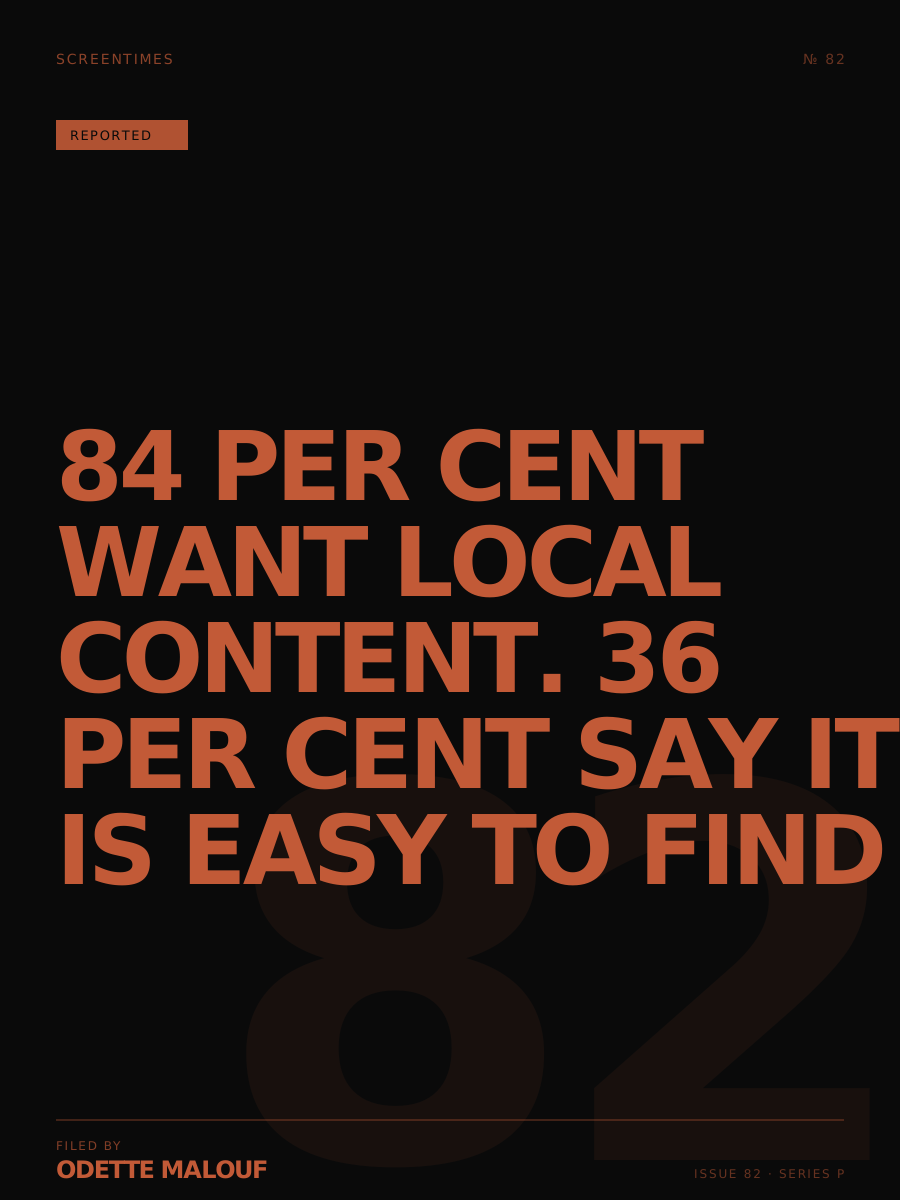
84 per cent want local content. 36 per cent say it is easy to find
Screen Australia's Screen Currency 2026 report finds strong demand for Australian screen stories and a discovery problem that no amount of production funding fixes on its own.
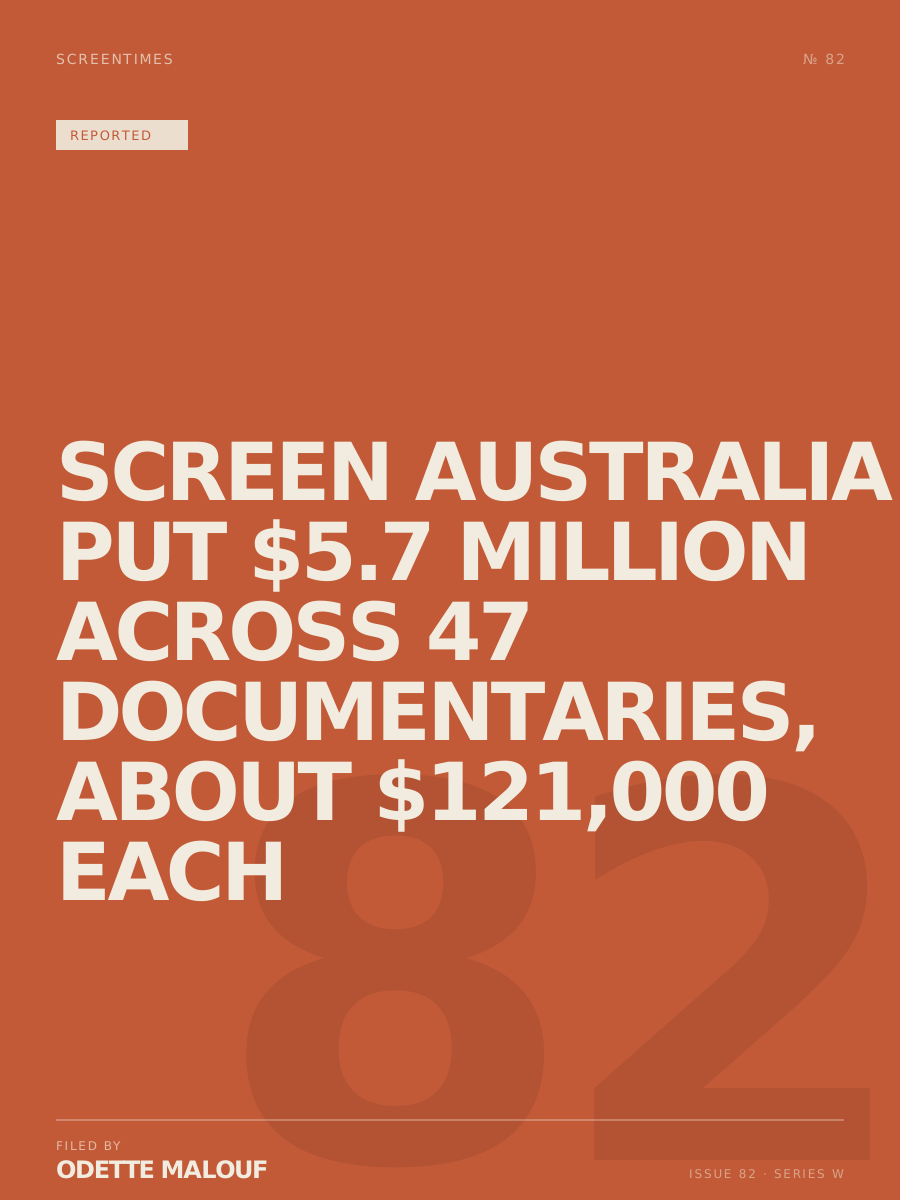
Screen Australia put $5.7 million across 47 documentaries, about $121,000 each
Screen Australia announced more than $5.7 million for 47 documentary projects on 2 October, and the agency's own audience research explains why it is framing the round the way it is.
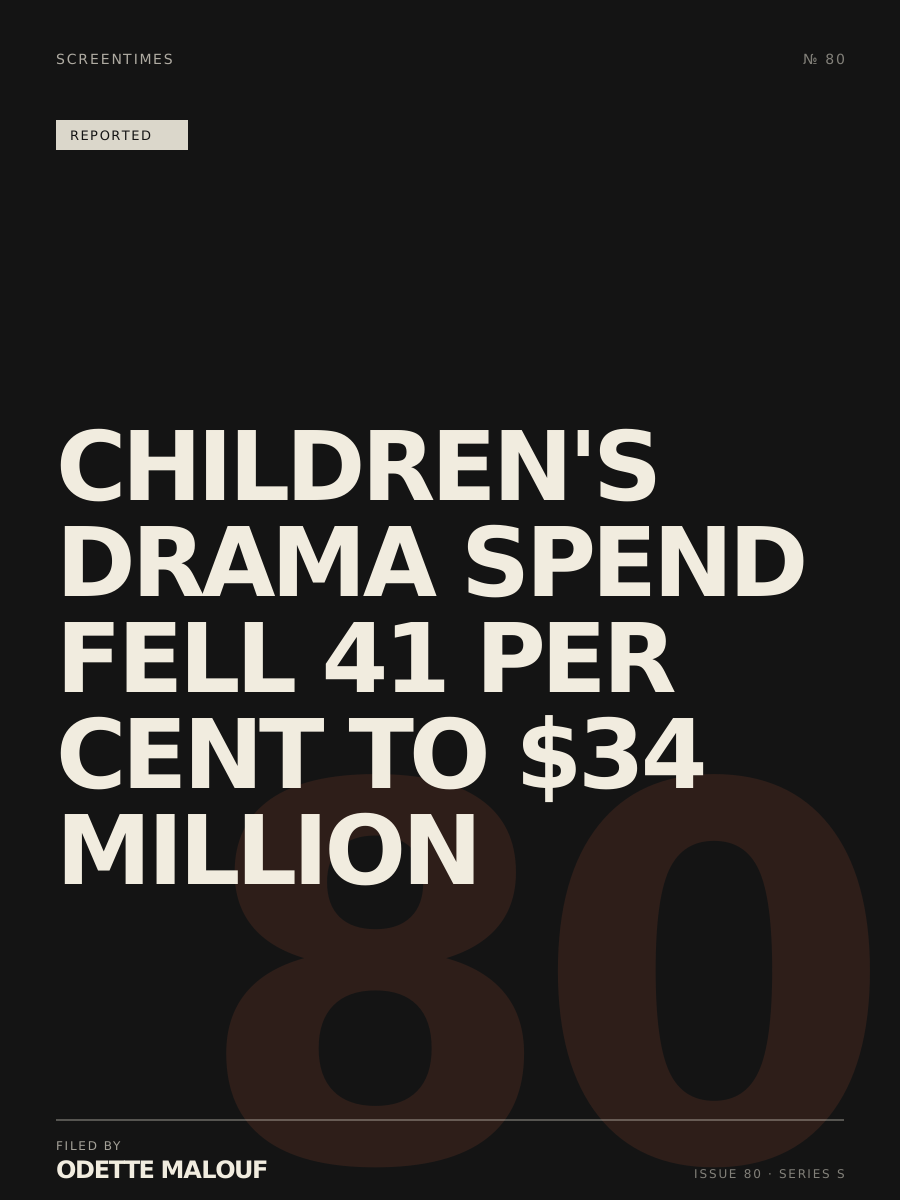
Children's drama spend fell 41 per cent to $34 million
Screen Australia's Drama Report recorded a record $2.7 billion in production spend, and the single steepest movement in it was a collapse in children's content.