Bring Him to Me puts Sam Neill in a car and lets the drive do the work
Luke Sparke's thriller is ninety minutes in a car with a hitman and a target, and the confinement is the point.
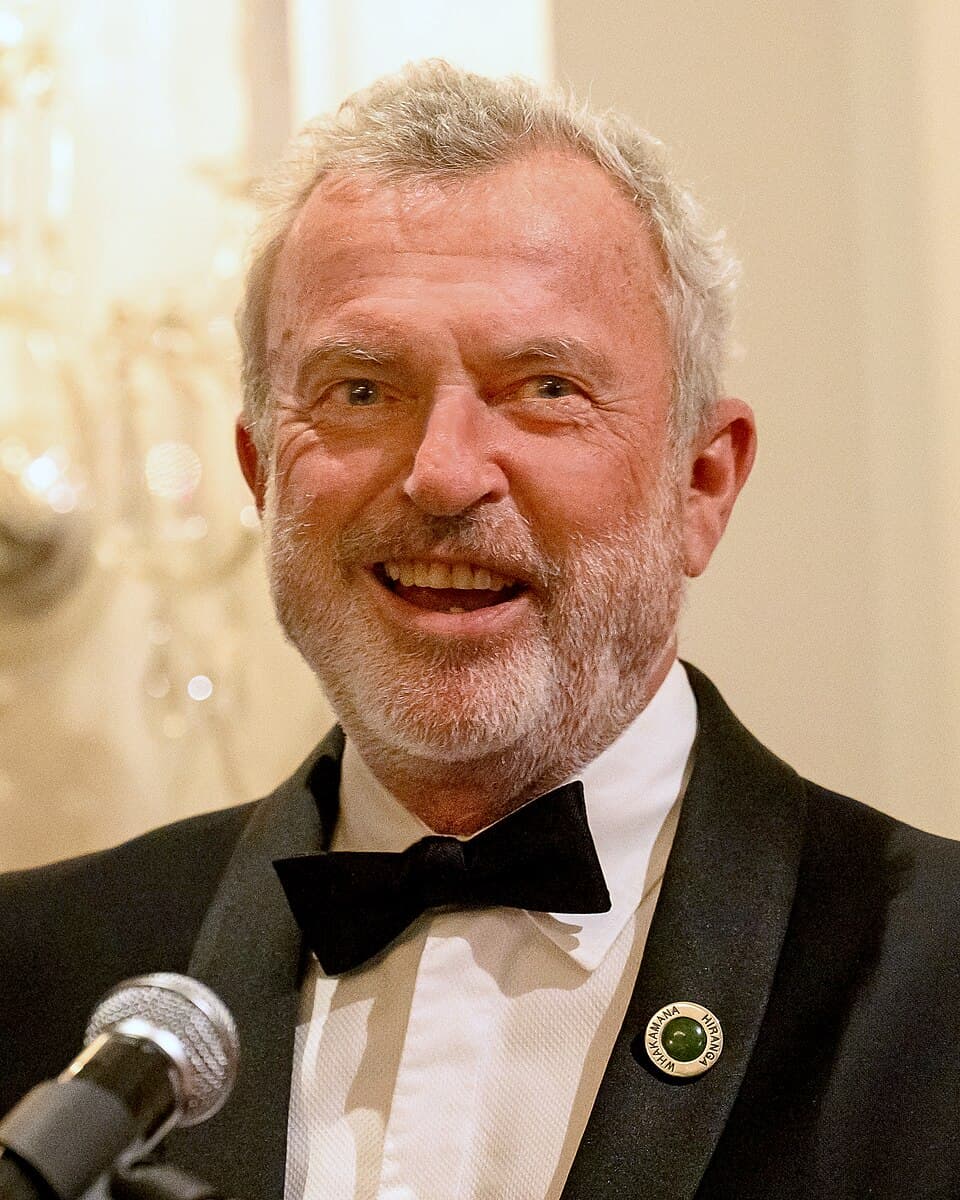
The premise fits in a sentence. A driver picks up a passenger. The passenger does not know the driver has been hired to kill him. The car moves through the night. That is it. That is the film. Luke Sparke’s Bring Him to Me (2024) is ninety minutes of two men in a vehicle, and the confinement is not a limitation to be overcome but the mechanism through which everything interesting happens.
Sam Neill plays the driver. Barry Pepper plays the passenger. Rachel Griffiths appears in a supporting role that punctuates the drive but does not interrupt its logic. The car is the stage. The road is the clock. The conversation between these two men, which begins as small talk and curdles into something considerably more dangerous, is the only dramatic engine the film needs or uses.
The single-location problem
Single-location thrillers have a structural problem that most of them do not solve. The constraint creates tension at the outset because the audience understands that someone cannot leave, but the same constraint becomes a liability in the second act because the audience starts to wonder why the filmmaker could not afford a second set. The challenge is to make the confinement feel chosen rather than imposed, to convince the viewer that the location is not a budget compromise but a dramatic necessity.
Sparke handles this well, though not perfectly. The car’s interior is shot with a density of angle and light variation that prevents visual monotony. Cinematographer Mick McDermott uses the passing headlights of oncoming traffic, the intermittent glow of service stations, and the shifting quality of darkness itself to create a visual rhythm that gives the film a sense of movement even when the dramatic tension is static. The car is always going somewhere, and the physical forward motion provides a structural momentum that the screenplay can lean against during its quieter passages.
The comparison to make here is Locke (Steven Knight, 2013), which confined Tom Hardy to a BMW for its entire running time and built its tension from phone calls. Bring Him to Me is less formally rigorous than Locke but more physically dangerous. The threat in Sparke’s film is not emotional or professional but mortal. Neill’s driver has a job to do, and the passenger is the job, and the question is not whether the job will get done but what will change in the driver between now and then.
Neill’s late career
There is a version of this film where Neill’s casting is stunt casting, where the pleasure is simply in seeing a beloved actor play against type. Neill has spent decades being warm, intelligent, avuncular. He is the palaeontologist who loves dinosaurs. He is the vintner in Central Otago. He is the man you would like to have dinner with. Putting him behind the wheel as a contract killer could easily feel like a gimmick, a late-career swerve designed to generate press coverage rather than dramatic interest.
It does not feel like that. What Neill does with the role is quieter and more unsettling than villainy usually permits. His driver is not menacing. He is polite, careful, attentive. He asks Pepper’s character about his life with what appears to be genuine interest. The menace comes not from Neill performing threat but from the audience’s knowledge that this politeness has a purpose, that every question is a form of assessment, that the warmth is professional rather than personal. Neill plays the role as though the driver is a man who has done this enough times that the moral dimension has receded entirely, replaced by a kind of vocational calm that is more frightening than anger would be.
This connects to a broader pattern in Neill’s recent work. His performance in The Twelve (the Australian legal series, not the Belgian one) showed a similar willingness to inhabit moral ambiguity without signalling it. The Neill of the last five years is more interesting than the Neill of the previous twenty, and the reason is that he has stopped reassuring the audience. He is no longer the actor who makes you feel safe. He is the actor who makes you feel that safety was always an illusion you constructed from his face.
The Gold comparison
Gold (Anthony Hayes, 2022) is the other recent Australian film that put a name actor in a single location and dared the audience to stay. Zac Efron, stranded in a desert beside a gold nugget too large to carry, enduring heat and dehydration and the slow unravelling of rational thought. Gold was more visually austere than Bring Him to Me, more interested in landscape as antagonist, more committed to the physical deterioration of its protagonist. It was also, at times, punishing to watch, a film that trusted its conceit so completely that it did not always notice when the audience’s patience was being tested rather than rewarded.
Bring Him to Me is the more audience-friendly version of this experiment. It moves faster. It has two characters instead of one, which means it has dialogue, which means it has the pleasures of performance and exchange that Gold deliberately denied itself. Whether this makes it a lesser film is a question of taste. What it makes it, certainly, is a more commercial one, and the commercial dimension matters because it connects to a larger question about what the indie Australian genre film can sustain.
Scale and survival
The Australian film industry has spent the last decade producing genre work at budgets that would not cover catering on a mid-range American production. Some of this work is exceptional. Some of it is competent. Most of it disappears. The question that Bring Him to Me raises, without answering, is whether there is a sustainable model for Australian genre filmmaking that does not depend on international co-production money, streaming acquisition, or the kind of festival visibility that only a handful of films achieve each year.
Sparke has built a career in this space. His Occupation films were science-fiction action pictures made on budgets that required ingenuity to substitute for resources. Bring Him to Me is a smarter allocation of the same instinct: instead of stretching a small budget across a large canvas, he has shrunk the canvas to fit the budget, and the result is a film where the money is on screen in the form of two strong performances rather than diffused across visual effects and location work that cannot compete with Hollywood equivalents.
This is the model that works, and it is the model that Australian genre cinema keeps rediscovering and then forgetting: find the constraint that makes the budget irrelevant. A car. A desert. A house. A single night. The films that succeed at this scale are the ones that understand the location is not the setting but the subject, that the confinement is not the problem but the argument, and that two good actors in a small space will always generate more tension than a dozen adequate actors across a dozen locations. Bring Him to Me understands this. The car goes forward. The conversation deepens. The night does not end until someone decides how it ends. That is enough.
Bronte writes long-form criticism of Australian cinema and the international art films that feed into it. She was on the ground at Cannes in 2019 and has not entirely forgiven the festival for 2020. Patient with slow films; impatient with tidy ones.
MORE BY BRONTE HAUGHEY →
The Surfer traps Nicolas Cage on a beach and discovers that the ocean is the real antagonist
Lorcan Finnegan's beach thriller gives Cage nothing but sand and hostility, and what he does with both is more controlled than anyone expected.
The Dry gives Eric Bana a landscape and lets him stand in it
Robert Connolly's adaptation knows the difference between withholding information and withholding feeling.
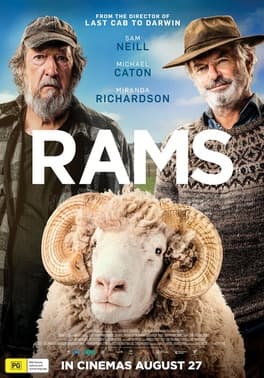
Rams gives Sam Neill and Michael Caton a flock of sheep and nothing left to say to each other
Jeremy Sims' remake finds its heart in the silence between two brothers who share a fence line and absolutely nothing else.