The Australian films worth tracking in 2020
The year's most anticipated Australian films include a Ned Kelly punk opera, a surfing memoir, and a magpie, and not one of them will have an easy path to the screen.
The Australian film calendar for 2020 is unusually full, and the fullness is not the usual kind. This is not a year of safe bets, of period dramas with recognisable casts and pre-sold audiences. The slate reads like a dare. A Ned Kelly film shot like a punk gig. A debut feature about a dying teenager that played Venice and Toronto before most Australians knew it existed. A family drama built around a magpie. A frontier western that has been in development for the better part of a decade. A comedy about sheep that sounds like a joke and is not. Each of these films is doing something specific, and each of them will need to find an audience that does not yet know it is waiting.
I want to lay out what is coming, film by film, because the conversation about Australian cinema tends to happen after the fact, after the reviews, after the box office numbers, after the think pieces about why we do or do not support local films. I am more interested in the conversation that happens before. What are we looking at? What are the filmmakers trying to do? And what does the year’s slate, taken as a whole, tell us about where Australian cinema thinks it is going?
True History of the Kelly Gang
Justin Kurzel’s third feature arrived in Australian cinemas in late January, so by the time you read this it will already be generating opinions. I want to register mine early: this is the most formally ambitious Australian film in years, and the ambition is not incidental to the story but inseparable from it. Kurzel adapts Peter Carey’s Booker Prize-winning novel not as historical drama but as hallucination, a fever dream of colonial violence rendered in smeared colour and anachronistic costume. The gang wear dresses. The bush looks like a nightclub. The violence is sudden and ugly and filmed without the distance that period settings usually provide.
George MacKay plays Kelly as a young man being assembled from trauma, and the performance has a physical recklessness that suits the film’s register. Essie Davis is Ellen Kelly, and she is extraordinary, turning the mother role into something feral and political and completely unsentimental. The supporting cast includes Nicholas Hoult, Russell Crowe and Charlie Hunnam, which gives the film an international profile that most Australian productions cannot buy.
Whether audiences will go along with the approach is a genuine question. Australians have strong feelings about Ned Kelly, and those feelings tend toward reverence. Kurzel is not reverent. He is interested in the myth as a construction, and the film’s deliberate anachronisms, the punk aesthetic, the gender play, the refusal to treat the bush as sacred ground, will alienate viewers who want their Kelly straight. But a Kelly film that plays it straight would be the eighth or ninth of its kind, and none of the previous ones solved the problem of how to make a 140-year-old story feel present. Kurzel’s solution is to refuse the past tense entirely, and whether you agree with the execution, you cannot accuse the film of timidity.
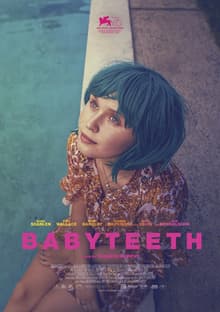
Babyteeth
Shannon Murphy’s debut feature is the one that has already been validated by the international festival circuit. It premiered in Competition at Venice, won the Marcello Mastroianni Award for best young actor (Toby Wallace), screened at Toronto and London, and arrives in Australia with the kind of critical consensus that is difficult to manufacture and impossible to ignore. The film is about a terminally ill teenager who falls for a small-time drug dealer, and if that synopsis sounds like a recipe for sentiment, Murphy’s direction goes the other way entirely. The tone is sharp, fractured, comic in places where you do not expect comedy and restrained in places where another filmmaker would lean into the emotional release.
Eliza Scanlen is the teenager, and Ben Mendelsohn and Essie Davis (appearing on this list twice, which tells you something about the depth of the talent pool) are her parents. The script, by Rita Kalnejais and adapted from her stage play, structures itself in titled chapters that break the narrative into discrete emotional states rather than a conventional arc. It is a structural choice that keeps the audience at a slight distance, and that distance is the film’s great intelligence; it trusts you to feel without being told how.
Penguin Bloom
Glendyn Ivin’s adaptation of Cameron Bloom and Bradley Trevor Greive’s book is currently in post-production and scheduled for later in the year. Naomi Watts plays Sam Bloom, a mother of three who is paralysed in a fall while on holiday in Thailand and whose recovery is aided by the family’s adoption of an injured magpie chick. Andrew Lincoln co-stars. The production has been photographed in the Northern Beaches, and the early materials suggest a film that leans into the landscape and the light of coastal Sydney with a specificity that the memoir earned.
The risk with Penguin Bloom is the same risk that attaches to any true-story adaptation built around recovery: the narrative structure is predetermined, and the emotional arc is visible from the first act. Ivin, whose work on Brendan showed a capacity for understatement, will need to find something inside the story that the audience does not already know.
High Ground
Stephen Johnson’s frontier western has been in development for years, and its arrival, whenever it arrives, will be an event. Simon Baker plays a sniper in 1919 who is haunted by his participation in a massacre of Aboriginal people, and who, twelve years later, is drawn into a conflict with a young Aboriginal man (Jacob Junior Nayinggul) who survived the killing. The film was shot in Kakadu and Arnhem Land, and the landscape is not backdrop but argument: the country itself is a participant in the story.
Johnson directed Yolngu Boy in 2001, and his return to feature filmmaking after nearly two decades is driven, by his own account, by the conviction that the frontier-violence story has not yet been told properly in Australian cinema. High Ground is explicitly about massacre, and the film’s willingness to name what happened, to put it on screen without euphemism, positions it as a corrective to a national cinema that has historically preferred metaphor when dealing with colonial violence.
Rams
Jeremy Sims’s remake of the 2015 Icelandic film of the same name moves the story from rural Iceland to rural Western Australia and casts Sam Neill and Michael Caton as estranged brothers who are forced to cooperate when a disease threatens their sheep flocks. The premise sounds slight. It is not. The Icelandic original, directed by Grimur Hakonarson, won the Un Certain Regard prize at Cannes and built its comedy from the silence and stubbornness of men who have spent decades not speaking to each other. The Australian version, with a script adapted by Jules Duncan, transposes the emotional logic to a WA farming community and trusts that the specifics will translate.
Neill and Caton are inspired casting. Both actors carry decades of screen history with them, and the friction between their performance styles, Neill’s stillness against Caton’s warmth - should generate the same productive tension that powered the original. The question is whether Sims can resist the temptation to explain the joke. The Icelandic film’s great virtue was its refusal to sentimentalise its characters or underline its comedy. The laughs arrived because the film trusted the audience to see the absurdity without being told where to look.
The year ahead
Five films, five different ambitions, five different risk profiles. What connects them is a shared refusal to play it safe, which is either a sign of an industry in a confident phase or an industry that has decided safety was never an option to begin with. The financing environment for Australian features remains difficult. The theatrical window is shrinking. The audience for local stories exists but it is not guaranteed, and it will not show up out of obligation.
What the 2020 slate suggests is that Australian filmmakers have stopped trying to compete with Hollywood on its own terms and have started making films that only they can make. That has always been the correct strategy, and it has never been an easy one. The films on this list will succeed or fail on their own merits, in a market that does not owe them anything, and the fact that they exist at all, in this form, with these ambitions, is worth noting before the year begins to unfold.
Bronte writes long-form criticism of Australian cinema and the international art films that feed into it. She was on the ground at Cannes in 2019 and has not entirely forgiven the festival for 2020. Patient with slow films; impatient with tidy ones.
MORE BY BRONTE HAUGHEY →
The Correspondent is a grief film wearing a prison film
Kriv Stenders built an Egyptian prison on a Sydney soundstage in six weeks, and the picture he made inside it is not about Egypt at all.
Furiosa and the country George Miller will not leave
Two years after Furiosa underperformed in May 2024, the picture has clarified into the most patiently photographed film of George Miller's career, and possibly the last one he will shoot in the Hay plains.
Six years of Australian cinema and the argument is still open
The films got better, the audiences stayed complicated, and the critics kept writing.