The 2019 Australian box office in five numbers
Australian films took 4.6 per cent of the domestic box office in 2019, and the number tells you less than you think.
Australian films earned $53.6 million at the domestic box office in 2019. That figure represents 4.6 per cent of total Australian box office revenue for the calendar year. Per the latest Screen Australia data release, total box office across all titles was $1.16 billion.
The 4.6 per cent figure is up from 4.1 per cent in 2018 and down from 5.0 per cent in 2017. Over a ten-year average, the local share sits at roughly 4.4 per cent. In other words, 2019 was normal. The question is whether normal is good enough.
Number one: $1.16 billion total
The total Australian box office in 2019 was $1.16 billion, a slight decline from the $1.2 billion recorded in 2018. The drop tracks a global pattern: overall cinema attendance in mature markets is flattening as streaming subscriptions rise. Australia had roughly 83 million cinema admissions in 2019, down from 85 million the year prior.
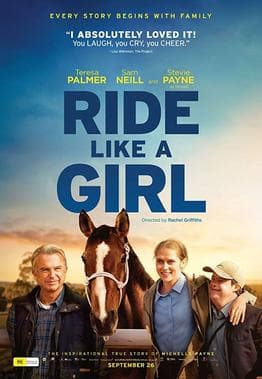
The top ten films by gross were all Hollywood productions. Avengers: Endgame took $79.5 million domestically. The Lion King took $66 million. The highest-grossing Australian film, Ride Like a Girl, came in at number 21 on the year’s chart.
Number two: $16.3 million for Ride Like a Girl
Ride Like a Girl, directed by Rachel Griffiths in her feature debut, earned $16.3 million at the Australian box office. That makes it the highest-grossing local film of 2019 and the seventh highest-grossing Australian film of the decade.
The film tells the story of Michelle Payne, the first female jockey to win the Melbourne Cup. It was released in September, timed for the spring racing carnival, and it found an audience that does not typically show up for Australian independent cinema: regional audiences, older demographics, families. Per the filing, Ride Like a Girl played on over 300 screens at peak, a wide release by local standards.
Number three: $7.8 million for Palm Beach
Rachel Ward’s Palm Beach grossed $7.8 million, making it the second highest-grossing Australian film of 2019. The ensemble drama, set among a group of old friends reuniting at the titular Sydney beach suburb, drew on a cast including Bryan Brown, Sam Neill, Greta Scacchi, and Jacqueline McKenzie.
Together, Ride Like a Girl and Palm Beach accounted for $24.1 million of the $53.6 million total. Two films carried 45 per cent of the local box office. That concentration ratio is consistent with the historical pattern: in most years, two or three titles account for the majority of Australian box office revenue.
Number four: 37 releases
Per Screen Australia’s records, 37 Australian feature films received a theatrical release in 2019. Of those, 11 grossed less than $100,000 at the box office. A further nine grossed between $100,000 and $500,000.
The median gross for an Australian theatrical release in 2019 was approximately $310,000. The mean, pulled upward by the two top performers, was $1.45 million. The gap between those two figures describes an industry where a small number of breakout titles mask a long tail of films that struggle to reach their audience in cinemas.
Number five: 4.6 per cent
The 4.6 per cent share has been the subject of debate in industry circles since the data landed. Screen Australia’s own benchmarking notes that comparable English-language markets (the United Kingdom, Canada) maintain local shares in the five to eight per cent range. France, which operates a different support model entirely, holds local share above 30 per cent in most years.
The question of whether 4.6 per cent represents success or stagnation depends on what you measure it against. Against the prior year, it is an improvement. Against the decade average, it is steady. Against comparable international markets, it is low. Against the stated policy objective of maintaining a robust and diverse local screen culture, the number is ambiguous at best.
What the headline figure does not capture is the shift happening beneath it. Streaming commissions and acquisitions are now a significant pathway for Australian content to reach audiences. Stan, ABC iview, and SBS On Demand all commissioned original Australian programming in 2019, and those projects do not appear in box office figures. The theatrical share, in isolation, describes a shrinking portion of how Australians encounter local stories on screen.
The $53.6 million is a real number. It reflects real tickets sold, real audiences in cinemas, real commercial outcomes for the filmmakers involved. But the box office is no longer the whole story, and the 4.6 per cent, for all the attention it receives, tells you less than it used to.
Odette covers the business of Australian screen. Previously a financial journalist. Reads every Screen Australia annual report the week it drops. Short paragraphs, long memory, never misses a figure.
MORE BY ODETTE MALOUF →
The 2023 Australian box office told two stories and believed neither
Total box office recovered to $1.1 billion, but the Australian share fell to 3.8 per cent, the lowest in a decade.
Screen Australia's $212 million year and the question nobody asked
The number is the largest on record, but the distribution tells a different story.
84 per cent want local content. 36 per cent say it is easy to find
Screen Australia's Screen Currency 2026 report finds strong demand for Australian screen stories and a discovery problem that no amount of production funding fixes on its own.