The 2023 Australian box office told two stories and believed neither
Total box office recovered to $1.1 billion, but the Australian share fell to 3.8 per cent, the lowest in a decade.
Two numbers define the 2023 Australian box office. The first is $1.1 billion, the total domestic gross across all titles, which represents a genuine recovery from the pandemic years and sits within striking distance of the $1.16 billion recorded in 2019. The second is 3.8 per cent, which is the Australian share of that total, the lowest figure in a decade and a full percentage point below the ten-year average. The first number is a success story. The second is not. Both are true at the same time.
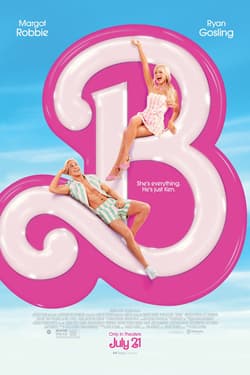
The recovery was driven almost entirely by Hollywood. Barbie grossed $84.3 million in Australia, making it the highest-grossing film of the year and one of the top ten highest-grossing films in Australian box office history. Oppenheimer grossed $51.2 million. Together, the Barbenheimer phenomenon accounted for $135.5 million, or roughly 12.3 per cent of the total market, in a two-week window in July. Remove those two films and the remaining box office looks less like recovery and more like continuation of a downward trend that began before COVID.
The Australian share
The 3.8 per cent figure is the one that matters to the local industry. It means Australian films earned approximately $41.8 million at the domestic box office in 2023. For context, the ten-year average sits at 4.4 per cent. The 2019 figure was 4.6 per cent. The 2016 figure, boosted by Hacksaw Ridge (which counted as Australian for co-production purposes), was 7.2 per cent.
The top-grossing Australian film of 2023 was Anyone But You, the rom-com starring Sydney Sweeney and Glen Powell, which grossed $16.1 million domestically. It was filmed in Sydney, qualified as an Australian co-production, and was marketed globally as an American film. Whether it counts as a local story reaching a local audience depends on how generously you define those terms. The second highest was Shayda, Noora Niasari’s drama about an Iranian mother in suburban Australia, which grossed $3.2 million after winning the audience award at Sundance. The gap between $16.1 million and $3.2 million describes the market in miniature.
The festival-to-cinema gap
2023 was, by most qualitative measures, a strong year for Australian film. Shayda won at Sundance. The New Boy, directed by Warwick Thornton, screened in competition at Cannes. Limbo, Talk to Me, and The Rooster all received significant festival attention. The critical reception was warm. The box office response, in most cases, was not.
Talk to Me is the exception worth examining. The horror film from Adelaide filmmakers Danny and Michael Philippou grossed $7.1 million domestically and over $90 million worldwide. It was distributed by A24, marketed aggressively on social media, and found an audience that does not typically seek out Australian cinema. Its success was genuine and earned. It was also anomalous. Horror travels in ways that drama does not. The Philippou brothers built an audience on YouTube before they made a feature. Their distribution pathway was not available to most Australian filmmakers, and extrapolating from their success would be a mistake.
The mid-budget question
The numbers point to a structural problem that has been discussed in industry circles for years without resolution. The mid-budget Australian film, budgeted between $4 million and $10 million, aimed at a domestic theatrical audience, is disappearing. The economics no longer support it. A $6 million drama needs to gross roughly $3 million at the box office to be considered commercially viable (accounting for distribution costs, exhibitor splits, and the gap between gross and net). In 2023, only five Australian films crossed that threshold.
The films that work commercially tend to fall into two categories: low-budget genre films with international sales potential, and co-productions with foreign partners that share the financial risk. The middle ground, the distinctly Australian, modestly budgeted drama that depends on a domestic audience to recoup, is the space that is contracting. These are the films that win AACTAs and screen at the Sydney Film Festival and struggle to hold screens past their second week.
What the numbers do not count
As with every box office wrap, the theatrical figures describe a shrinking portion of how Australians watch Australian content. Stan, ABC iview, SBS On Demand, and Binge all commissioned original Australian programming in 2023. Netflix released multiple Australian-made titles. The audience for Australian screen content is almost certainly larger than the box office suggests; it is simply distributed across platforms that do not report viewership figures in any standardised way.
This does not make the 3.8 per cent irrelevant. The theatrical box office remains the most visible metric, the one that gets cited in policy submissions and budget reviews, the one that shapes public perception of whether Australian film is “working.” A 3.8 per cent share, in a year where the total market recovered to pre-pandemic levels, tells a clear story: Australians went back to the cinema in 2023. They went to see Barbie and Oppenheimer and The Super Mario Bros. Movie. They did not, in significant numbers, go to see Australian films.
The $1.1 billion says the audience is still there. The 3.8 per cent says the audience is not there for us. Both figures are true. Neither, on its own, is the whole story.
Odette covers the business of Australian screen. Previously a financial journalist. Reads every Screen Australia annual report the week it drops. Short paragraphs, long memory, never misses a figure.
MORE BY ODETTE MALOUF →
The 2019 Australian box office in five numbers
Australian films took 4.6 per cent of the domestic box office in 2019, and the number tells you less than you think.
Spider-Man took more in one weekend than Australian films took in six months
Cinemas had a record first half of 2026, and Australian films took $17.1 million of it, more than half from two studio-distributed titles.
Australian cinema's 2024 awards season by the numbers
Three Australian features made the international circuit in 2024, and the funding trail behind each tells a different story.