Audrey finds the violence inside a suburban house and does not raise its voice
Natalie Bailey's debut is a domestic thriller set at kitchen-table volume, and the restraint is more frightening than any raised hand.

The most frightening shot in Audrey is a wide of a hallway. Nothing happens in it. The camera holds on the corridor of a suburban house, the kind of hallway that exists in every brick veneer in every middle ring of every Australian city: beige carpet, white walls, a few framed photos, a door ajar at the end. The lighting is flat. The sound design is almost silent, just the low hum of a refrigerator somewhere off-screen and, beneath it, the particular quiet of a house in which someone is listening. That is all. No figure crosses the frame. No shadow moves. The shot lasts perhaps fifteen seconds, and it is the point at which the film stops being a family drama and becomes something else entirely.
Natalie Bailey’s debut feature is set almost entirely inside a house in suburban Melbourne, and it concerns a family whose dysfunction expresses itself not through confrontation but through the careful management of space. Who sits where. Who enters which room. Who speaks first. The violence in this film is not physical, or not primarily physical. It is atmospheric. It lives in the gaps between sentences, in the way a character’s posture changes when a door opens, in the domestic choreography of a household that has organised itself around the avoidance of a detonation that may or may not come.
The architecture of control
The house is the film’s central character, and Bailey shoots it with an attention to spatial logic that most horror directors would envy. The kitchen is where the family performs normalcy: meals are prepared, conversations are had, the rituals of domestic life are enacted with a discipline that reads, initially, as order and, gradually, as control. The living room is a transitional space, a place where the family sits together but does not relax. The bedrooms are private territories, and the film tracks who enters whose bedroom and under what circumstances with a precision that tells you everything about the power dynamics without requiring a word of exposition.
The father figure, played with a controlled affability that is deeply unsettling, is the author of this spatial regime. He does not shout. He does not threaten. He arranges. He sits at the head of the table not because anyone has assigned him the seat but because the alternative has never been tested. He asks questions in a tone that makes answering feel optional and not answering feel dangerous. The performance is calibrated to a degree that makes you wonder how many takes Bailey shot, because the margin between charm and menace is so narrow that a single misplaced emphasis would collapse it.
Accumulation as method
There is a tradition in Australian cinema of addressing gendered violence through spectacle, through the big scene, the confrontation, the moment when the subtext becomes text and the audience is given permission to feel what it has been feeling. Audrey refuses this. Bailey’s method is accumulation. Small moments. A hand placed on a shoulder for slightly too long. A compliment delivered with a weight that makes it a correction. A joke that nobody laughs at but everybody smiles at, because smiling is easier and safer than not smiling.
This is the same approach Kitty Green used in The Assistant, where the horror of a workplace built around a predator was conveyed not through any single act of violence but through the bureaucratic infrastructure that enabled it: the phone calls, the car receipts, the earrings left on the couch. Green understood that the system is the violence, that the individual acts are symptoms rather than causes, and that showing the system in its mundane operational detail is more damaging than showing the acts themselves. Bailey works in a similar register but transposes it from the office to the home, where the systems are older and more deeply embedded and where the exits are harder to find because they look like doors you could walk through but cannot.
The ensemble
The film’s ensemble cast operates as a unit rather than a collection of individual performances, which is essential to what Bailey is doing. The mother, the children, the occasional visitor from outside the family system: each of them exists in relation to the father’s gravity, and the film tracks these orbits with a steadiness that would be clinical if it were not also compassionate. Bailey does not judge her characters for their accommodation of an impossible situation. She shows the accommodation as a survival strategy, which it is, and she shows its cost, which is high, and she does not pretend that showing the cost is the same as offering a solution.
The title character, Audrey, is the youngest daughter, and the film positions her as the family member whose accommodation is least complete, whose compliance has the most visible seams. She does what she is told. She performs the required behaviours. But there are moments, a look held a beat too long, a question asked in a tone that is not quite neutral, where you can see the machinery of obedience grinding against something inside her that has not yet been worn smooth. These moments are where the film finds its hope, such as it is, and they are handled with a delicacy that trusts the audience to register them without underlining.
The question of volume
What interests me about Audrey is its commitment to a tonal register that most films about domestic violence abandon. The genre, if it is a genre, tends toward escalation. The tension builds. The incidents become more severe. The climax is a rupture, a moment of violence that the film has been winding toward since its opening minutes. This structure is dramatically satisfying and emotionally legible, and it maps poorly onto the experience of people who actually live with family violence, for whom the pattern is not escalation but repetition, not rupture but endurance.
Bailey’s film is closer to repetition. Days pass. The routines are maintained. The house holds its shape. The father is charming at dinner and silent at breakfast and the difference between the two states is the weather system that governs everything. The film does not build to a single confrontation because the confrontation is distributed across the entire running time, present in every scene, never fully absent, never fully arrived. This is harder to watch than a conventional thriller, not because it is more violent but because it offers fewer opportunities for the audience to discharge its tension. The tension accumulates and stays.
Green’s shadow and Bailey’s own space
The comparisons to Kitty Green’s work are inevitable and not entirely fair to Bailey, who is doing something distinct. Green’s films, The Assistant and The Royal Hotel, are about women encountering systems of male power in spaces they can theoretically leave. The office. The pub. The outback town. The horror is institutional, and the exit, while costly, exists. Bailey’s film is about a family, and the horror is intimate, and the exit is not a door but a dismantling of everything the characters understand about who they are.
The Royal Hotel placed two backpackers in a remote pub where the threat was ambient and male and connected to alcohol and isolation. The film worked because it understood that the threat did not need to materialise fully to be felt. Audrey works for the same reason but pushes it further, because the threat is not ambient. It is domestic. It is the person who makes dinner. It is the voice that says goodnight. And the house that contains it is not a pub in the middle of nowhere but a house on a street with neighbours and street lights and a car in the driveway, and the ordinariness is the point.
Bailey has made a film that trusts silence more than speech, that uses domestic space the way a thriller uses a locked room, and that understands something fundamental about the way violence operates inside families: it does not announce itself. It furnishes the house. It sets the table. It pours the water. And the people who live with it learn to drink from the glass they are given, because the alternative is a kind of breakage they have been taught to fear more than the thing that is already broken.
Bronte writes long-form criticism of Australian cinema and the international art films that feed into it. She was on the ground at Cannes in 2019 and has not entirely forgiven the festival for 2020. Patient with slow films; impatient with tidy ones.
MORE BY BRONTE HAUGHEY →
Breaker Morant and the country that adopted its scapegoat
Bruce Beresford's 1980 courtroom drama made an English-born soldier into an Australian martyr, and the picture's argument about empire has outlived its historical certainties.
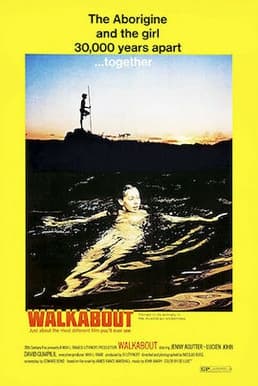
Walkabout is a British film about a country it never claims
Nicolas Roeg's 1971 picture is claimed as an Australian classic, though it was made by a Londoner, financed by two Americans and sold by 20th Century Fox. Its best argument is how little it pretends otherwise.
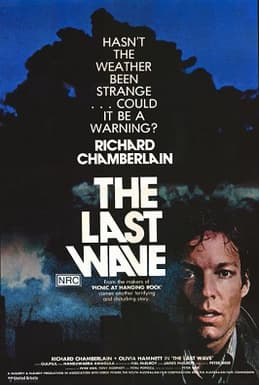
The Last Wave and the rain Sydney could not explain
Peter Weir's 1977 film puts a corporate lawyer in a drowned city and asks what a settler place owes to the ground and weather beneath it.