The AACTA nominations told the industry what it already knew and added one surprise
Memoir of a Snail led with nine nominations, which was expected; the surprise was where the television categories landed.

The Australian Academy announced its 2024 nominations on 28 October, and the film categories played out almost exactly as predicted. Memoir of a Snail, Adam Elliot’s second feature-length claymation, led the field with nine nominations. The Surfer, Lorcan Finnegan’s psychological thriller starring Nicolas Cage, picked up seven. Audrey, the Deborah Mailman-led drama directed by Natalie Bailey, received six. None of this was surprising. The surprise was in the television categories, and it told a more interesting story about where the industry’s weight has shifted.
Film: the expected front-runners
Memoir of a Snail was nominated in every major category: Best Film, Best Direction, Best Original Screenplay, Best Editing, Best Sound, Best Original Score, and three craft categories. Elliot’s film had already won the Cristal at Annecy and received strong notices at international festivals. Its dominance of the AACTA nominations was the kind of outcome that generates a headline but not a conversation. Everyone knew.
The Surfer and Audrey occupied the middle tier, both strong enough to appear across multiple categories but unlikely to challenge Memoir of a Snail for the top prizes. Below them, a cluster of films split the remaining nominations: The Convert, Runt, I Used to Be Funny (a co-production with Canada), and On Swift Horses, which received a single nomination for Supporting Actress. The distribution was narrow. Five films accounted for the majority of the nominations. The rest of the year’s releases were largely absent.
Television: streaming takes the room
The television categories were where the nominations got interesting. In Best Drama Series, three of the five nominees were streaming originals: The Office Australia (Prime Video), Last King of the Cross (Paramount+), and Scrublands (Stan). The two broadcast nominees were After the Flood (ABC) and Total Control season three (ABC). Free-to-air commercial networks were shut out entirely. No Seven drama. No Nine drama. No Ten drama.
This is a shift. In 2022, broadcast dramas still held majority positions in the AACTA television categories. In 2023, the split was roughly even. In 2024, streaming platforms took three of the five drama slots, and the two broadcast nominees were both from the ABC. The commercial networks, which were once the primary commissioners of Australian drama, did not produce a single show that the Academy considered worthy of nomination.
The comedy categories told a similar story. Fisk (ABC) and Colin from Accounts (Foxtel/Binge) were nominated alongside The Office Australia and Deadloch (Prime Video). Again, no commercial free-to-air presence.
What the pattern means
The nominations reflect a production reality that the industry has been discussing for two years. The commercial free-to-air networks have reduced their investment in scripted drama. Seven’s drama slate in 2024 consisted primarily of returning franchises and limited event series. Nine commissioned fewer hours of original drama than in any year since 2018. Ten, which has been under CBS/Paramount ownership, funnelled its scripted investment through Paramount+.
The AACTA nominations did not cause this shift. They recorded it. But awards nominations have a signalling function that goes beyond recognition. They tell financiers where quality is being produced. They tell writers and directors where the work is. They tell the Screen Australia board and the ACMA regulators where the expenditure is landing. When the AACTAs nominate three streaming shows and zero commercial broadcast dramas, the signal is clear: the talent pipeline has moved, and the money moved first.
Does the Academy reflect the industry or just itself
This is the question that recurs every year, and it does not have a clean answer. The AACTA voting membership skews toward established industry professionals: producers, directors, actors, and senior crew. It does not include audiences. It does not weight commercial performance. A show watched by two million people on free-to-air television and a show watched by forty thousand people on a streaming platform are judged by the same criteria, and those criteria favour production values, performances, and craft over reach.
The counter-argument is that this is what an industry award should do. The AACTAs are not a popularity contest. They are a peer assessment. If the peers believe that the best drama of the year was made for a streaming platform, that is the result. The fact that a commercial network drama reached a larger audience does not, by itself, make it a better show.
Both arguments are correct. Both are incomplete. The AACTAs are one data point in a larger picture, and the 2024 nominations, taken alongside the funding data, the commissioning trends, and the quota compliance reports, paint a picture of an industry in the middle of a structural transition that nobody voted for and everybody is living through.

Odette covers the business of Australian screen. Previously a financial journalist. Reads every Screen Australia annual report the week it drops. Short paragraphs, long memory, never misses a figure.
MORE BY ODETTE MALOUF →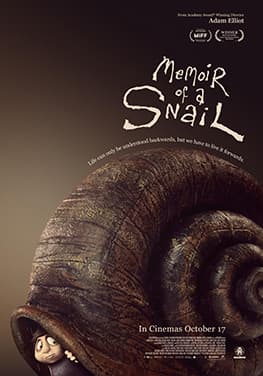
Australian cinema's 2024 awards season by the numbers
Three Australian features made the international circuit in 2024, and the funding trail behind each tells a different story.
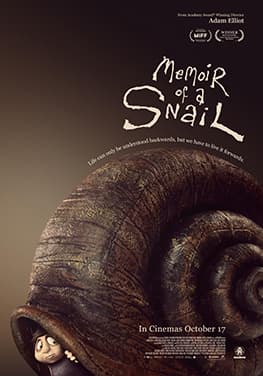
Memoir of a Snail's Oscar campaign cost more than the film and that is the system working as designed
The campaign budget for a $7 million claymation feature exceeded the production budget, and Screen Australia helped foot the bill.

The AACTA nominations went where the industry expected and that is the problem
Elvis led with twelve nominations, The Stranger picked up eight, and the pattern of big-budget domination continued unchallenged.