The AACTA nominations went where the industry expected and that is the problem
Elvis led with twelve nominations, The Stranger picked up eight, and the pattern of big-budget domination continued unchallenged.

The Australian Academy of Cinema and Television Arts announced its 2022 nominations on 17 October, and the results were exactly what anyone tracking the season expected. Elvis, Baz Luhrmann’s biographical spectacle, led the field with twelve nominations across film categories. The Stranger, Thomas M. Wright’s crime drama, followed with eight. Of an Age, Goran Stolevski’s coming-of-age story, received six. Blaze, Del Kathryn Barton’s debut feature, picked up five. The nominations described a hierarchy that was visible months before the announcement, and the absence of surprise is itself worth examining.
The Elvis factor
Elvis is a $105 million production, financed primarily through Warner Bros. with significant Australian expenditure that qualified it for the Producer Offset. It employed hundreds of Australian crew members. It was shot on the Gold Coast. Austin Butler’s performance as Elvis Presley is genuinely impressive. None of these facts are in dispute. The question is whether a film of this scale, operating with this budget and this level of international studio support, should dominate an awards body whose stated purpose is to recognise Australian screen achievement.
The twelve nominations swept the technical categories, which is unsurprising. A $105 million film will, by definition, have production values that a $4 million independent drama cannot match. Costume design on a period musical with a budget for three hundred outfits looks different from costume design on a contemporary drama where the characters wear clothes from their own wardrobes.
The AACTA membership votes on these categories without formal consideration of budget. A production designer who built the Las Vegas International Hotel from scratch is competing against a production designer who dressed a suburban house in Wollongong. Both are doing excellent work. The scale is not comparable. The award goes to the one that looks more impressive, and impression is a function of resources as much as talent.
The Stranger and the middle tier
The Stranger occupied the more interesting position in the nominations. Wright’s film, based on the true story of the police investigation into the murder of Daniel Morcombe, is a modestly budgeted Australian drama that performed well at festivals and received strong reviews. Its eight nominations included Best Film, Best Direction, Best Lead Actor (Joel Edgerton), and Best Supporting Actor (Sean Harris). This is the kind of film the AACTAs were designed to celebrate: Australian-financed, Australian-told, dealing with specifically Australian subject matter.
But eight nominations next to twelve is still a deficit, and the gap is structural. The Stranger does not have the craft-category breadth that Elvis has, because it does not have the production scale. Its costumes are contemporary. Its sound design is naturalistic rather than spectacular. Its editing serves the story rather than the spectacle. These are choices, not limitations, but the awards framework does not distinguish between the two.
Of an Age and Blaze
The smaller films in the nominations tell a more encouraging story, to a point. Of an Age, Stolevski’s film about a brief romance between two young men in 1999 Melbourne, received six nominations, including Best Film and Best Direction. Its budget was a fraction of Elvis’s. Its cast was largely unknown. Its subject matter was specific and personal. The six nominations represent genuine recognition from the Academy membership.
Blaze, Barton’s adaptation of the novel about a child’s response to sexual assault, received five nominations. Barton is primarily known as a visual artist, and her debut feature has a painterly visual style that divided critics.
Both films, however, are positioned in the nominations as contenders rather than front-runners. The architecture of the race, with Elvis at twelve and everything else trailing, establishes a hierarchy before any votes are cast. History suggests that the film with the most nominations wins the most awards. The 2022 race was, in practical terms, decided at the nomination stage.
The television categories
The television nominations were similarly predictable. Mystery Road: Origin (ABC), Heartbreak High (Netflix), and The Stranger (not the film; a different property) appeared across multiple categories. Established franchises and platform-backed shows dominated, while smaller productions struggled for visibility.
The nomination slots are fixed, and the same gravitational forces that pull Elvis to the top of the film categories pull high-profile series to the top of the television categories.
The predictability problem
The fundamental issue is not that the AACTAs nominated the wrong films. Elvis is a legitimate contender. The Stranger is a legitimate contender. Of an Age and Blaze both have strong cases. The issue is that the nominations were predictable to the point of irrelevance. Everyone in the industry knew, within one or two titles, exactly what the list would look like.
Awards bodies serve two functions. The first is recognition: honouring the people who made the best work. The second is discovery: directing attention toward work that audiences might not have found on their own. The AACTAs perform the first function adequately. They perform the second function poorly. Elvis does not need the AACTA’s help finding an audience. It grossed $260 million worldwide. Of an Age, which grossed modestly, could benefit from the signal boost. But the signal boost goes to the film with twelve nominations, not the film with six. The awards reward the films that are already visible, and the announcement surprises nobody.

Odette covers the business of Australian screen. Previously a financial journalist. Reads every Screen Australia annual report the week it drops. Short paragraphs, long memory, never misses a figure.
MORE BY ODETTE MALOUF →
The AACTAs went to Nitram and The Dry and the audience still was not watching
Nitram won seven AACTAs and The Dry won Best Film, and the combined domestic box office of the two was still less than one weekend of a Marvel sequel.
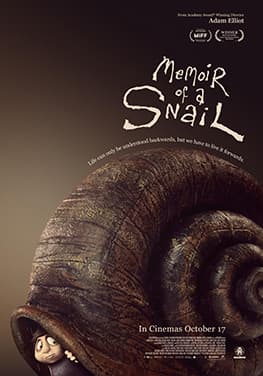
Australian cinema's 2024 awards season by the numbers
Three Australian features made the international circuit in 2024, and the funding trail behind each tells a different story.

The AACTA nominations told the industry what it already knew and added one surprise
Memoir of a Snail led with nine nominations, which was expected; the surprise was where the television categories landed.