The AACTAs went to Nitram and The Dry and the audience still was not watching
Nitram won seven AACTAs and The Dry won Best Film, and the combined domestic box office of the two was still less than one weekend of a Marvel sequel.

The 11th AACTA Awards ceremony, held in December 2021 at the Sydney Opera House, produced results that were critically coherent and commercially irrelevant. Nitram won seven awards, including Best Direction for Justin Kurzel, Best Lead Actor for Caleb Landry Jones, and Best Screenplay for Shaun Grant. The Dry won Best Film. The combined domestic box office of the two films at the time of the ceremony was approximately $23 million, the vast majority of which belonged to The Dry. For comparison, Spider-Man: No Way Home grossed $23.4 million in its first four days in Australian cinemas that same month.
These numbers are not cited to diminish the work. Nitram is an extraordinary piece of filmmaking. The Dry is a well-crafted thriller that found a genuine audience. But the numbers describe the space that Australian film awards occupy: a ceremony celebrating work that most of the country has not seen, broadcast to an audience that is, each year, slightly smaller than the year before.
The ceremony audience
The AACTA telecast on Channel Seven drew an estimated metropolitan audience of 287,000 viewers. This was down from the already modest 340,000 the previous year. For context, the same network’s evening news bulletin on a typical weekday draws approximately 900,000 metro viewers. The AACTAs attracted less than a third of the audience that would have watched Seven’s 6pm news in the same timeslot.
The decline is part of a longer trend. AACTA ceremony viewership has fallen in seven of the last ten years, and the Academy has responded with format changes (shorter telecast, tighter categories, pre-recorded segments) that have not reversed the slide. The fundamental problem is not the format. It is the disconnect between the films being celebrated and the films the viewing audience has any relationship with.
Nitram and the difficult-film question
Nitram is a film about the events leading to the Port Arthur massacre. It was always going to be a challenging commercial proposition. Kurzel and Grant made a deliberate choice not to depict the massacre itself, focusing instead on the biographical and social conditions that preceded it. The film premiered at Cannes, where Landry Jones won Best Actor. It was released in Australian cinemas with appropriate sensitivity and extensive trigger warnings.
The domestic box office was approximately $1.2 million. This is not a failure by the standards of a $7 million Australian drama. It is roughly what the market for this kind of film looks like in 2021: a limited theatrical run, strong festival positioning, eventual streaming availability. But it does mean that Nitram won seven AACTAs for a film that fewer than 100,000 Australians paid to see in cinemas.
The question this raises is one the AACTAs have never resolved: should the awards reflect what is best, or what is seen? The Oscars wrestle with this every year. The AACTAs do not wrestle with it because they have implicitly chosen “best,” defined by the voting body, which is the industry itself. This is a defensible position. It is also why the audience at home does not feel addressed.
The Dry and the commercial exception
The Dry represents the other end of the spectrum. Robert Connolly’s adaptation of Jane Harper’s bestseller, starring Eric Bana, grossed $21.5 million at the Australian box office, making it one of the highest-grossing Australian films of the pandemic era. It had a built-in audience from the novel. It had a star who meant something to Australian audiences. It had a genre (rural thriller) that plays well domestically. It did what the industry has been asking Australian films to do for years: it found a large local audience and performed commercially.
It won Best Film. It did not win much else. The major creative awards went to Nitram. This split neatly illustrated the two value systems operating within the ceremony: commercial success earns the top prize, creative ambition earns the craft awards, and the two rarely overlap.
What the gap tells us
The domestic box office for all Australian films released theatrically in 2021 was approximately $45 million. The AACTA-nominated films collectively accounted for roughly $28 million of that total, with The Dry alone responsible for nearly half. The remaining nominees, including Nitram, Penguin Bloom, High Ground, and June Again, divided the rest.
These figures describe an industry whose critical self-image and commercial reality are only loosely connected. The films the industry celebrates are not the films the public consumes. The AACTA ceremony sits in the gap between these two positions, performing a ritual of recognition that both sides can see but neither fully participates in.
The 287,000 viewers who watched the ceremony are, almost certainly, a subset of the people who already care about Australian cinema. They are not being converted by the broadcast. They were already converted. The ceremony preaches to the converted, and the converted are a smaller congregation each year.
None of this means the awards should not exist. Nitram deserved its seven AACTAs. The Dry deserved Best Film. The people who made those films deserved a night of recognition. But the country was watching Spider-Man, and the distance between the Opera House stage and the multiplex is measured in something larger than kilometres.
Odette covers the business of Australian screen. Previously a financial journalist. Reads every Screen Australia annual report the week it drops. Short paragraphs, long memory, never misses a figure.
MORE BY ODETTE MALOUF →
The AACTA nominations went where the industry expected and that is the problem
Elvis led with twelve nominations, The Stranger picked up eight, and the pattern of big-budget domination continued unchallenged.
Australian cinema's 2024 awards season by the numbers
Three Australian features made the international circuit in 2024, and the funding trail behind each tells a different story.

The AACTA nominations told the industry what it already knew and added one surprise
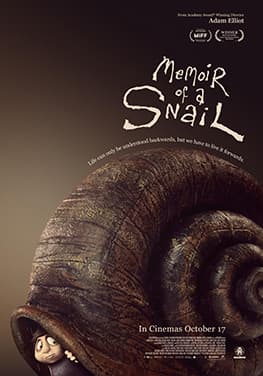
Memoir of a Snail led with nine nominations, which was expected; the surprise was where the television categories landed.