Warwick Thornton's quiet argument with the church
Thornton photographs faith the way he photographs landscape: patiently, without commentary, and with an eye for what the light reveals about what is missing.
The first image in The New Boy is a pair of hands cupped around a small flame, and the hands belong to a child whose name we never learn. He is credited only as “New Boy.” He arrives at a remote Catholic monastery in the Australian outback sometime in the 1940s, delivered without explanation, without paperwork, without any of the institutional apparatus that colonial Australia used to process Indigenous children into the system. He simply appears, as though he has walked out of the landscape itself, and the nuns do not know what to do with him. Neither, for a long time, does the film, and this deliberate withholding of narrative purpose is one of its most radical gestures. Warwick Thornton has made a picture about faith that refuses to tell you what faith is, or where it lives, or whose version of it deserves the frame.
Thornton, who is Kaytetye, has been making films about the intersection of Indigenous and colonial worlds for nearly two decades, and each one has found a different formal strategy for holding the two in view without collapsing either into a metaphor for the other. Samson and Delilah (2009), his debut feature, used long takes and almost no dialogue to depict two teenagers surviving on the margins of Alice Springs; its power came from duration, from the refusal to cut away from discomfort, from the camera’s insistence on staying with its subjects when every convention of narrative cinema said it was time to move on. Sweet Country (2017) used temporal fragmentation, flash-forwards that disrupted the chronology of a frontier murder story, to argue that colonial violence does not obey linear time but recurs, loops, bleeds through the decades. The New Boy adds a third strategy: luminosity.
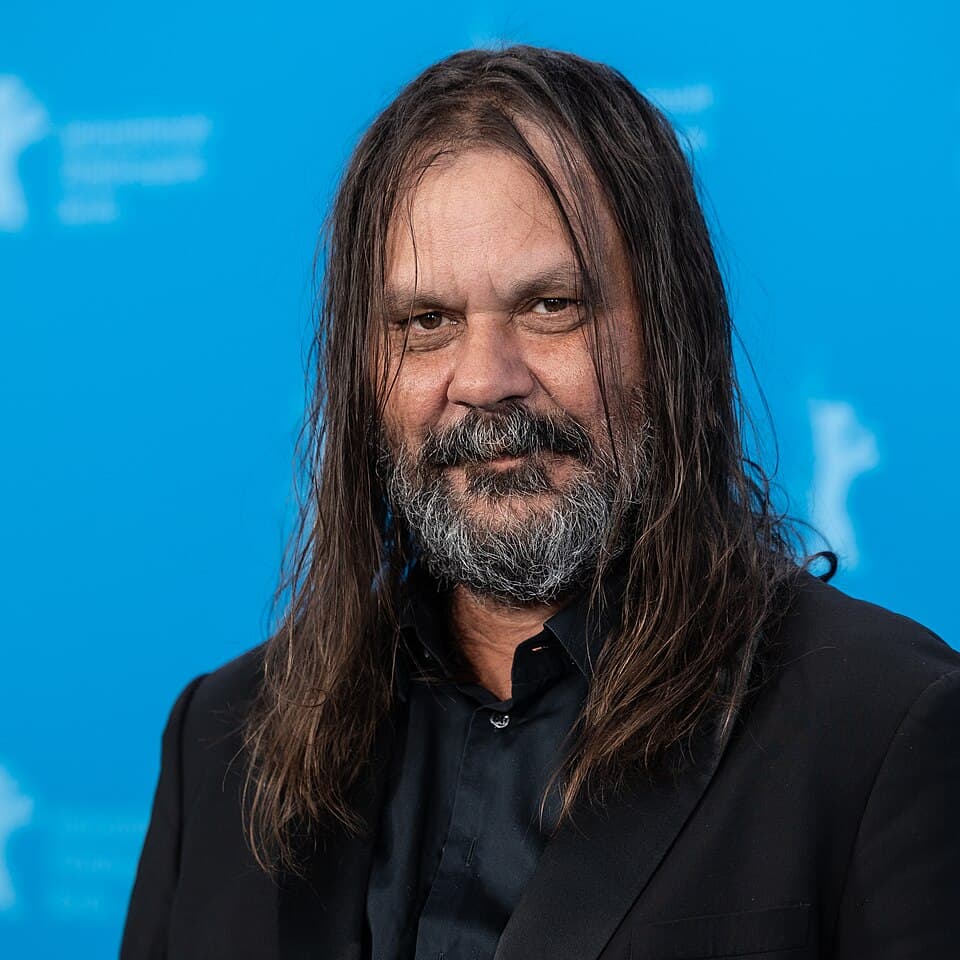
Thornton behind the camera
Thornton shot The New Boy himself, as he has done on all his features, and the cinematography is the film’s primary language. He works with natural and practical light almost exclusively, and the monastery’s interiors are lit by candles, oil lamps and the thin grey light that filters through small windows set high in stone walls. The effect is a picture that looks like it was painted rather than photographed; shadows have depth and grain, faces emerge from darkness the way they do in Rembrandt or Georges de La Tour, and the light itself becomes a subject, something the camera studies with the same attention it brings to the actors.
This is not decorative. The film’s central tension is between two kinds of light, two kinds of seeing. The monastery’s light is contained, institutional, directed: it illuminates what the church wants illuminated and leaves the rest in shadow. The boy carries a different light. He has a gift, something the film never names or explains, a capacity to heal, to make things glow, to produce warmth from his hands. His light is wild, uncontained, answerable to no doctrine. When he touches a dying plant and it greens, when he lays his hands on the wounded body of a goat and the wound closes, Thornton films these moments without special effects, without musical emphasis, without any of the apparatus cinema normally uses to signal the miraculous. The light simply changes. The frame warms. Something that was dark becomes less so. Whether this is spiritual power, metaphor, or the filmmaker’s own quiet assertion of Indigenous knowledge systems operating alongside and beyond Christian ones is left for the viewer to decide.
Blanchett in the architecture of doubt
Cate Blanchett plays Sister Eileen, the nun who runs the monastery in the absence of its priest, who is away at war. It is a performance built on contradiction: Eileen is devout, administratively competent, genuinely kind to the boys in her care, and also complicit in the system that has taken them from their families. Blanchett plays all of these truths simultaneously, without resolving them, and the performance is strongest in the small moments where Eileen’s faith and her institutional authority come into conflict. When she discovers the boy’s gift, her response is not wonder or fear but something closer to jealousy, a recognition that this child has access to a grace she has spent her life pursuing through prayer and discipline and has never found.
The relationship between Eileen and the boy is the film’s emotional core, and Thornton refuses to sentimentalise it. He does not make Eileen a villain. He does not make her a saviour. He makes her a believer who encounters something that her belief cannot accommodate, and watches her try to accommodate it anyway. The monastery becomes, in this reading, not a place of oppression (though it is that too, structurally, historically) but a place where two cosmologies coexist in the same rooms, share the same meals, kneel at the same altar, and cannot quite see each other.
The argument conducted in light
Thornton’s earlier films made their arguments through narrative; Samson and Delilah argued for visibility, Sweet Country for historical accountability. The New Boy makes its argument through light. The monastery’s candles, the boy’s hands, the sun on the red dirt outside: these are not symbols arranged for interpretation but phenomena observed with care. Thornton photographs faith the way he photographs country, patiently, at a distance that permits detail without presuming intimacy. He does not tell us that Indigenous spirituality is superior to Catholicism, or that the church destroyed what it touched, or that the boy’s gift is evidence of anything in particular. He shows us two systems of meaning operating in the same space, lit by different sources, and he holds the camera steady while they negotiate.
This restraint is the film’s strength and, for some viewers, its limitation. The New Boy does not build to a dramatic confrontation between its two worlds. It does not climax in violence or revelation. It ends, instead, with an image of the boy standing in the landscape, the monastery behind him, the country ahead, and the light falling on both with equal weight. The argument is not resolved because Thornton does not believe it can be, not in ninety minutes, not in two hundred years. What can be done, and what the film does with extraordinary discipline, is to hold both sides in the frame at once, without flinching, without editorialising, and to trust the audience to sit with the discomfort of two truths occupying the same picture.
The career in the frame
Thornton is now three features into a body of work that constitutes one of the most significant contributions to Australian cinema in the past two decades. Each film has expanded his formal range while maintaining the same ethical commitment: to look at the places where Indigenous and colonial Australia meet, to look steadily, and to resist the temptation to resolve what he sees into narrative comfort. The New Boy is his most visually accomplished film, and it is also his quietest, a work that trusts light to do the work other films assign to dialogue and plot. The argument with the church is there, in every frame, conducted not through accusation but through attention. Thornton points his camera at the candle and at the boy’s hands and at the country beyond the walls, and the light tells you everything he will not say.

Bronte writes long-form criticism of Australian cinema and the international art films that feed into it. She was on the ground at Cannes in 2019 and has not entirely forgiven the festival for 2020. Patient with slow films; impatient with tidy ones.
MORE BY BRONTE HAUGHEY →
Sweet As sends a teenager into the Pilbara with a camera and does not tell her what to find
Jub Clerc's debut follows a Nyul Nyul teenager on a photography trip through the Pilbara, and the film is gentle enough to let her look without narrating what she sees.
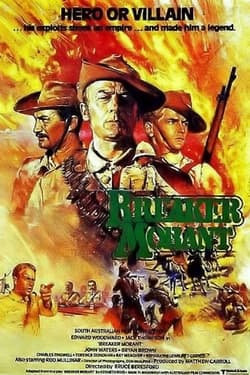
Breaker Morant and the country that adopted its scapegoat
Bruce Beresford's 1980 courtroom drama made an English-born soldier into an Australian martyr, and the picture's argument about empire has outlived its historical certainties.
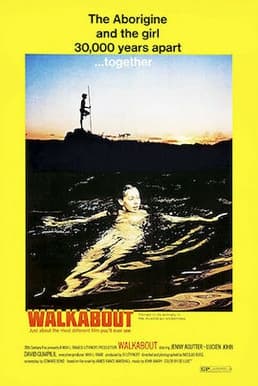
Walkabout is a British film about a country it never claims
Nicolas Roeg's 1971 picture is claimed as an Australian classic, though it was made by a Londoner, financed by two Americans and sold by 20th Century Fox. Its best argument is how little it pretends otherwise.