The Rooster puts a man in the outback and strips away every reason to stay
Mark Leonard Winter's debut feature drops Hugo Weaving into a dying town and asks how long a man will stay in a place that has stopped asking him to.
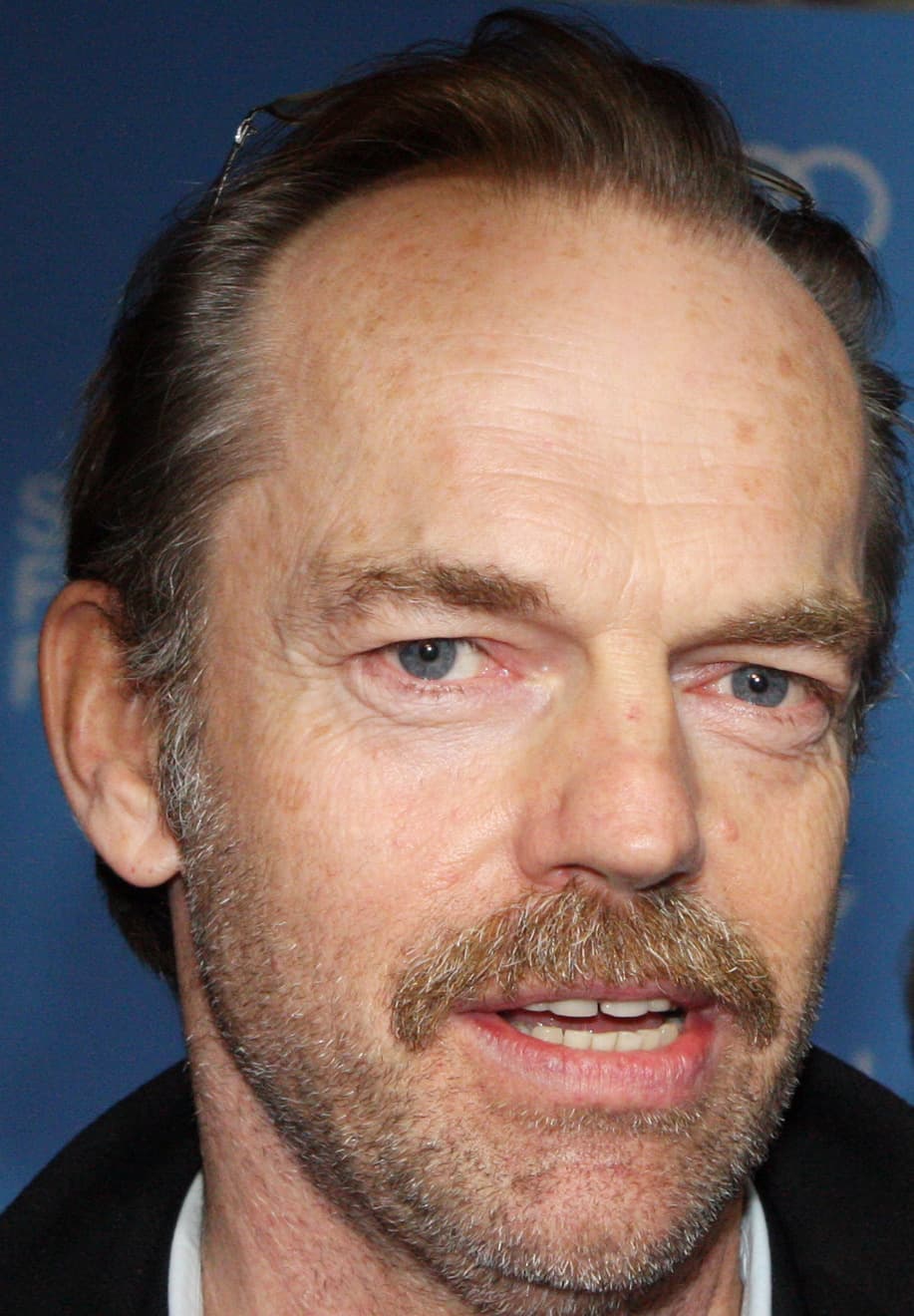
There is a particular kind of Australian town that exists in a state of slow evaporation. Not collapse, which would be dramatic and legible, but something quieter and harder to film: a place losing its people one by one, the way a dam loses water through a crack you cannot see. The shops close. The school enrolment drops. The footy team folds. The pub stays open because someone has to keep the lights on, and the person who keeps them on becomes, by default, the reason the town still registers as a town at all. The Rooster is about one of these places, and about a man who arrives in it, and about the slow, grinding question of whether arrival is the same thing as staying.
Mark Leonard Winter wrote, directed, and stars in this film, which is either a mark of extraordinary ambition or an act of creative stubbornness, depending on your disposition. Winter plays a young drifter who turns up in a remote outback community with no clear reason for being there and no obvious plan to leave. Hugo Weaving plays the town’s informal patriarch, a man whose authority comes not from any official position but from the simple fact that he has not left. In a place defined by departure, the person who remains accumulates a kind of gravity. Weaving plays this gravity with the precision you would expect from an actor who has spent four decades making underwritten roles feel inhabited.
The weight of an empty street
What Winter understands, and what lifts The Rooster above the median of Australian small-town dramas, is that a dying town is not a metaphor. It is a specific economic and social condition, and it produces specific behaviours in the people who live through it. The characters in this film do not talk about the town dying because they do not need to. They can see it. The empty shopfronts are visible in almost every exterior shot. The roads are wide and clean and carry almost no traffic. The landscape is not hostile in the way that outback landscapes are hostile in genre cinema, all scorching light and predatory distance. It is indifferent, which is worse. The land does not care whether the town survives, and the film holds that indifference in the frame without trying to make it beautiful or terrifying.
Weaving’s character, who goes by a name the town probably gave him rather than the one he was born with, operates as the film’s emotional anchor. He runs the pub. He mediates disputes. He knows which fences need mending and whose dog is sick and which families have been here long enough to claim ownership of the town’s diminishing story. When Winter’s character arrives, Weaving’s response is not suspicion but a kind of wary curiosity, the curiosity of a man who has seen enough newcomers to know that most of them leave, and who has trained himself not to invest in people who are passing through.
The dying-town tradition
Australian cinema has a long and uneven history with stories about people stuck in remote communities. Wake in Fright, the benchmark, treated the outback town as a psychic trap, a place that consumed the protagonist’s self-regard and left him with nothing but his own worst impulses. Strangerland, decades later, used the desert’s blankness as a screen onto which a family could project its fractures. Both films treated the landscape as an active antagonist. The Rooster does something different. The town is not a trap and the landscape is not hostile. The problem is simpler and sadder: there is not enough here. Not enough people, not enough work, not enough reason to stay. The question the film asks is not “can he escape?” but “why would he remain?”
This is a harder question to dramatise, because it lacks the urgency of confinement. Winter handles it by distributing the film’s emotional weight across a series of small encounters rather than building to a single crisis. A conversation at the bar. A drive to check on a neighbour. A meal eaten in silence across a kitchen table. These scenes accumulate in the way that days accumulate in a place where nothing much happens, and the film earns its running time by trusting that the accumulation itself is the story.
Weaving’s late career
It is worth noting where Weaving is in his career, because it matters to what The Rooster achieves. He is past the point where he needs to prove anything. The blockbuster roles, Agent Smith, Elrond, V, are behind him, and what remains is a body of work in smaller films that has been consistently more interesting than his franchise appearances. In Hearts and Bones, he played a war photographer returning to Sydney and confronting the human cost of an image he took. In The Rooster, he plays a man whose entire life is an argument for presence, for showing up, for being the last person in the room when the room empties.
There is a scene late in the film where Weaving’s character sits on the veranda of the pub and looks at the street and says nothing. The shot holds for a duration that would be indulgent in a less confident film. Here, it works, because the film has spent its preceding hour establishing what that street means, what it used to contain, what it has lost. The silence is not empty. It is the sound of a man listening to a town that has almost finished speaking.
Winter as triple threat
The decision to write, direct, and star in a debut feature is a gamble, and the results are uneven in the way that ambitious gambles tend to be. Winter’s performance is strong, particularly in scenes where his character’s opacity, his refusal to explain himself, creates a productive tension with Weaving’s open-hearted weariness. The direction is less consistent. Some scenes are composed with a quiet assurance that suggests Winter has thought carefully about where to put the camera and how long to hold it. Others feel rushed, as though the demands of acting in a scene compromised his ability to direct it.
The screenplay is the strongest element. Winter writes dialogue that sounds like speech rather than writing, which is rarer in Australian cinema than it should be. His characters talk the way people in remote communities actually talk: in half-sentences, in references to shared knowledge, in the comfortable shorthand of people who have known each other long enough to stop explaining. The newcomer’s inability to speak this language, his reliance on complete sentences and explicit questions, marks him as an outsider more effectively than any plot device could.
What the emptiness holds
The film ends without resolving its central question, which is the right choice. Whether the drifter stays or leaves is less important than what the town has shown him about the cost of permanence. Weaving’s character has paid that cost every day for decades. The town is his life, and his life is the town, and the circularity of that arrangement is both its meaning and its limitation. He stays because he stayed, and he stayed because he stays. There is no origin story for this kind of commitment. There is just the fact of it, solid and stubborn and wearing down.
The Rooster is a small film about a small place, and it does not pretend otherwise. Its ambitions are modest and specific: to put two men in a room, or a pub, or a paddock, and to watch what happens when one of them has nowhere to go and the other has nowhere else to be. That the film achieves this with as much clarity and feeling as it does is a credit to Winter’s writing, Weaving’s presence, and a landscape that, for once, is allowed to be ordinary. Not mythic. Not menacing. Just there, the way it always has been, waiting for no one in particular.
Bronte writes long-form criticism of Australian cinema and the international art films that feed into it. She was on the ground at Cannes in 2019 and has not entirely forgiven the festival for 2020. Patient with slow films; impatient with tidy ones.
MORE BY BRONTE HAUGHEY →
Breaker Morant and the country that adopted its scapegoat
Bruce Beresford's 1980 courtroom drama made an English-born soldier into an Australian martyr, and the picture's argument about empire has outlived its historical certainties.
Walkabout is a British film about a country it never claims
Nicolas Roeg's 1971 picture is claimed as an Australian classic, though it was made by a Londoner, financed by two Americans and sold by 20th Century Fox. Its best argument is how little it pretends otherwise.
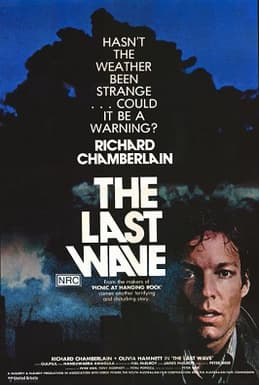
The Last Wave and the rain Sydney could not explain
Peter Weir's 1977 film puts a corporate lawyer in a drowned city and asks what a settler place owes to the ground and weather beneath it.