The SVOD local content quota is one year old and the numbers are in
The streamers were required to spend locally and most of them did, but the definition of 'local' is doing more work than the regulators intended.

The SVOD local content expenditure obligation took effect on 1 January 2025. Streaming platforms operating in Australia with annual revenues exceeding $50 million were required to spend a minimum percentage of that revenue on qualifying Australian content. Twelve months later, the first compliance reports have been filed with ACMA. The headline result: most platforms met their targets. The detail beneath the headline is less reassuring.
Who spent what
Netflix, Disney+, Amazon Prime Video, Paramount+, and Stan all filed reports by the 31 January 2026 deadline. Apple TV+ filed late, citing internal accounting complexities, but submitted within the extension period. The aggregate spend across all six platforms was approximately $340 million AUD, which exceeds the initial government modelling of $280 to $300 million. On the surface, the quota produced more spending than expected.
The breakdown tells a different story. Netflix accounted for roughly $130 million of the total, driven largely by productions that were already in development or filming before the quota commenced. Clickbait season two, Heartbreak High season three, and two unannounced original series made up the bulk of Netflix’s qualifying expenditure. Stan reported approximately $55 million, similarly weighted toward existing slate. Disney+ reported $45 million, with the majority attributed to a single large-format nature documentary series filmed across regional Australia.
The definition problem
The quota legislation defines qualifying Australian content using Screen Australia’s existing framework: Australian producer, majority Australian key creatives, principal photography in Australia. Co-productions under official treaty arrangements also qualify, and this is where the numbers start to stretch.
Several platforms counted co-productions toward their obligations where the Australian component was a minority stake. A Disney+ drama series, produced primarily in the UK with an Australian co-producer and one week of location shooting in Victoria, was reported as qualifying expenditure at its full Australian spend. Technically compliant. Functionally, the Australian creative involvement was marginal.
Amazon counted a global unscripted format with an Australian host and Australian contestants, filmed in New Zealand, as qualifying content on the basis that the production company was Australian-registered and the post-production was completed in Sydney. Again, technically compliant. The show’s connection to Australian storytelling, Australian locations, or Australian creative voices was minimal.
ACMA has acknowledged these edge cases in its interim compliance summary but has not signalled enforcement action. The regulator’s position, as stated in the summary, is that the first year is “an establishment period” during which platforms are expected to develop internal systems for tracking and reporting qualifying expenditure. The implication is that enforcement will tighten in subsequent years. The independent sector is not confident.
What the independents got
Screen Producers Australia published its own analysis of the first-year data in February 2026. The findings are blunt. Of the $340 million in total qualifying expenditure, SPA estimates that approximately $85 million flowed through independent Australian production companies. The remaining $255 million was spent on platform-owned productions, co-productions with offshore partners, and acquisitions of completed Australian films that were financed independently of the quota.
The quota does not include a sub-obligation requiring platforms to commission from independent producers. SPA lobbied for one during the consultation process. It was not included in the final legislation. The result is that platforms can meet the quota by spending on their own internal productions, staffed by their own development executives, without commissioning a single project from an independent Australian company.
This is not hypothetical. At least two platforms met their obligations primarily through internal productions. The independent projects they did commission were largely acquired as finished products or late-stage pick-ups, meaning the platform’s involvement came after the creative decisions had been made. The quota incentivises expenditure. It does not incentivise partnership.
ACMA’s capacity
ACMA’s compliance team for the SVOD quota consists of four full-time equivalent staff, according to the authority’s most recent annual report. Four people are responsible for auditing the expenditure claims of six multinational platforms, each of which has internal accounting structures designed to optimise across multiple regulatory jurisdictions simultaneously.
The first-year compliance reports were self-assessed. Platforms submitted their own figures, with supporting documentation, and ACMA reviewed them against the legislative definitions. No platform was audited in the traditional sense. The regulator has the power to request additional documentation and to conduct formal audits, but has not exercised that power in the first year.
The enforcement mechanism for non-compliance is a civil penalty of up to $10 million per breach, which sounds significant until you consider that it represents roughly one week of Netflix’s Australian revenue. The deterrent effect depends entirely on ACMA’s willingness to pursue enforcement, and the regulator’s public statements suggest a preference for collaborative compliance over punitive action.
The real question
The quota was designed to ensure that streaming platforms, which benefit from Australian subscribers and Australian infrastructure, contribute to the local production ecosystem. By that measure, it has produced additional spending. The $340 million figure is real. Jobs were created. Productions were funded. Content was made.
But the question the independent sector is asking is more specific: did the quota increase the number of original Australian stories commissioned from Australian creators? The answer, after one year, is that it probably did not, or at least not at the scale the policy was intended to produce. The platforms spent the money. They spent it in ways that met the legal definition of local content. Whether those ways aligned with the policy’s intent is a question that ACMA, and the Minister, will need to address before the second year’s reports are filed.
The quota exists. The spending exists. The gap between the two is where the independent sector lives, and after twelve months, that gap has not narrowed.
Odette covers the business of Australian screen. Previously a financial journalist. Reads every Screen Australia annual report the week it drops. Short paragraphs, long memory, never misses a figure.
MORE BY ODETTE MALOUF →
The local content quota fight that nobody is winning
The government wants streamers to spend locally, the streamers want flexibility, and the independent sector wants both to stop pretending this is about them.
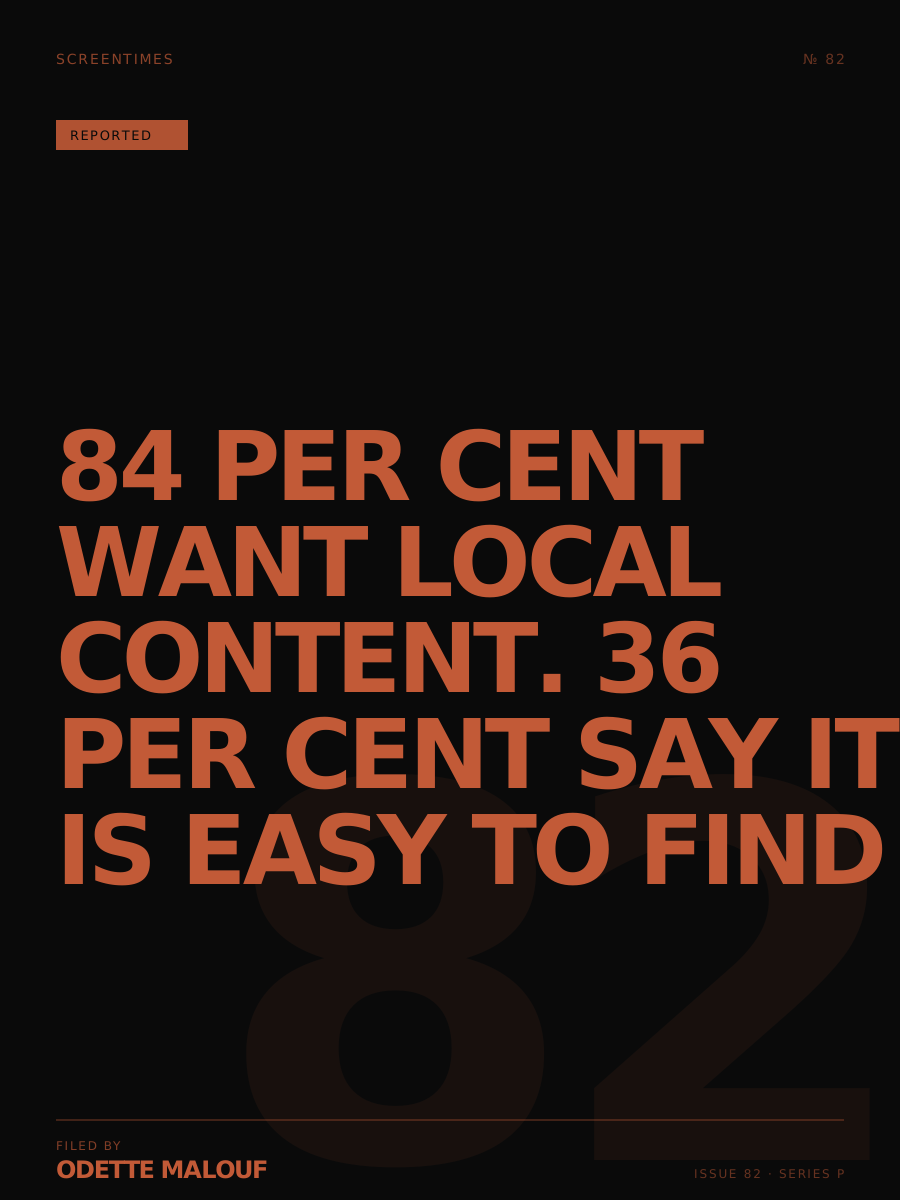
84 per cent want local content. 36 per cent say it is easy to find
Screen Australia's Screen Currency 2026 report finds strong demand for Australian screen stories and a discovery problem that no amount of production funding fixes on its own.
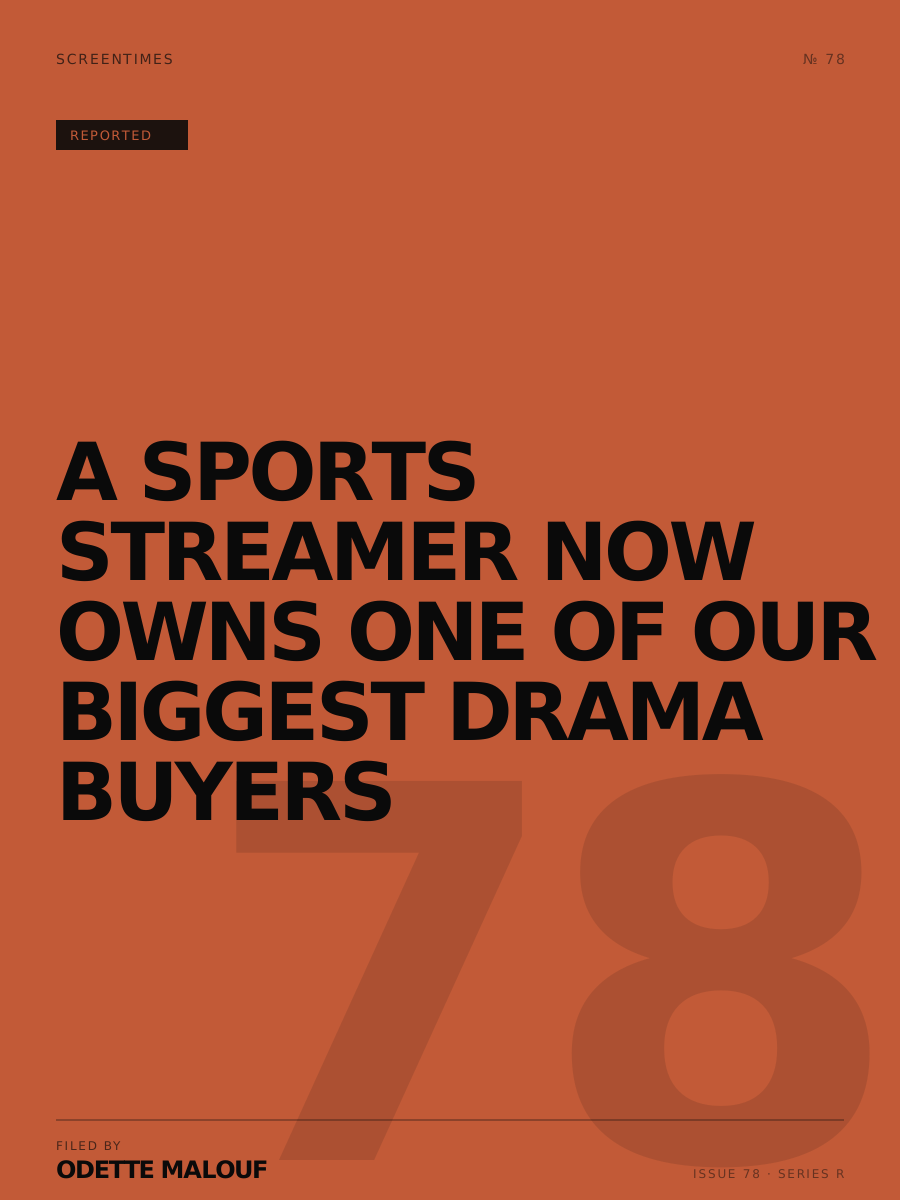
A sports streamer now owns one of our biggest drama buyers
DAZN has completed its A$3.4 billion purchase of Foxtel, handing a sports-first global platform control of a company that has been a steady commissioner of Australian scripted drama.