Disney and Paramount are pulling back from Australia and the silence is telling
Two of the five major streamers have quietly reduced their Australian commissioning, and the local production sector has not yet said the word 'contraction' out loud.
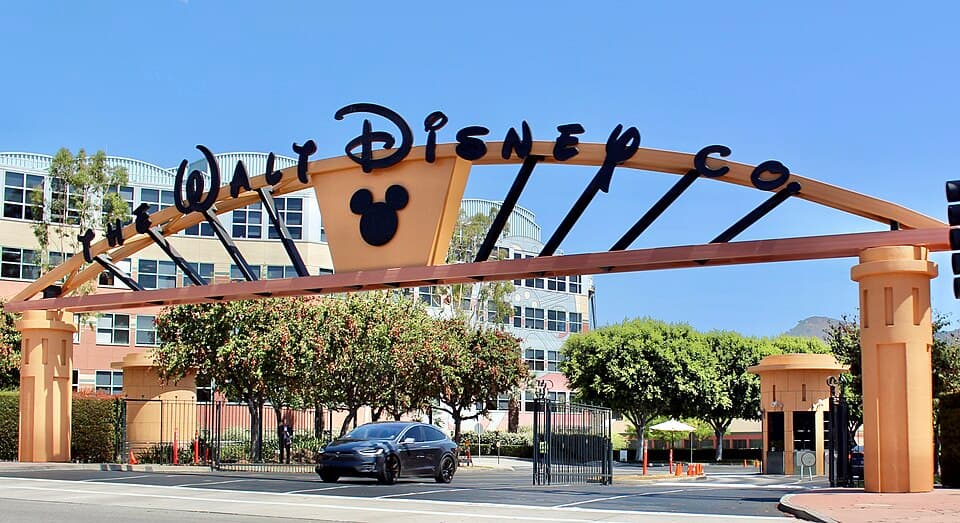
Disney+ commissioned four Australian original series in 2022. In 2023, it commissioned two. In 2024, as of October, it has commissioned none. The company has not made a public statement about reducing its Australian slate. It has not needed to. The absence of announcements is the announcement.
Paramount+ is following a similar trajectory. The platform launched in Australia in August 2021 with a stated commitment to local originals and a first-year slate that included Last King of the Cross, Spreadsheet, and Madame X. By mid-2024, Paramount’s Australian commissioning pipeline had slowed to a near-stop. The merger with Skydance, finalised in September 2024, has introduced additional uncertainty. Local production companies with Paramount development deals describe the situation as “frozen,” which in industry language means nobody is returning calls but nobody has formally cancelled anything either.
The numbers behind the quiet
The five major streamers operating in Australia are Netflix, Stan, Disney+, Paramount+, and Amazon Prime Video. Between them, they commissioned approximately 35 Australian original series in 2022. In 2023, that figure dropped to 24. Projections for 2024, based on announced titles through October, sit at around 18.
Disney’s pullback is the most visible because its initial entry was the most aggressive. The platform arrived in Australia in November 2019 and spent heavily on local content through 2021 and 2022. The Artful Dodger, Nautilus, Irreverent, and Last Days of the Space Age were all commissioned during this period. Reviews were mixed. Viewership figures were not disclosed, which at Disney means they were not good enough to disclose. The internal calculation appears to have shifted: Australian originals are expensive relative to their subscriber impact in a market of 26 million people, and the global catalogue travels better.
Paramount’s retreat has a different cause but the same effect. The Skydance merger has triggered a company-wide review of content spending, and international originals are the first line item to be scrutinised. Australia is not being singled out. Paramount has reduced commissioning in the UK, Canada, and parts of Europe on a similar timeline. But the Australian production sector, which geared up for streamer work between 2020 and 2023, is now holding capacity it cannot fill.
The production companies in the middle
The impact falls hardest on mid-sized independent production companies. Between 2020 and 2023, several Australian prodcos restructured around streamer commissions. They hired development executives. They signed first-look deals. They built internal capacity for the volume that streamers were promising. That volume has contracted, and the fixed costs remain.
Three Australian production companies with Disney or Paramount development deals declined to comment on the record. Off the record, the description is consistent: projects that were in active development have been paused without formal cancellation. Development funding that was committed has not been paid. Executives who were responsive in 2022 are now unreachable. The word “contraction” has not been used publicly by any industry body, though Screen Producers Australia acknowledged in its September 2024 briefing that “commissioning volumes have moderated from peak levels.”
“Moderated from peak levels” is doing a lot of work in that sentence.
Netflix and the relative exception
Netflix remains the most active international streamer in the Australian market, though its commissioning pace has also slowed. The platform released Boy Swallows Universe, Wellmania, and Surviving Summer across 2023 and 2024, and has additional titles in production. Its Australian strategy differs from Disney’s and Paramount’s in one key respect: Netflix treats Australian content as part of a global catalogue rather than a local offering. An Australian series that performs well in Southeast Asia or Latin America justifies its budget regardless of its Australian viewership. Disney and Paramount were commissioning for local subscriber acquisition, which is a narrower and more fragile justification.
Stan, the only Australian-owned streamer in the group, continues to commission local content but operates on a fundamentally different budget scale. A Stan original drama is budgeted at $3 million to $6 million per season. A Disney+ or Paramount+ original was budgeted at $8 million to $15 million. The gap in spending means that streamer pullback cannot be absorbed by Stan increasing its volume. The money is not equivalent.
The crew pipeline again
The downstream effect is the one nobody in an executive suite talks about first but the one that matters most to the industry’s long-term capacity. Between 2020 and 2023, the streaming boom created sustained employment for Australian crew at rates and durations that the domestic industry alone could not support. Grips, gaffers, production designers, and post-production houses built their forward projections around a commissioning volume that no longer exists.
This is not the first time the Australian crew base has faced a contraction driven by international decisions made elsewhere. The end of the first wave of Hollywood runaway production in the mid-2000s produced a similar correction. What is different now is the speed. The streaming expansion happened over three years. The contraction is happening over eighteen months. Production companies and crew who scaled up for boom conditions are being asked to scale down before they have recovered their investment.
The Australian Communications and Media Authority’s local content framework, which requires streaming platforms to spend a percentage of Australian revenue on local content, is scheduled for implementation in 2025. Whether it arrives in time to change the trajectory, and whether the percentages are high enough to matter, are open questions. What is not an open question is the direction of travel. Two of the five major streamers are pulling back. A third is slowing. The production sector built for five is about to find out what three looks like.
Odette covers the business of Australian screen. Previously a financial journalist. Reads every Screen Australia annual report the week it drops. Short paragraphs, long memory, never misses a figure.
MORE BY ODETTE MALOUF →
84 per cent want local content. 36 per cent say it is easy to find
Screen Australia's Screen Currency 2026 report finds strong demand for Australian screen stories and a discovery problem that no amount of production funding fixes on its own.
A sports streamer now owns one of our biggest drama buyers
DAZN has completed its A$3.4 billion purchase of Foxtel, handing a sports-first global platform control of a company that has been a steady commissioner of Australian scripted drama.
The SVOD local content quota is one year old and the numbers are in
The streamers were required to spend locally and most of them did, but the definition of 'local' is doing more work than the regulators intended.