Rake was never about the cases
Eight years and five seasons of Cleaver Greene taught Australian television that you can keep a man unredeemed, and that audiences will follow him anyway.
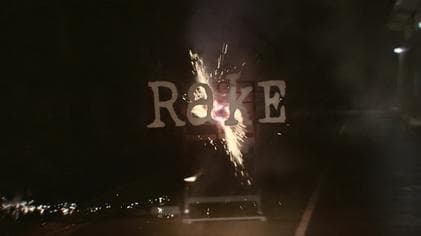
Look, here it is, wait for it: Rake is not a legal drama. It has barristers in it, and wigs, and a courtroom with a better view than it deserves, but if you went in for the law you came out with a bad education and a very good time. The cases were the delivery system. The show was a man.
That man is Cleaver Greene, a Sydney barrister who defends the indefensible, gambles what he does not have, and falls for the wrong women with a loyalty he does not extend to his clients’ expectations. Richard Roxburgh played him for five seasons on the ABC from 2010 to 2018, and he co-created the show with Peter Duncan and Andrew Knight. It is one of the genuinely strange things the public broadcaster ever put on, and it is worth saying so.
The honest thing about Cleaver
Honestly, the achievement is how little the show tries to fix him. Prestige drama of the period had a standard move with its charming wrecks: the second-season bottom, the redemption arc, the speech. Rake skips it. Cleaver finishes episodes slightly worse than he started them, and then does it again next week. The writers understood that the audience did not want him to get better. We wanted to see how he would get out of it, and we wanted him to be allowed to be himself while he did.
To its credit, the show kept a floor of consequence under the farce. People in Cleaver’s orbit get hurt, and the hurt stays. The supporting cast (Danielle Cormack as Scarlet, Russell Dykstra as Barney, Adrienne Pickering as Missy) were given enough interior life that they never became props for his chaos. The show’s wit is the wit of people who know exactly what he costs.
The performance under the performance
Roxburgh gets the credit, and he deserves it, but it is worth being specific about what he is doing. Cleaver is written as a talker, a man who solves problems with sentences, and Roxburgh plays the talk as a form of fear. Watch the beat before a big courtroom speech: the half-second where the face goes blank and the man is, clearly, working out whether this is the one that fails. Then the voice arrives, and it is magnificent, and the audience relaxes. The show understood that the relief is the pleasure. Every win is a near miss.
That is also why the farce works. Farce needs a protagonist who is always one bad decision from collapse, and a world that keeps supplying the bad decision. Rake supplies it weekly (a client who lies, a lover who turns up, a debt that comes due), and Cleaver’s genius, which the show treats as both his gift and his curse, is that he can talk his way out of everything except himself.
A Sydney that looks like Sydney
There is a cheap way of making a Sydney drama, which is to point the camera at the harbour and call it a day. Rake gave the city to the people who actually work in it: the courthouse corridors, the tired chambers, the pubs where the verdict gets argued again. It looked like a place that sent invoices. That sense of a city of professionals (a lot of them unwell) is one of the reasons the show worked on its home audience, who recognised the world and could laugh at it without being told to.
The remake that missed
An American version, with Greg Kinnear in the lead, aired on Fox in 2014 and was cancelled after a single season, by the usual accounts. The reasons are instructive. Transposed to a network with standards-and-practices departments and a need for a likeable lead, the character lost the thing that made him work, which is that nobody in the original, including Cleaver, was ever quite on his side. The cases survived the translation. The man did not.
What it left
Australian television has a record of building shows about decent people in difficult jobs. Rake is the rare local hit about an indecent person in a good job, and its legacy is a quiet permission: that a public broadcaster can fund a protagonist the audience loves without ever approving of him. Whether or not later shows admit it, that licence is part of its inheritance.
If you have not seen it, start at the first season, give it three episodes, and let the man do the work. If you have, you already know what I mean, and you probably have a favourite disaster.

Rhys watches more television than is healthy and writes about it with a dryness that tips occasionally into cruelty. His favourite ABC drama is the one the ABC just cancelled, whichever that happens to be.
MORE BY RHYS TAVITA →
What Australian television has coming in 2020 and why you should care
The ABC has a political thriller, Stan has a Cate Blanchett immigration drama, and Foxtel has whatever Foxtel always has, which is good television nobody subscribes to watch.
Return to Paradise imports the cosy-crime formula and survives the flight
The ABC took Britain's most reliable comfort-crime export, moved it to a NSW beach town, and somehow the formula arrived intact.

Plum and the game that breaks the men who love it
Brendan Cowell's ABC drama is about a retired league hard-man whose head is full of poems and quietly bleeding, and it argues those are the same thing.