The Narrow Road to the Deep North won every department but the show
Justin Kurzel's Burma Railway miniseries won nine AACTAs and led the Logies on nominations, then lost best miniseries at both, and the juries were right both times.
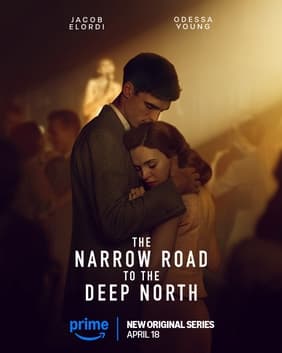
The Narrow Road to the Deep North went into the Logies on 16 August with more nominations than anything else on the night, six, and came out with one, Simon Baker for supporting actor. The best miniseries Logie went to Goolagong. Back in February, at the AACTAs, it won nine awards, and lost best miniseries to Apple Cider Vinegar (which I liked a great deal and said so, so no grudges here).
That is a show that won the camera, the cutting room, the wardrobe, the sound desk, the score and its lead actor, and then lost the building. Twice.
Here it is, wait for it: I think the juries got it right both times. That is the annoying part.
Nine wins, one missing
The AACTA list is worth reading in full, because it is basically a crew sheet. Jacob Elordi for lead actor. Heather Mitchell for supporting actress. Justin Kurzel for direction. Sam Chiplin for cinematography. Alexandre de Franceschi for editing. Alice Babidge for costumes, and again with Bev Dunn and Paul Sarpi for production design. Jed Kurzel for the score. The sound team, Andy Wright, Mick Boraso, Nick Emond and Glenn Newnham. Elordi also got a Golden Globe nomination and a Satellite Award, which is the kind of sentence Australian television does not usually get to write about itself.
Justin Kurzel directed all five episodes and Shaun Grant wrote all five, which puts this alongside Snowtown, True History of the Kelly Gang and Nitram in the long, grim Kurzel and Grant catalogue. Fremantle bought the rights to Richard Flanagan’s Booker winner in 2018, stepped away, and Curio Pictures made it. They shot from November 2023 to March 2024, it had a first outing at the Berlinale, and Prime Video put all five episodes up on 18 April 2025. That was Good Friday, timed for the Easter holidays, which also put it a week out from Anzac Day, and I doubt that escaped anyone at Amazon.
Three years, one of them great
The show runs three timelines and cuts between them constantly. In 1940 Dorrigo Evans (Elordi) is a medical student engaged to Ella (Olivia DeJonge) who meets his uncle Keith (Baker) for the first time and falls for Keith’s much younger wife, Amy (Odessa Young). In 1942 he is a prisoner of war and the camp doctor on the Burma Railway, under Major Nakamura (Show Kasamatsu). In 1989 he is Ciarán Hinds, a celebrated surgeon and war hero, married to an older Ella (Mitchell), refusing to tell a journalist anything true about the war.
Look. The 1942 material is as good as anything this country has put on a screen. Dorrigo debriding tropical ulcers with maggots because there is nothing else. An amputation with a meat saw. Rabbit Hendricks drawing the camp in secret, racing to finish before he dies. And the fourth episode, which I have seen once and do not plan to see again: Thomas Weatherall’s Darky Gardiner, who will not give up the two men who skived off the work party, beaten late into the night while the rest of the camp is lined up and made to watch. Dorrigo washes the body at dawn, then finally opens the letter from Ella he has been saving, and inside is a newspaper clipping saying Keith and Amy have died in a fire.
That is one episode of television, and it is also, honestly, the entire AACTA craft list in one sequence. Chiplin’s light, de Franceschi’s patience, the sound team, Babidge’s rags. You can see exactly what the craft juries were voting for. They were voting for that night.
And then it cuts to 1989
The problem is the next cut.
To its credit, Hinds is very good, and Mitchell (who won that AACTA for a reason) plays Ella as a woman who has known for forty years that she was the consolation prize and has decided to be excellent anyway. But the 1989 strand is, mostly, an old man being unpleasant in nice rooms. There is an affair with Lynette (Essie Davis), who is married to his colleague Rick (Dan Wyllie). There is a surgery that goes wrong and a medical inquiry. There is a charity event. There is a book launch for Rabbit’s drawings.
Every time the show leaves the camp for 1989, the air goes out of it, and it does this over and over across five episodes. The novel has room for old Dorrigo’s emptiness to accumulate into something. The show has the same emptiness and far less time, so it plays as interruption.
The 1989 strand exists to deliver the ending: Ella admitting that Amy did not die in the fire, that she came looking for Dorrigo after the war and found Ella with a baby instead, and Dorrigo driving off with that and being hit at an intersection, his last vision the jungle. It is a strong ending. It is Flanagan’s. It still does not justify all the charity dinners.
The best scene is in the wrong year
Here is the thing that tells you the most about the show. Its best scene is not in any of its three years.
It is 1946, Anzac Day, in the last episode. The surviving men, back home, drink together and then break into the fish shop in Darky’s home town, where Darky always wanted to free the live fish from the tank, and they carry the fish down to the sea and let them go. It is ridiculous and wrecked and completely earned, and it is set in a year the show only reaches in its final hour.
That is the strongest argument I can make for why it lost the big one. The juries for best miniseries are not voting on a night in a camp or a break-in at a fish shop. They are voting on five episodes as a whole, including the bit where Ciarán Hinds attends a fundraiser. Apple Cider Vinegar knew exactly what it was from top to bottom. Goolagong is a sports biopic, which is about as clear as a shape gets. The Narrow Road to the Deep North is three shows, one of them great, braided together because the book was braided together.
(Small, separate tragedy: Thomas Weatherall was nominated twice in the same Logie category, for this and for Heartbreak High, and lost both times to his own co-star.)
Where that leaves it
None of this is a complaint about the people who made it. The voting, for once, made sense. The departments were extraordinary, so the departments won. The whole was uneven, so the whole lost.
It is the best thing Australian television made in 2025 in about nine different ways. It just was not the best show, and it turns out those are different prizes.
Rhys watches more television than is healthy and writes about it with a dryness that tips occasionally into cruelty. His favourite ABC drama is the one the ABC just cancelled, whichever that happens to be.
MORE BY RHYS TAVITA →
High Country trusts the mountains more than the mystery
Eight episodes, five missing persons, and a Victorian Alps landscape doing about sixty per cent of the dramatic work. Season two arrives on 14 September with almost nobody from season one.
Stan made a great Australian road comedy and told nobody
Dylan River directed all eight episodes of a stolen-taxi comedy set in the 1980s outback, and it went out on Stan with roughly the fanfare of a software update.
Invisible Boys never puts anyone on the bus to Perth
Nicholas Verso's ten-part Stan drama refuses the one ending Australian queer coming-of-age stories always reach for, and is far better for the refusal.