Floating Life and the family that was never going to land
Clara Law's 1996 film about a Hong Kong family scattering across the world was Australia's Oscar submission and barely registered at the local box office. It remains the most honest film we have about arriving.
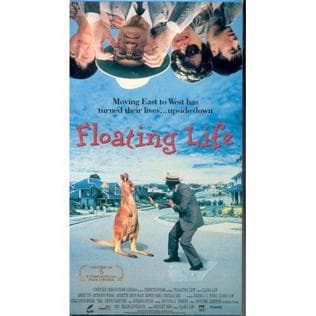
I keep thinking about how quietly Floating Life asks its question. Not ‘will they fit in?’, which is the question Australian cinema has usually put to migrants, but something stranger and kinder: what if the family was never going to land, and the film is about learning to live in the air?
Clara Law’s 1996 picture follows a Hong Kong family in the years before the 1997 handover. An older couple move to Australia with their two youngest sons, and they stay with a daughter who has already made a life here. Other members of the family scatter elsewhere. The title is literal. Nobody in this film is rooted, and the film does not pretend that rooting is the goal.
What the film was, and what it was given
It was a serious piece of work by the standards of the time. Law directed from a screenplay she wrote with Eddie Fong, her partner and longtime collaborator; the two of them were nominated for the screenplay prize at the 1996 AFI Awards. Dion Beebe shot it. Bridget Ikin produced. Davood Tabrizi’s score won a Golden Horse Award in Taiwan, and the film took Law a Silver Leopard at Locarno and the best-director and best-feature prizes at Gijón. It was selected as Australia’s entry for the Academy Award for Best Foreign Language Film that year and was not accepted as a nominee.
Then there is the number. In Australian cinemas it grossed $141,398, according to the figures usually quoted for it. That is not a failure by the standards of an art-house release, and it is not what a film with that résumé should have earned. I do not think the audience rejected it. I think the marketing machine, and the shape of the local conversation about migration at the time, had no category for a film that was neither a comedy of cultural clash nor a tragedy of assimilation.
The first Australian film with my mother in it
I want to say what the picture did for me, because the argument I am making is not abstract. The first Australian film I saw in which a person on screen looked like my mother was this one, and I was twenty-six. That is a very late age to meet your own family in a cinema. It is also, if you think about it, a fairly accurate measure of how long the national screen took to catch up.
What I noticed first was not the representation, though that mattered. It was the pacing. The film is domestic in scale and patient in rhythm, more interested in a family’s long conversations about who will go and who will stay than in any single event. A migrant story in the commercial mould would hurry the family towards a lesson. Law lets them be tired. The film does not ask whether the family will arrive; it asks what it costs to keep one foot in each place.
The craft of staying still
It would be easy to read the film as sociology, and that does it a disservice. Beebe’s photography and Tabrizi’s score (the work that took the Golden Horse) are doing patient, particular things. The images do not hurry to establish a postcard Sydney or a postcard Hong Kong. They stay with faces and rooms, and the effect is that place becomes a feeling the characters carry from one house to the next. Law and Fong write the same way. Nobody delivers a speech about identity, because nobody in a family that is actually coming apart has the energy for one.
That restraint is also why the film ages so well. The commercial migrant story of the 1990s now looks dated, with its tidy reconciliations and its cheerful final-reel dinners. Floating Life looks contemporary because it never promised a resolution. It offers attention instead, and attention does not date.
Why the handover matters
The 1997 handover is the pressure under every scene, and the film treats it as weather, not as plot. Families in Hong Kong in the mid-1990s were making decisions about whether to leave, and the decisions were not heroic or even clearly rational. They were made on the basis of rumour, of a sister’s advice, of who already had a visa. The film understands that migration at this scale is a mood before it is a policy.
Anthony Wong, Annette Shun Wah, Annie Yip, Edwin Pang and Cecilia Fong Sing Lee make up the principal cast, and the ensemble works because none of them plays a representative. Nobody is asked to stand for a community. They are asked to be one person each, with a particular worry, and the film trusts the sum of those worries to say something about the whole.
Australia as one place among several
What I find most radical about the picture, now, is that it declines to make Australia the destination of the story. Sydney is where part of the family has come to rest, or to pause. It is not the film’s point of view. It is one of the places a Chinese family might be, and the film regards it with the same mix of hope and weariness it brings to everywhere else.
That is a generous way to make a film in a country that has historically wanted to be the answer. It is also a risky one. The local industry rewards films that confirm the nation’s picture of itself, and a film that quietly declines the invitation is easy to forget.
A country that wanted an answer
I think about the year the film came out. It was 1996, and the national argument about who Australia was and who it was for had a sharp edge. A film that said ‘some of us are still deciding’ was gentle in tone and quite hard in implication. It refused to flatter the host country, and it refused to flatter the migrants. Both are rarer than they should be.
What the archive has done
The National Film and Sound Archive has since restored the film, and a restored print is exactly what it deserved. The more important repair, though, is in how the picture gets talked about. It is not a ‘migrant film’, as if that were a genre with fixed walls. It is an Australian film of the 1990s, one of the best, made by a director who arrived here from Hong Kong and looked at the country with the attention of a person who has not yet decided whether to stay.
I want to say, or rather, I want to ask: how many of us are still living inside that attention? I do not mean the immigrants. I mean everyone. The national habit of telling arrival stories as if arrival were a single event has never matched what people actually do, which is arrive slowly, in instalments, and sometimes not entirely.
Floating Life knew that in 1996. It is still waiting for the country to catch up.

Mara writes essays. She came to film writing from a decade of literary criticism and still reaches, sometimes, for a novel before she reaches for a shot list. She lives in the inner north of Melbourne and does not explain which city that is.
MORE BY MARA DENG →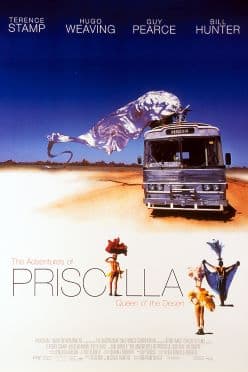
Priscilla and the question of who gets on the bus
The 1994 road comedy is remembered as the film that let Australia laugh at itself. Look at who it left off the bus, and the generosity gets more complicated.
The Home Song Stories and the mothers we have to explain
Tony Ayres made a film about a Chinese migrant mother and refused to redeem her. Nineteen years on it is still the bravest thing about it.

Of an Age and the country a 24 hour love can hold
Goran Stolevski's second feature is a 24 hour love story shot in suburban Melbourne. The country it photographs is one I keep going back to.