David Michod keeps making films about men who destroy what they build
From Animal Kingdom to The Rover to War Machine, Michod's career is a study in how power corrodes from the inside.
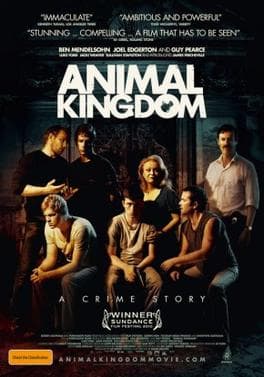
David Michod’s films do the same thing. They do it in different settings and at different scales and with different budgets and in different genres, but they do the same thing. They take a man, or a group of men, who have built a structure of power, whether that structure is a crime family, a survivalist’s code, a military command, or a medieval kingdom, and they watch as the man, or the men, dismantle it. Not from incompetence. Not from external pressure. From something internal, something that looks like ambition from the outside but functions, on closer inspection, as a drive toward destruction that cannot be separated from the drive toward control. The building and the wrecking are the same impulse, and Michod’s career is a study of that identity.
The debut that announced everything
Animal Kingdom (2010) is one of the best Australian debut features of the last thirty years, and it is also, in retrospect, a film that contains every theme Michod would spend the next fifteen years exploring. The Cody family runs a criminal enterprise in suburban Melbourne. The matriarch, Smurf (Jacki Weaver), holds it together through a combination of maternal warmth and sociopathic pragmatism. The uncles are violent, charismatic, and operating on borrowed time. The youngest member, J (James Frecheville), enters this world as an outsider, a teenager orphaned by his mother’s overdose, and the film follows his education in the mechanics of power and the cost of proximity to it.
What makes Animal Kingdom Michod’s film rather than a conventional crime drama is the specificity of its interest in collapse. The Cody family is not brought down by the police, though the police are there. It is not brought down by a rival operation, though rivals exist. It is brought down by the family itself, by the internal logic of a power structure that can only maintain control through escalating violence, and the escalation eventually consumes the people doing the escalating. Smurf’s love for her sons is real. It is also the thing that kills them, because her love expresses itself as protection, and her protection expresses itself as violence, and the violence cannot be contained within the boundaries she has set for it.
Weaver’s performance received the attention it deserved. The film won awards. Michod was immediately categorised as an Australian crime filmmaker, which was accurate in the narrowest sense and misleading in the broader one, because Animal Kingdom is less interested in crime than it is in the specific way that family structures metabolise violence.
The desert strips everything back
The Rover (2014) is the film that clarified Michod’s project. Set in a near-future Australian outback ten years after an unspecified economic collapse, it follows Eric (Guy Pearce), a man who has lost everything and is pursuing a group of thieves who have stolen his car. The car is the only thing he has left, and the pursuit of it becomes a study in what happens to a man when all social structures have been removed and the only thing that remains is will.
The film is deliberately punishing. It is slow, violent, and nearly wordless for long stretches. The landscape is bleached and empty. The people who populate it are operating at the level of pure survival, and the moral frameworks that would normally govern their behaviour have evaporated along with the economy that supported them. Robert Pattinson plays Rey, the brother of one of the thieves, a young man with an intellectual disability who becomes Eric’s reluctant companion, and the relationship between them is the film’s only source of tenderness, which makes it also the film’s most vulnerable element.
What The Rover does is take the thesis of Animal Kingdom and remove everything that made it palatable. No suburban setting. No family dynamics. No Jacki Weaver providing a performance so charismatic that the audience can enjoy the film without fully confronting its bleakness. In the desert, with the structures gone, Michod’s argument is naked: men build systems of control, and those systems eventually consume the men who built them, and what remains after the consumption is not freedom but emptiness.
The Netflix pivot
War Machine (2017) was Michod’s first film for Netflix and his first film set outside Australia, and the critical response was confused in a way that was more revealing about the critics than about the film. Brad Pitt plays a fictionalised version of General Stanley McChrystal, the American military commander in Afghanistan who believed he could win the war through a combination of counterinsurgency theory, personal charisma, and an absolute refusal to acknowledge the possibility of failure. The film is a satire, which surprised people who had decided Michod was a serious filmmaker, as though seriousness and satire were mutually exclusive.
The confusion was understandable but wrong. War Machine does exactly what Michod’s previous films do. It places a man at the centre of a power structure, gives him the intelligence and ambition to believe he can control outcomes, and then watches as the structure collapses from within. McChrystal, as Pitt plays him, is not stupid. He is not corrupt. He is a man of genuine conviction whose conviction is indistinguishable from arrogance, and the arrogance leads him to make decisions that destroy his career, his mission, and the lives of the soldiers under his command. The building and the wrecking. The same impulse.
What the film lost by leaving Australia was specificity of place. Animal Kingdom was Melbourne in its bones. The Rover was the outback as both landscape and metaphor. War Machine is set in Afghanistan but could, structurally, be set anywhere that American military power operates, and the generic quality of the setting drains the film of the geographic intelligence that made Michod’s earlier work distinctive. The satire is sharp. The performances are committed. But the film feels untethered in a way that his Australian work does not.
The king and the kingdom
The King (2019), also for Netflix, pushed even further from Australian soil. An adaptation of Shakespeare’s Henriad starring Timothee Chalamet as Henry V, the film is the largest canvas Michod has worked on and the most conventional narrative he has attempted. It is also, beneath the armour and the medieval settings, the same story again. A young man inherits power he did not seek. He attempts to wield that power responsibly. The attempt draws him into violence, and the violence transforms him, and by the end of the film the man who wanted to be a good king has become the kind of king he despised at the beginning.
Joel Edgerton co-wrote the screenplay with Michod and plays Falstaff, and the Michod-Edgerton partnership is one of the more productive creative relationships in contemporary Australian cinema. Edgerton’s contribution tends to ground Michod’s more abstract impulses in character detail, and The King benefits from this. Chalamet’s performance is better than the initial reviews suggested, carrying a quiet devastation in the final scenes that earns the film’s thesis about the corruption of power more convincingly than the battle sequences do.
What leaving cost and what it paid for
The trajectory from Animal Kingdom to The King is a trajectory away from Australia, and the question is whether this matters. In one sense it does not: Michod’s thematic concerns are portable, and the argument he makes about power and self-destruction applies as readily to a medieval English court as to a Melbourne crime family. In another sense it matters a great deal, because the specificity of Michod’s best work is geographical. The Cody house in Animal Kingdom, with its carpeted hallways and its television always on, is not interchangeable with any other location. The bleached roads of The Rover are not abstract space. They are a particular desert rendered with a particular attention to light and distance and silence. When Michod’s films are set in Australia, the landscape is a character. When they are set elsewhere, the landscape is a backdrop.
Netflix gave Michod budgets and stars that the Australian industry could not provide. What it took, or what Michod traded, was the pressure of working within constraints that forced his films toward a density of place and mood that his larger productions do not always achieve. War Machine has Brad Pitt. The King has battle sequences. Neither has the airless, inescapable quality of that carpeted house in Pascoe Vale.
Whether Michod returns to Australian stories is a question the industry asks about all its most talented exports, and the answer is usually determined by economics rather than desire. Michod has said he wants to. He has said he has Australian projects in development. What he has not said, because no filmmaker says this, is whether the return would feel like coming home or like regression, whether the small budgets and the local stories would feel like the constraints that made his work great or the constraints that he left for a reason. The films will answer that question. They always do.
Bronte writes long-form criticism of Australian cinema and the international art films that feed into it. She was on the ground at Cannes in 2019 and has not entirely forgiven the festival for 2020. Patient with slow films; impatient with tidy ones.
MORE BY BRONTE HAUGHEY →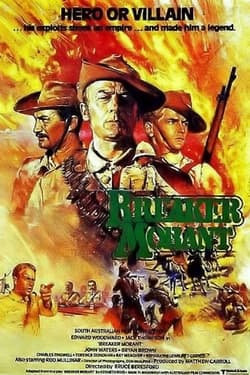
Breaker Morant and the country that adopted its scapegoat
Bruce Beresford's 1980 courtroom drama made an English-born soldier into an Australian martyr, and the picture's argument about empire has outlived its historical certainties.
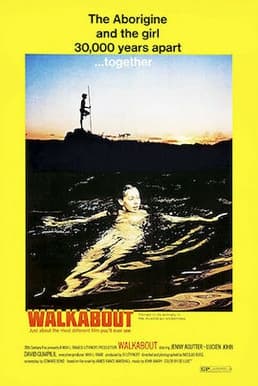
Walkabout is a British film about a country it never claims
Nicolas Roeg's 1971 picture is claimed as an Australian classic, though it was made by a Londoner, financed by two Americans and sold by 20th Century Fox. Its best argument is how little it pretends otherwise.
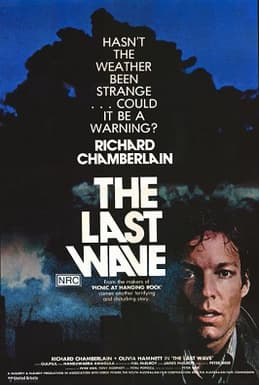
The Last Wave and the rain Sydney could not explain
Peter Weir's 1977 film puts a corporate lawyer in a drowned city and asks what a settler place owes to the ground and weather beneath it.