Anyone But You made $220 million by treating Sydney like a postcard and the audience like it was 2003
The most commercially successful film ever shot in Australia is a romantic comedy that uses Sydney Harbour the way a travel brochure does, and that calculation paid off.

The numbers are not subtle. Anyone But You cost somewhere between $25 million and $50 million to produce, depending on which accounting you trust, and it earned over $220 million at the global box office. It is the most commercially successful theatrical romantic comedy since Crazy Rich Asians in 2018, and it is the highest-grossing film ever shot primarily in Australia. These are facts worth sitting with, because they tell you something about what the market wanted in late 2023 that the market had not been getting; namely, a film in which two attractive people dislike each other in a beautiful location and then, through a series of contrived circumstances, discover that they were wrong.
Will Gluck’s picture is not trying to be more than this. I want to be precise about what I mean, because there is a critical habit of treating commercial transparency as a deficiency, as though a film that knows exactly what it is and delivers it without apology is automatically less interesting than one that hedges. Anyone But You does not hedge. It is a romantic comedy built on the structural logic of Shakespeare’s Much Ado About Nothing, which it acknowledges explicitly in its source material credit, and it deploys Glen Powell and Sydney Sweeney with the confidence of a studio that understood, correctly, that these two people on screen together would generate enough friction and charm to sustain a running time that is, if we are honest, about fifteen minutes too long.
Sydney as set dressing
The film was shot in Sydney and its surrounds, and it uses the city the way a certain kind of international production has always used certain kinds of cities: as landscape, as light, as a visual promise that the experience of watching this film will be pleasurable in the same way that a holiday is pleasurable. The Harbour appears. The beaches appear. The sandstone and the figs and the clean blue geometry of the water appear, and they appear in wide shots and golden-hour compositions that belong on the side of a Qantas billboard.
This is not a criticism, exactly; or rather, it is an observation that becomes a criticism only if you expected something different. The picture is set in Sydney because the production received substantial location incentives from the New South Wales government, and because the exchange rate made Australia competitive against comparable locations in Europe and Southeast Asia. The story could be set anywhere warm with a coastline and a supply of photogenic architecture. The Australian-ness of the setting is cosmetic. No character speaks with an Australian accent. No scene depends on any quality specific to Sydney as a lived place. The harbour functions here the way the Amalfi Coast functions in a Nancy Meyers picture: it is there to be gorgeous, and it is gorgeous, and that is the extent of the transaction.
The question of nationality
This raises a question that Australian film culture returns to every few years, usually with a weariness that suggests everyone already knows the answer and would prefer not to have the conversation again: is this an Australian film? The director is American. The leads are American. The screenplay, adapted by Gluck and Ilana Wolpert from Shakespeare via a loose modern reworking, was developed in Los Angeles. The financing came from Sony Pictures, an American studio. The crew was largely Australian. The locations are Australian. The post-production facilities were Australian. The government subsidies were Australian.
The honest answer is that Anyone But You is an Australian film in the same way that a hotel built by an international chain in Circular Quay is an Australian hotel. It exists here. It employs people here. It looks, from the outside, like it belongs here. But the decisions about what it is and what it means were made somewhere else, by people whose relationship to the place is professional rather than personal. This is not a moral failing. It is how the global production economy works, and pretending otherwise does not help anyone understand the actual conditions under which Australian screen workers earn a living.
Powell, Sweeney, and the mechanics of charm
What the picture does well, and what accounts for its commercial performance far more than its location or its source material, is cast its two leads with precision. Glen Powell in 2023 was in the middle of a run that would make him, by most industry measures, a genuine movie star in the old-fashioned sense: someone whose presence in a project changes the economic calculus of that project. Sydney Sweeney, coming off Euphoria and a string of prestige television roles, brought a different kind of audience, younger and more online, and the combination proved to be almost unreasonably effective.
Their chemistry is real, in the way that screen chemistry is always both real and manufactured: the actors are doing something genuine with their eyes and their timing, and the lighting and the editing and the scoring are doing everything possible to amplify it. There is a scene in which the two of them, forced to share a bed, perform an elaborate pantomime of mutual disgust that is transparently, visibly, pleasurably a prelude to desire. It is not new. It is not original. It works. It works the way it has worked since Claudette Colbert and Clark Gable put a blanket between them in It Happened One Night, because the structure is sound and the performers are committed to it.
What the revival means
The success of Anyone But You prompted a wave of commentary about the “return of the romantic comedy,” and much of that commentary conflated one film’s commercial performance with a genre-wide trend. The picture did not revive the romantic comedy; the romantic comedy had not died. It had moved to streaming, where it continued to perform steadily in a lower-profile register. What Anyone But You demonstrated was something more specific: that a theatrically released, studio-backed romantic comedy with two charismatic leads and a sun-drenched setting could still open wide and draw audiences who wanted to sit in a dark room with strangers and watch people fall in love.
Whether this constitutes a meaningful development for Australian cinema is a separate question, and the answer is probably: not much, or not directly. The film’s success will generate more international productions in Australia, which will generate more crew employment and more location spending, which is good for the infrastructure if not for the culture. The next international romantic comedy shot in Sydney will use Sydney the same way: as a surface, a colour, a temperature. And Sydney will oblige, because Sydney is very good at being looked at, and because the economics make sense, and because the alternative is not being chosen at all.
What I will say for the picture is this: it knows what it is, it does what it sets out to do, and it does it with a competence that is itself a form of craft. Not every film needs to interrogate its own premises. Some films are built to deliver pleasure, and the skill involved in delivering that pleasure reliably, at scale, to an audience that has been underserved, is not nothing. Anyone But You is not a great film. It is a successful one, and the gap between those two things is where most of the interesting questions about commercial cinema live.

Bronte writes long-form criticism of Australian cinema and the international art films that feed into it. She was on the ground at Cannes in 2019 and has not entirely forgiven the festival for 2020. Patient with slow films; impatient with tidy ones.
MORE BY BRONTE HAUGHEY →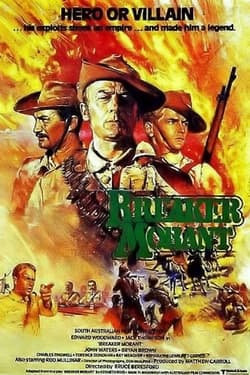
Breaker Morant and the country that adopted its scapegoat
Bruce Beresford's 1980 courtroom drama made an English-born soldier into an Australian martyr, and the picture's argument about empire has outlived its historical certainties.
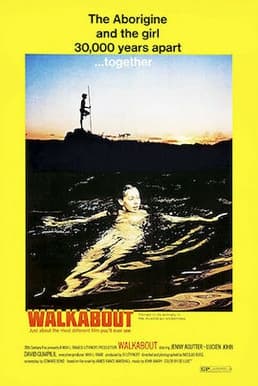
Walkabout is a British film about a country it never claims
Nicolas Roeg's 1971 picture is claimed as an Australian classic, though it was made by a Londoner, financed by two Americans and sold by 20th Century Fox. Its best argument is how little it pretends otherwise.
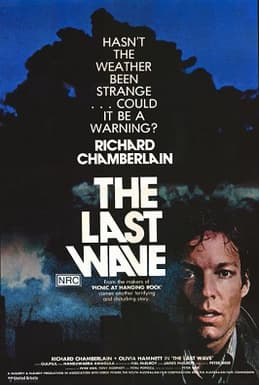
The Last Wave and the rain Sydney could not explain
Peter Weir's 1977 film puts a corporate lawyer in a drowned city and asks what a settler place owes to the ground and weather beneath it.