Anyone But You made $220 million and Australian cinema still does not know what to do with that
The most commercially successful film ever shot in this country is a romantic comedy that pretends to be American, and the success tells us something we do not want to hear.

I want to say I did not enjoy Anyone But You. That would make this essay simpler, because then I could write it from the outside, the way I have written about plenty of international productions that pass through Australia, use the light, employ the crews, and leave without contributing anything to the national conversation. I could note the box office, acknowledge the spectacle, and move on. But I enjoyed it. I sat in a cinema in Newtown and I laughed at the bit with the boat and I watched Glen Powell do the thing with his face that Glen Powell does, and I had a good time, and when it was over I walked out feeling slightly odd about the whole experience in a way I have been trying to articulate for weeks.
The oddness is this: Anyone But You is the most commercially successful film ever shot in Australia. Over $220 million at the global box office. More than Crocodile Dundee adjusted for inflation, more than Mad Max: Fury Road domestically, more than any Australian-set story has ever earned. And it is not, by any meaningful cultural measure, an Australian film. The director is American. The leads are American. The screenplay was developed in Los Angeles. The financing came from Sony. The story is set in Sydney the way a screensaver is set in a forest: the place is there, it is pretty, and it does not matter.
What Australian cinema gains
I want to be honest about the material reality first, because dismissing it would be dishonest. Anyone But You employed hundreds of Australian crew members. Grips, gaffers, art department, catering, drivers, location managers, post-production houses in Sydney and Melbourne. These are real jobs held by real people in an industry where steady work is never guaranteed, and a production of this size, shooting for weeks across multiple Sydney locations, represents a significant injection of income into the local screen workforce.
The infrastructure benefits are real too. Fox Studios hosted significant portions of the production. Location fees went to local councils. Accommodation, transport, equipment hire: the production spent money in Australia, and that money circulated through the economy in ways that are genuinely useful to people whose livelihoods depend on the screen sector. When Screen NSW offers location incentives to attract international productions, this is the return they are hoping for. On those terms, Anyone But You is a success story.
The problem is that those terms are the only terms on which it is a success story for Australia. The film does not tell an Australian narrative. It does not cast Australian actors in lead roles. It does not engage with anything specific to Sydney as a place where people actually live, fight, love, grieve, or negotiate their identities. Sydney in Anyone But You is a holiday destination. It functions as setting the way Santorini functions in a travel ad: sun, water, architecture, warmth. Beautiful and empty of meaning.
What Australian cinema does not gain
Here is where I start to feel the ambivalence sharpen into something more uncomfortable. Australian cinema has spent decades trying to articulate what it is, what distinguishes it, what makes it worth protecting and funding. The answer, historically, has involved Australian stories told by Australian filmmakers with Australian actors, reflecting something about the experience of living in this country back to the people who live here. Samson and Delilah. The Sapphires. Animal Kingdom. The Dressmaker. Babyteeth. Films that could not have been made anywhere else, because their texture and their meaning are embedded in the place.
Anyone But You could have been made anywhere with a harbour and a favourable exchange rate. And it made more money than all of those other films combined.
I do not think this means Australian stories are commercially worthless. I think it means something more specific and more painful, which is that the global audience does not care where a romantic comedy is set, as long as the leads are charming and the location is photogenic. The $220 million did not arrive because audiences wanted to see Sydney. It arrived because audiences wanted to see Glen Powell and Sydney Sweeney flirt near water, and Sydney happened to be the water.
The identity question
Is Anyone But You an Australian film? The Australian screen industry would prefer not to answer this question directly, because every honest answer creates problems. If it is Australian, then the most successful Australian film ever made is one that deliberately obscures its Australian-ness, which suggests the market rewards erasure. If it is not Australian, then the government subsidies that attracted the production are a form of cultural subsidy that produces no culture, only employment, which makes them harder to defend politically when budgets tighten.
The Screen Australia offset scheme does not require a production to be culturally Australian. It requires Australian expenditure. This is a policy choice, and it is a defensible one: the infrastructure needs feeding whether or not the stories are local. But it means the single greatest commercial outcome the Australian screen sector has ever been associated with tells us nothing about Australian cinema’s creative health. It tells us the crews are excellent. It tells us the locations are beautiful. It tells us the dollar is competitive. It tells us nothing about whether Australian filmmakers can reach audiences with Australian stories, which is supposed to be the point.
What I do not know how to feel
I keep returning to the cinema in Newtown, to the feeling of watching the film and enjoying it and not being able to locate where the enjoyment stopped being simple. I think it stopped around the second act, when there is a sequence set at a Sydney property that is clearly a Sydney property, with that particular quality of Australian coastal light that I recognise in my body before I recognise it with my eyes, and none of the characters notice it. The light is just light. The place is just a place. The story moves through it without friction, the way water moves through a pipe.
I liked the film. I liked the performances and the timing and the absurd Shakespeare of it all. I liked that it existed in cinemas, that people bought tickets, that romantic comedies are allowed to be big again. And I felt, underneath all of that liking, a quiet disappointment that has nothing to do with the film itself and everything to do with what its success reveals about where Australian cinema sits in the global marketplace.
The thing we do not want to hear
The thing we do not want to hear is this: the most effective way to make a commercially successful film in Australia might be to make a film that is not recognisably Australian at all. To use the light and the locations and the crews and the infrastructure, and to tell a story that belongs nowhere in particular, starring people who could be from anywhere, speaking in accents that signal universality rather than specificity. To make a product instead of a portrait.
I do not believe this is true in any absolute sense. The Dry made twenty-one million dollars by being aggressively, unmistakably Australian. Bluey conquered the world without pretending to be American. There are counter-examples. But Anyone But You made $220 million, and the counter-examples did not, and the gap between those numbers is wide enough to make anyone anxious about what the market is actually saying.
I enjoyed the film. I do not know what to do with that enjoyment. I suspect the industry does not either, and that the discomfort will be expressed not as a conversation but as a silence, the kind of silence that settles over a room when someone has said something true that nobody wants to discuss. The $220 million sits there, enormous and legible, and Australian cinema looks at it the way you look at a photograph of yourself taken by a stranger: recognisable, but not quite yours.

Mara writes essays. She came to film writing from a decade of literary criticism and still reaches, sometimes, for a novel before she reaches for a shot list. She lives in the inner north of Melbourne and does not explain which city that is.
MORE BY MARA DENG →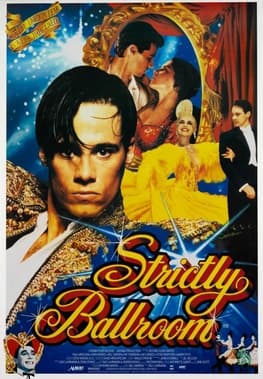
Strictly Ballroom is a film about who is allowed to teach the steps
Baz Luhrmann's 1992 comedy is sold as a story about dance. It is also a story about an Australian champion who has to be taught his own steps by a Spanish-Australian family in their own house.

Looking for Alibrandi was the first Australian story handed to me as mine
It was not my family's story. It was the shape of my family's story, put on a screen in a country that had never once bothered to hold it before.
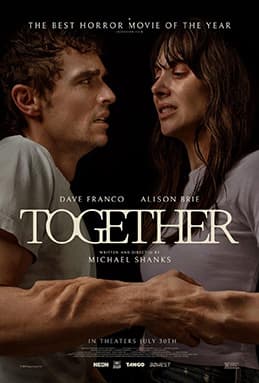
Together is an Australian horror film that learned to say trunk
Michael Shanks made a Melbourne body horror film about two people fusing into one, then sanded the Australian out of it. I keep looking for the seam.