MEAA negotiated new crew rates and the independent sector said it could not afford them
The new minimum rates are a 12 per cent rise over the expired agreement, and the debate is whether the industry can absorb them or pass them on.

The Media, Entertainment and Arts Alliance concluded negotiations on new minimum crew rates in early 2022, replacing an agreement that had expired during the pandemic. The new rates represent a 12 per cent increase over the previous minimums. For a gaffer on a feature film, that is roughly an extra $200 per week. For a production with a 40-person crew over an eight-week shoot, the total additional cost is in the range of $150,000 to $250,000, depending on department sizes and overtime structures.
The numbers matter because the response to them split the industry along a line that has existed for years but is rarely discussed this directly. International productions operating in Australia, backed by studio budgets and attracted by the 30 per cent location offset, can absorb a 12 per cent rate increase without restructuring. The increase is a rounding error on a $100 million production. Local independent productions, working with budgets between $2 million and $10 million, cannot absorb it without cutting something else. The question is what gets cut.
The case for the increase
Crew rates had been effectively frozen for the duration of the pandemic. The previous agreement expired in 2020, and negotiations stalled as the industry dealt with shutdowns, restrictions, and the more immediate question of whether production would continue at all. During that period, crew worked under the old rates while costs rose around them. Housing costs increased. Fuel increased. The cost of living in Sydney and Melbourne, where most production takes place, increased substantially.
At the same time, the pandemic triggered an attrition crisis. Experienced crew left the industry. Electricians went to construction. Camera assistants went to corporate video. Transport drivers went to logistics, where the hours were better and the pay was comparable. The people who remained were working longer hours on more productions, because the post-COVID production boom created demand that the reduced workforce could not comfortably meet.
The 12 per cent increase, in this context, was not generous. It was a correction. It brought rates closer to where they would have been if the agreement had been renegotiated on schedule, adjusted for inflation, and benchmarked against comparable industries. The MEAA’s position was straightforward: crew are skilled workers, the cost of living has risen, and the rates should reflect both.
The case against affordability
The independent sector’s response was not that crew did not deserve the money. It was that the money did not exist. An independent Australian feature film budgeted at $4 million typically allocates between 35 and 45 per cent of that budget to crew costs, including on-costs, overtime, and penalty rates. A 12 per cent increase on crew minimums translates to a 4 to 5 per cent increase on the total budget. On a $4 million film, that is $160,000 to $200,000.
That money has to come from somewhere. The Producer Offset does not increase to match crew rates. State agency investment is capped. Broadcaster licence fees have been declining for years. International pre-sales for Australian independent films are, with rare exceptions, modest. The budget is a fixed pool, and when one cost rises, another must fall.
In practice, the options are limited. Producers can reduce the shooting schedule, which means fewer days and more pressure on every department. They can reduce the crew size, which means fewer people doing more work. They can reduce post-production budgets, which affects the finished product. Or they can reduce the number of films they make, which is the outcome nobody wants to say out loud but which is the logical endpoint of a cost structure that rises faster than the available funding.
The two-tier economy
The rate negotiation exposed a structural divide that has been widening for at least a decade. Australia now operates a two-tier production economy. The first tier is international production: studio-funded features and series attracted by the location offset, serviced by Australian crews, and operating at budget levels where crew rates are a minor variable. The second tier is local independent production: Australian stories made with Australian money at budget levels where every line item is a negotiation.
The two tiers compete for the same crews. When a Marvel series is shooting in Sydney and an independent feature is shooting in Melbourne, they are drawing from the same pool of gaffers, grips, sound recordists, and camera operators. The Marvel series pays above the minimums because it can. The independent feature pays the minimums because it must. When the minimums rise, the independent feature’s already thin margin gets thinner, while the Marvel series does not notice.
What happens next
The new rates are in effect. Productions are budgeting to them. The immediate impact has been what the independent sector predicted: tighter budgets, shorter schedules, and harder conversations about what a film can afford. Some producers have reported scaling back projects. Others have delayed. The MEAA has indicated willingness to discuss tiered arrangements for low-budget productions, but the details are unresolved.
The deeper question remains. Australian crew deserve to be paid fairly. Australian independent films deserve to exist. The current funding model cannot deliver both at the rates the market demands. Something in that equation will eventually give. The negotiation decided the rates. It did not decide who bears the cost.

Odette covers the business of Australian screen. Previously a financial journalist. Reads every Screen Australia annual report the week it drops. Short paragraphs, long memory, never misses a figure.
MORE BY ODETTE MALOUF →
The Australian screen workforce lost 4,200 people in two years and the pipeline has not noticed
The MEAA survey found that one in five below-the-line crew left the industry between 2022 and 2024, and the productions still filming have not yet felt the gap.
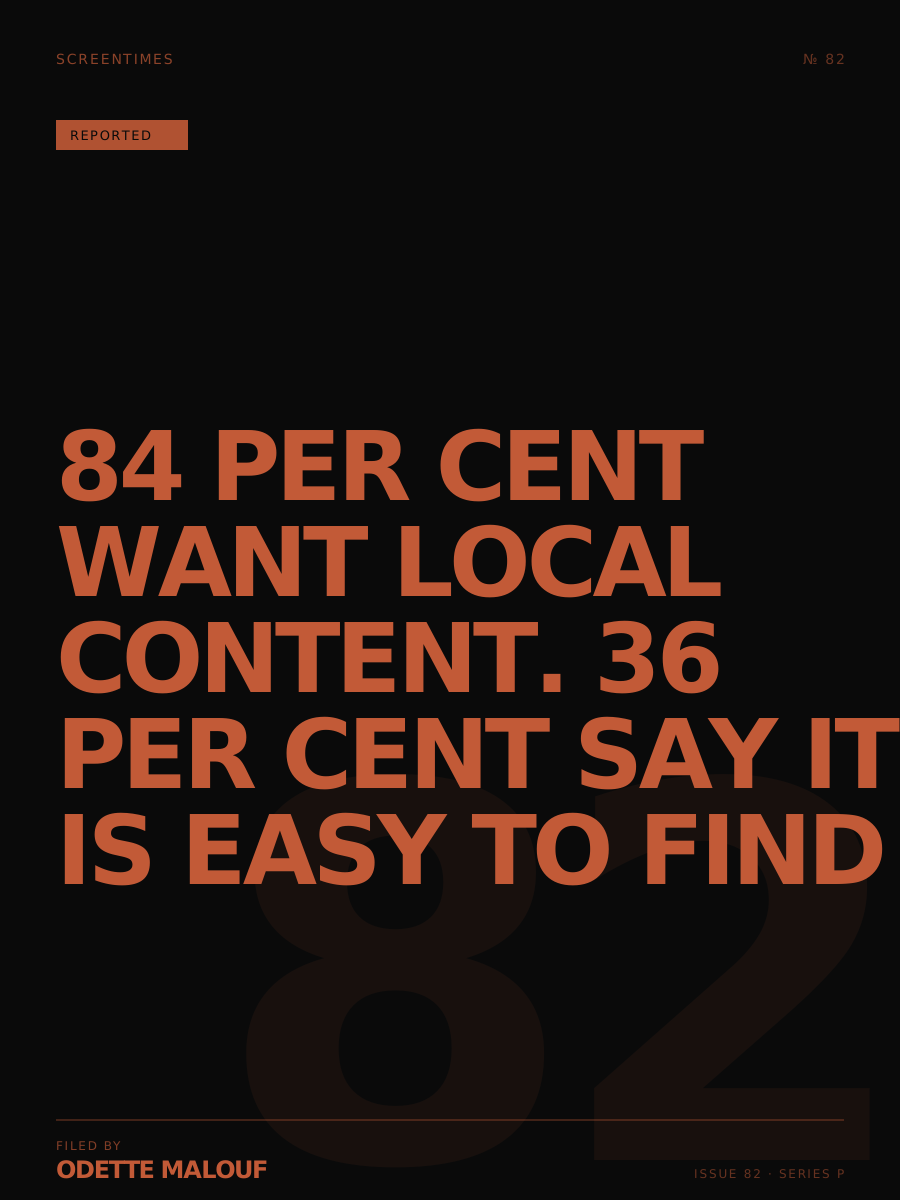
84 per cent want local content. 36 per cent say it is easy to find
Screen Australia's Screen Currency 2026 report finds strong demand for Australian screen stories and a discovery problem that no amount of production funding fixes on its own.
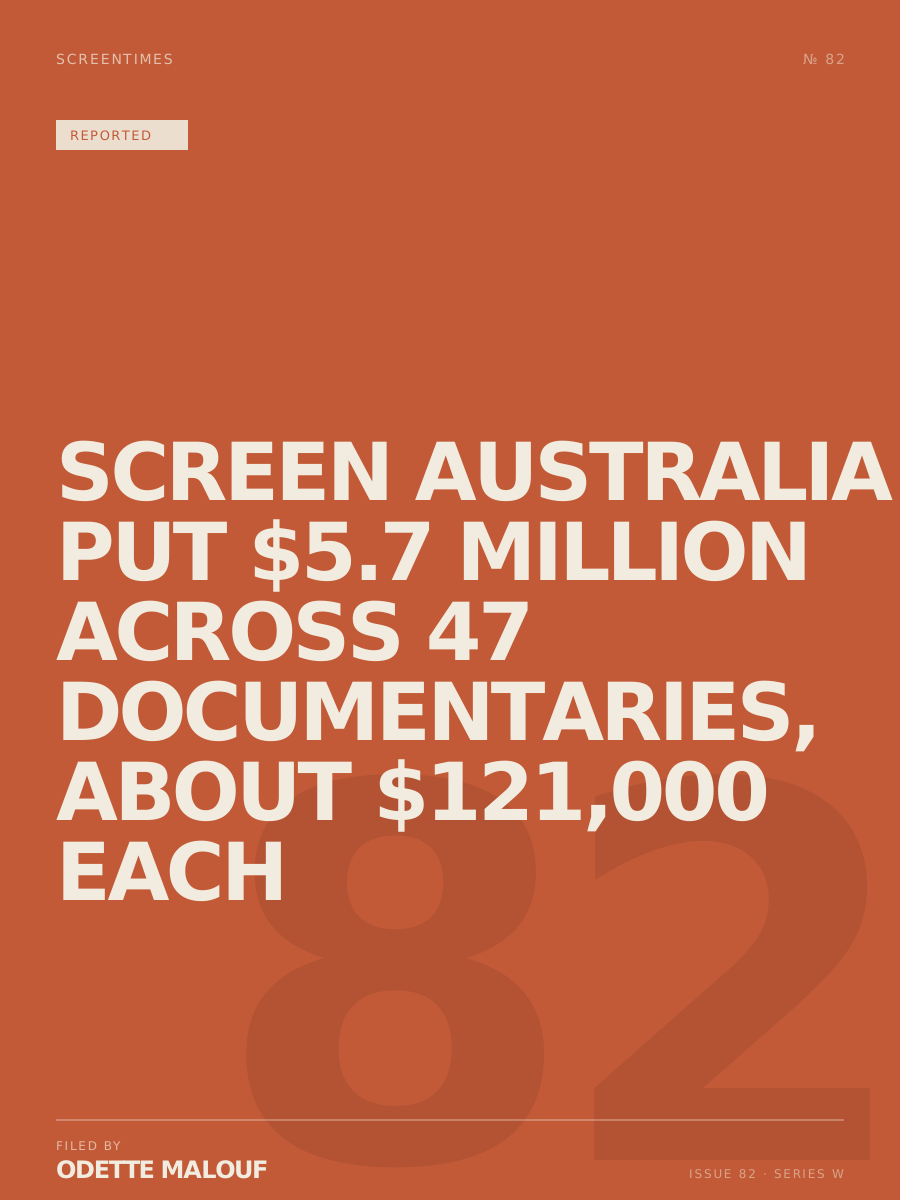
Screen Australia put $5.7 million across 47 documentaries, about $121,000 each
Screen Australia announced more than $5.7 million for 47 documentary projects on 2 October, and the agency's own audience research explains why it is framing the round the way it is.