Fisk season three still works because Kitty Flanagan refuses to let Helen be likeable
Helen Fisk remains the worst person in every room she enters, and the show remains the funniest thing on ABC because of it.
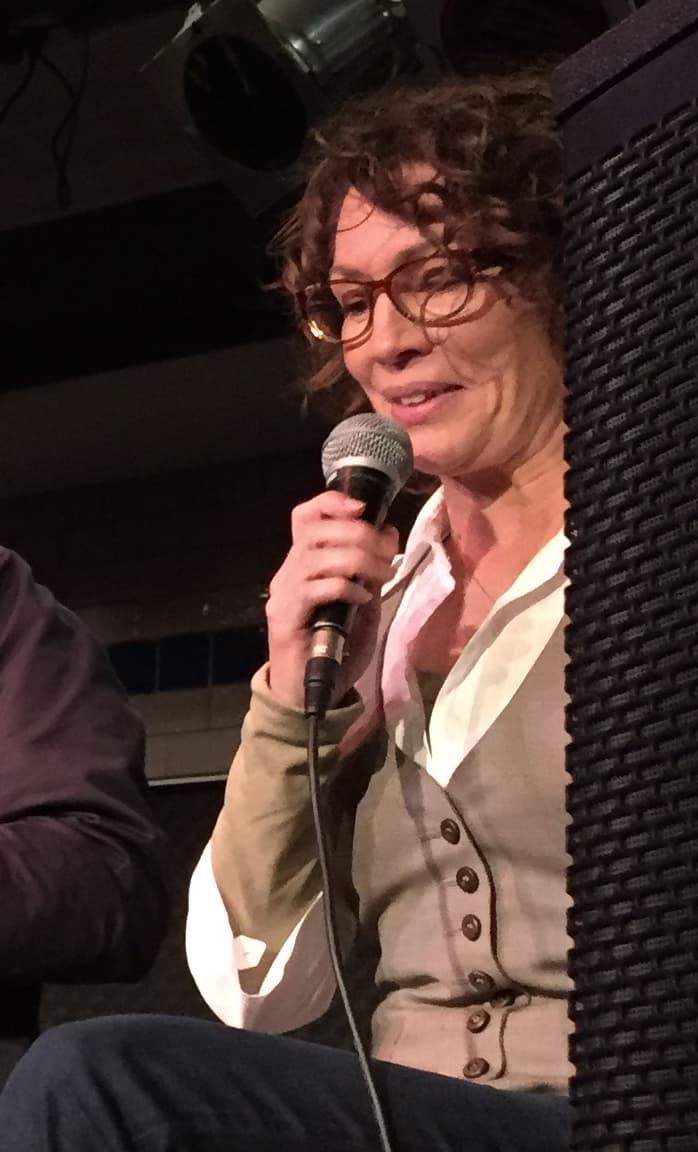
Three seasons in, Helen Tudor-Fisk has not grown. She has not softened. She has not learned a single lesson about empathy, professional conduct, or the basic social contract that governs how adults interact with other adults. This is not a failure of character development. This is the show’s entire thesis, and it is the reason Fisk remains the funniest thing on ABC by a margin that should concern every other comedy in the building.
Kitty Flanagan created Helen, writes Helen, and plays Helen, and in season three she has doubled down on the one quality that makes the character work: Helen is not a loveable misanthrope. She is not hiding a heart of gold beneath a prickly exterior. She is simply a person who finds other people’s problems genuinely, sincerely boring, and who cannot pretend otherwise for even the length of a sentence. The show never asks you to root for her. It asks you to watch her, which is a different thing entirely, and much harder to sustain.
The gift of a terrible protagonist
Look, there is a version of Fisk that does not work. You can imagine it quite easily. Helen has a rough exterior but gradually reveals her vulnerability. She bonds with her colleagues. She has a breakthrough with a difficult client that teaches her something about herself. By season three, she is demonstrably a better person than the woman who walked into the Gruber and Associates office in episode one. That version would be pleasant and forgettable and it would have been cancelled after season two.
What Flanagan does instead is commit to the bit with a discipline that borders on structural. Helen does not arc. The world arcs around her. Her colleagues evolve, her clients come and go with their variously absurd legal problems, and Helen remains fixed at the centre, a monument to social discomfort and professional indifference. It is a surprisingly radical choice for a network sitcom, and the fact that it works is down to Flanagan’s understanding that comedy does not require sympathy. It requires precision.
The ensemble does the heavy lifting
The cast around Flanagan has always been the mechanism that lets the show function. Marty Sheargold as Ray, the aggressively friendly property lawyer, is doing work that looks easy and is not. Ray is the kind of colleague who would drive you up the wall in real life, all unsolicited advice and performative mateship, and Sheargold plays him with such genuine warmth that you start to wonder if maybe Helen is the problem. (She is. She is always the problem.)
Aaron Chen, who joined the ensemble in season two, continues to be a standout. His character operates at a frequency that is slightly adjacent to everyone else’s reality, and Chen’s delivery is so deadpan that you occasionally wonder if he knows he is in a comedy. This is a compliment. The best comic performers are the ones who look like they have wandered in from a different show and have decided to stay because the catering is decent.
The guest cast in season three follows the established pattern: recognisable Australian faces playing people who need very specific legal advice, usually involving property disputes, neighbourhood feuds, or situations that could be resolved by a single honest conversation but will not be, because this is a law office and honest conversations are billable. The legal specificity is one of the show’s underrated strengths. The cases are dumb, but they are dumb in the way real low-stakes legal disputes are dumb, and that grounding is what separates Fisk from sketch comedy.
The ABC sitcom and why it still works
There is an argument, one I hear regularly and find increasingly tiresome, that the half-hour network sitcom is a dead format. Streaming has killed it. Audiences want serialised drama. Nobody watches appointment television any more. And then Fisk pulls 800,000 viewers on a Wednesday night and the argument quietly falls apart.
The ABC sitcom format works for Australian comedy in a way that streaming originals consistently do not, and the reason is constraints. A 26-minute episode with a cold open, a problem, and a resolution inside the half-hour forces a discipline that longer formats actively discourage. When you give an Australian comedy 45 minutes and no ad breaks, you get Colin from Accounts, which is good, or you get one of the several Stan and Binge comedies from the past three years that were interesting for two episodes and then ran out of things to say. (I will not name them. You already know which ones I mean.)
Fisk sits in a lineage that runs through Utopia, The Games, and arguably back to Frontline. These are shows about workplaces populated by people who are not especially good at their jobs, filmed with a restraint that lets the performances do the work. No flashy editing. No needle drops. No B-story that exists purely to fill the runtime. Just people in rooms, being funny, while the camera watches. It is a format that Australia has been quietly excellent at for thirty years, and the fact that it keeps producing shows this good suggests it is not dead so much as unfashionable, which is a different condition entirely and one that tends to resolve itself.
The third-season test
Most Australian comedies do not get a third season. The ones that do tend to show visible strain: running gags that have lost their momentum, character dynamics that have been explored to exhaustion, a general sense that the show has said what it came to say and is now repeating itself in a different font.
Fisk avoids this by refusing to develop. The show is not a serialised narrative. It is a series of encounters between a fixed personality and a rotating cast of problems, and that structure is essentially inexhaustible. As long as Flanagan can keep finding new ways for Helen to be terrible in professional settings, the show has material. And based on the evidence of season three, she can keep finding new ways for a very long time.
Honestly, the thing I admire most about Fisk is its confidence in the premise. Flanagan knows what the show is. She knows what Helen is. She is not interested in testing whether the character can sustain an emotional arc, because she has correctly identified that the absence of an emotional arc is the joke. Helen will not change. The world will keep expecting her to. And the gap between those two positions is where the comedy lives, reliably, precisely, and with a meanness that the ABC has been too polite to attempt for most of its history.
It is good. Go watch it. Helen would not want you to.

Rhys watches more television than is healthy and writes about it with a dryness that tips occasionally into cruelty. His favourite ABC drama is the one the ABC just cancelled, whichever that happens to be.
MORE BY RHYS TAVITA →
Why Are You Like This is the angriest comedy on ABC and it knows exactly who it is yelling at
The show is loud, furious, and performatively woke in the way that only a genuinely smart comedy can sustain without collapsing.
Frayed season two brings Sarah Kendall back to Newcastle and the cringe back to ABC
Kendall plays a woman who faked her life in London and came home to Newcastle, and the show's best trick is that Newcastle does not care.

Rake was never about the cases
Eight years and five seasons of Cleaver Greene taught Australian television that you can keep a man unredeemed, and that audiences will follow him anyway.